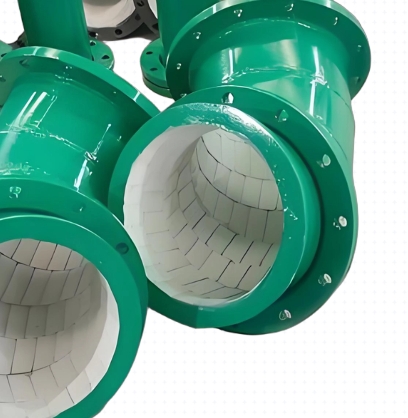
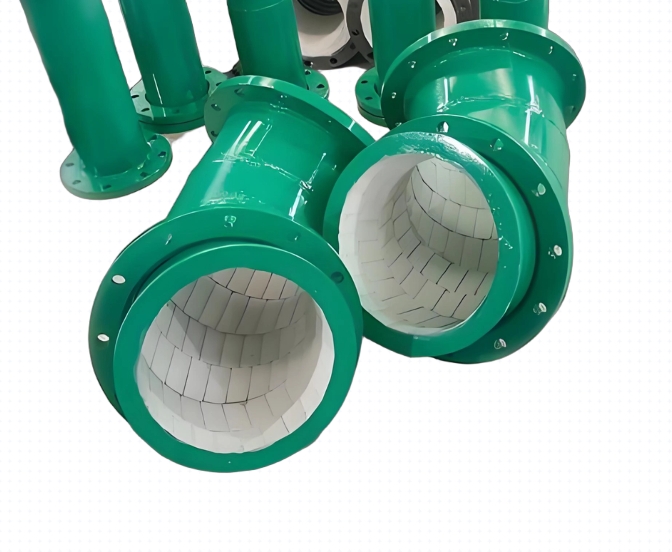


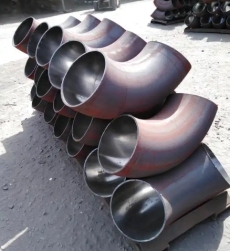
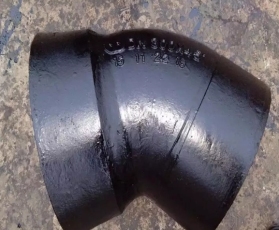
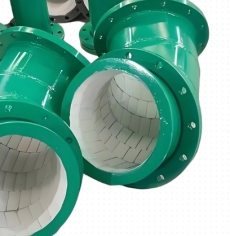
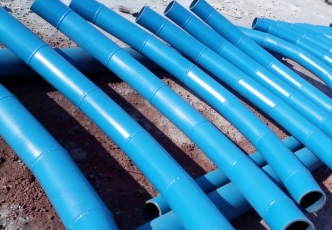
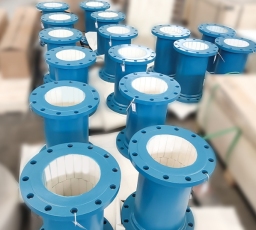
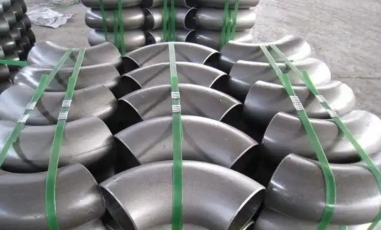

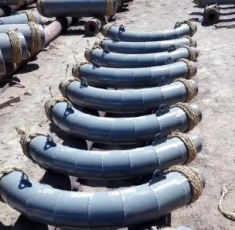
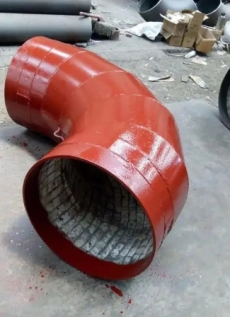
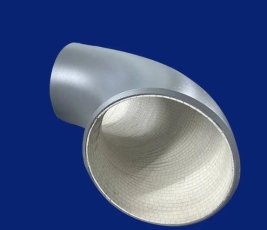
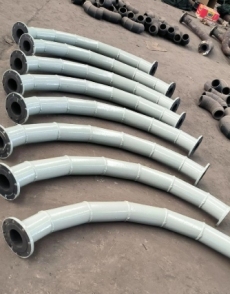
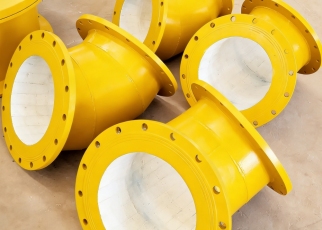
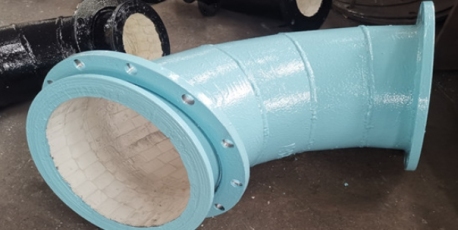
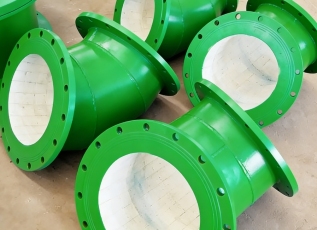
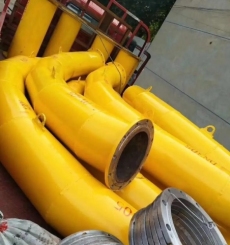
The grooved quick connection design of this elbow reduces the installation time by more than 60% compared with welded and flange connections, eliminating the need for on-site hot work and reducing installation safety risks. The 92% alumina ceramic lining has excellent wear resistance, which can resist the high-speed scouring of coal powder and fly ash, and the service life is more than 8 times longer than that of ordinary carbon steel elbows. The matrix adopts Q355 high-strength carbon steel, which has good compressive performance and adapts to the high-pressure working conditions of power plant pipeline systems. The angle design is optimized for power plant scenarios, providing three common angles of 45°, 90°, and 180° to meet different pipeline steering needs. Each elbow has undergone strict air tightness test to ensure no dust leakage during conveying, meeting the environmental protection requirements of power plants.
The nominal diameter covers DN100 to DN800mm, the thickness of the ceramic lining is 8mm to 12mm, and the wall thickness of the Q355 carbon steel matrix ranges from 7mm to 28mm according to the nominal diameter. The working temperature range is -20℃ to 700℃, and it can withstand pressure ratings from PN16 to PN40. The weight of a single elbow ranges from 15kg for DN100 to 75kg for DN800. It adopts grooved connection conforming to ANSI/ASME B16.9 standard, adapting to standard grooved pipe fittings. The density of the ceramic layer is ≥3.6g/cm³, ensuring high wear resistance. It has passed ISO 9001 and China Classification Society CCS certification, and each batch of products has passed wear resistance test and air tightness test.
It is mainly used in coal powder conveying systems of thermal power plants, fly ash collection pipelines, ash and slag removal pipeline systems. It is suitable for conveying solid media commonly used in power plants such as coal powder, fly ash, and furnace slag. As the core steering connector of the power plant pipeline system, it can effectively reduce the wear speed of the pipeline, reduce the operation and maintenance costs and downtime of the power plant, and improve the overall operation efficiency and economy of the power plant.







 Post RFQ


 Chat
Chat


 ALL CATEGORIES