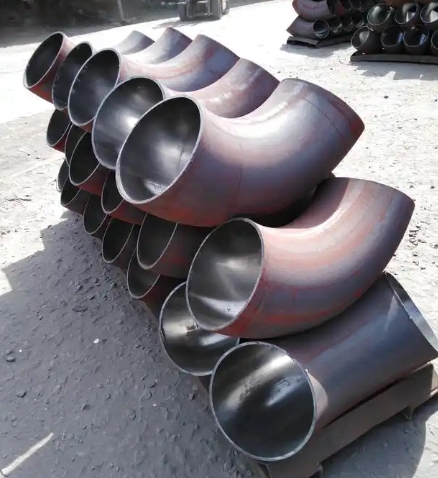
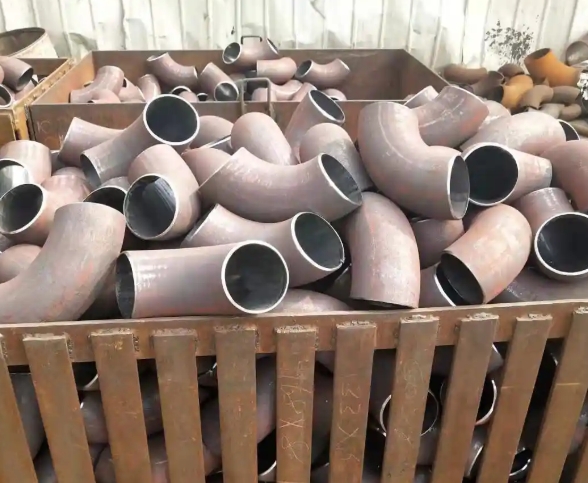


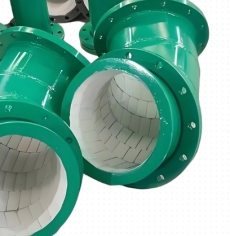
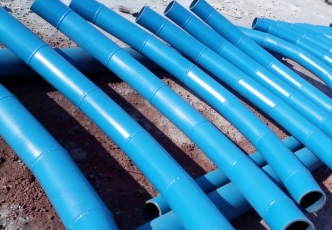
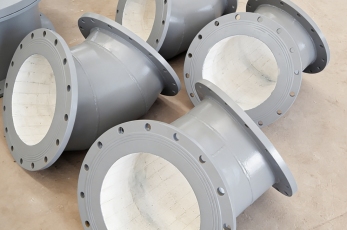
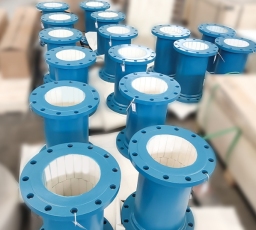

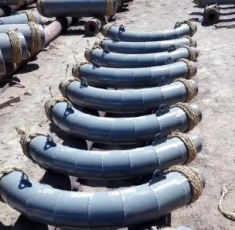
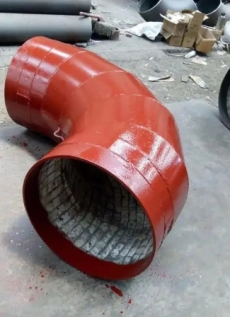
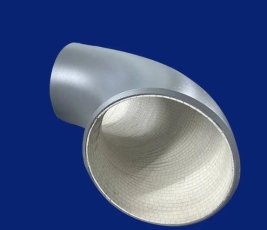
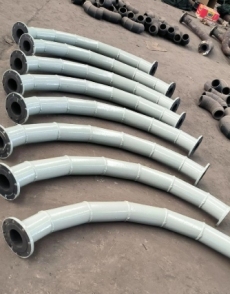
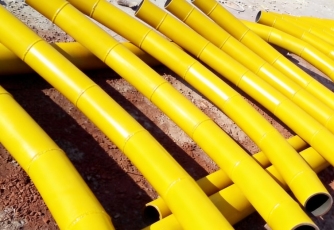
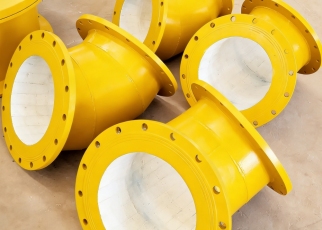
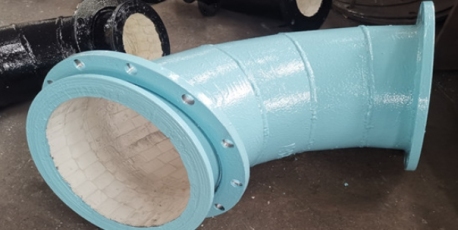
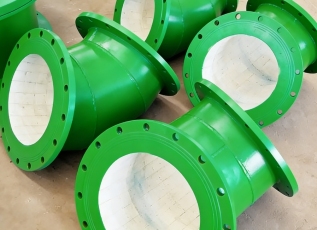
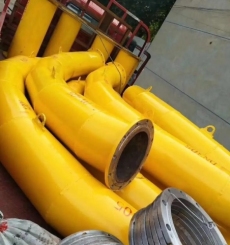
The core advantage of this elbow lies in its double-layer composite structure. The ceramic layer and carbon steel matrix are tightly combined through high-temperature sintering, avoiding the risk of falling off. The ceramic layer with HRA≥85 has more than 10 times longer wear life than ordinary carbon steel elbows. The welded installation method adapts to the on-site welding requirements of most industrial pipelines, without additional custom flange kits. It can be customized with different angles (30°, 45°, 90°) and sizes to adapt to the pipeline layout of different working conditions. The surface is treated with anti-corrosion treatment to improve the overall service life and reduce the damage of medium corrosion to the matrix.
The detailed specifications include that the nominal diameter covers DN50 to DN1200mm, the thickness of the ceramic lining is 8mm to 15mm, and the wall thickness of the base carbon steel ranges from 6mm to 30mm according to the nominal diameter. The working temperature range covers -20℃ to 800℃, and it can withstand pressure ratings from PN16 to PN64. The weight of a single elbow ranges from 12kg for DN50 to 85kg for DN1200. The connecting end adopts a groove welding design, matching the size of national standard welded pipelines. The density of the ceramic layer is ≥3.6g/cm³, ensuring high wear resistance. It has passed ISO 9001 quality management system certification, and each batch of products has passed water pressure test and appearance inspection to ensure that the delivery quality meets industrial standards.
It is mainly used in coal powder conveying pipelines of thermal power plants, ore slurry conveying pipelines of mineral processing plants, sintering ore dust conveying systems in the metallurgical industry, and bulk cargo loading and unloading pipeline systems of ports and wharfs. It is suitable for conveying media containing solid particles, such as coal powder, iron ore powder, beneficiation slurry, cement clinker, etc. It can be used as a steering connector of long-distance pipeline systems, effectively reducing the leakage and replacement costs caused by pipeline wear, helping industrial enterprises reduce operation and maintenance investment and improve production continuity.







 Post RFQ


 Chat
Chat


 ALL CATEGORIES