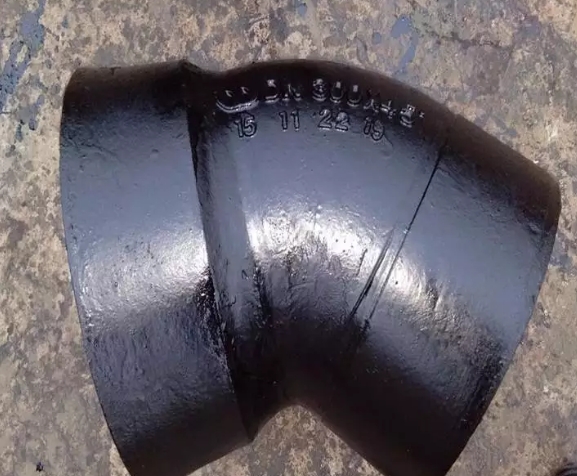
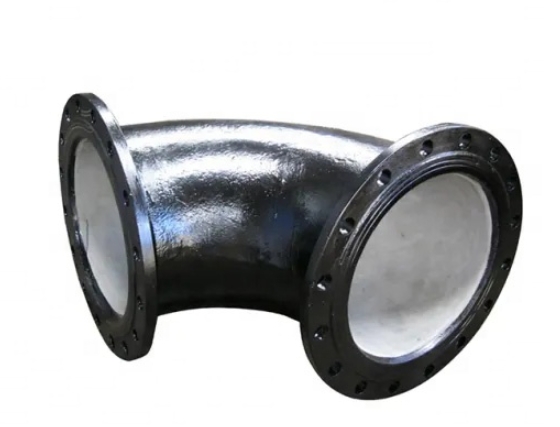


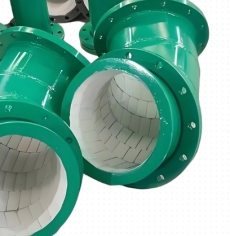
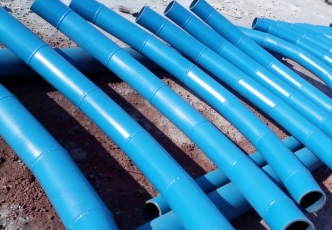
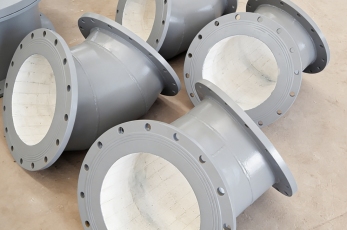
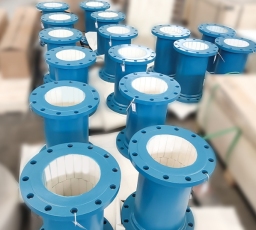

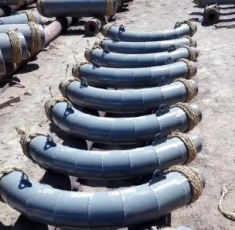
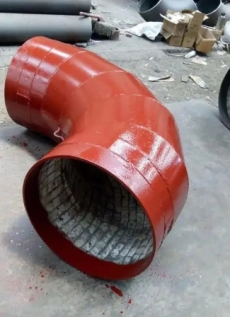
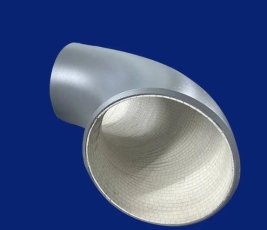
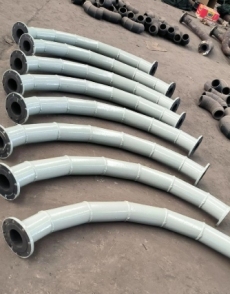
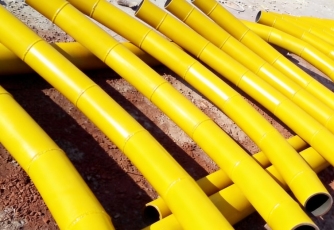
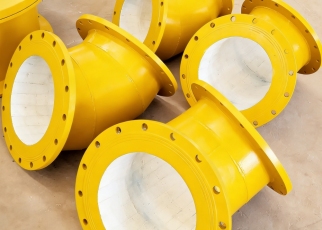
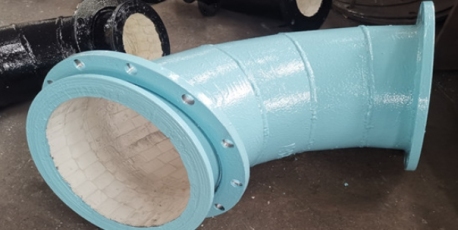
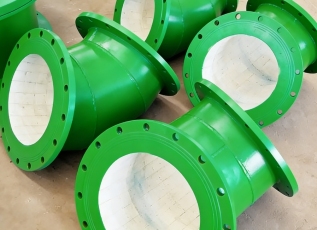
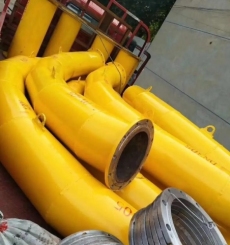
The core advantage lies in the high hardness and corrosion resistance of 95% high-purity alumina ceramic, which has better wear and corrosion resistance than 92% alumina ceramic. It adopts the butt weld flange design conforming to ASME B16.5 standard, with excellent sealing performance, which can adapt to pipeline flanges of different standards. The lining ceramic and the matrix are combined through pre-assembly bonding + high-temperature curing process, avoiding the falling off of the ceramic layer during conveying. The alloy steel matrix is treated with anti-corrosion sandblasting, which can resist the erosion of humid environment and corrosive media. It supports customization of multiple angles such as 30°, 60°, 90°, 180° to meet the needs of complex pipeline layout, and provides supporting services for flange gaskets to improve installation sealing.
The nominal diameter covers DN80 to DN600mm, the thickness of the ceramic lining is 10mm to 18mm, and the wall thickness of the alloy steel matrix ranges from 8mm to 35mm according to the nominal diameter. The working temperature range is -30℃ to 900℃, and it can withstand pressure ratings from PN25 to PN100. The weight of a single elbow ranges from 18kg for DN80 to 120kg for DN600. It adopts butt weld flange connection, conforming to ASME B16.5 standard, and is equipped with PTFE gaskets as standard. The density of the ceramic layer is ≥3.75g/cm³, ensuring excellent wear and corrosion resistance. It has passed ISO 9001 and CE certifications, and each product has passed pressure test and sealing performance test to ensure qualified delivery.
It is mainly used in corrosive slurry conveying pipelines in the chemical industry, high-temperature dust conveying pipelines in petrochemical plants, sludge conveying systems in sewage treatment plants, and pulp conveying pipelines in paper mills. It is suitable for conveying media with corrosiveness, such as acidic slurry, alkaline dust, high-temperature sludge, etc. As a pipeline steering connector, it can effectively reduce pipeline damage caused by medium corrosion and wear, reduce the spare parts replacement and maintenance costs of enterprises, and improve the operation safety and stability of the pipeline system.







 Post RFQ


 Chat
Chat


 ALL CATEGORIES