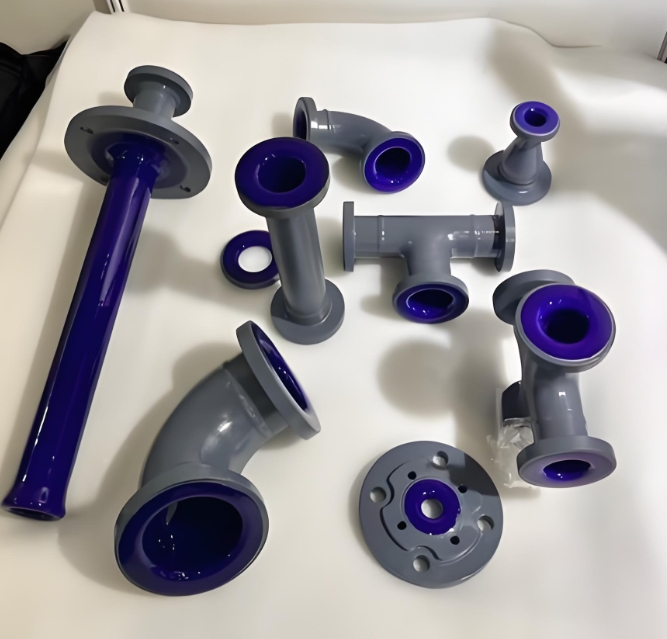
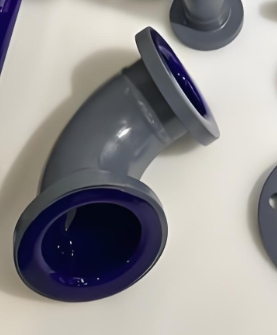


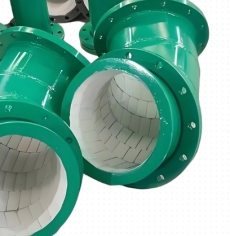
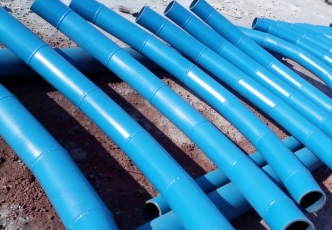
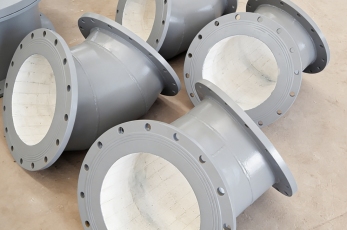
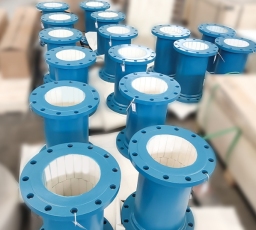

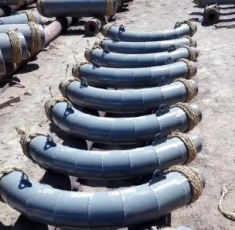
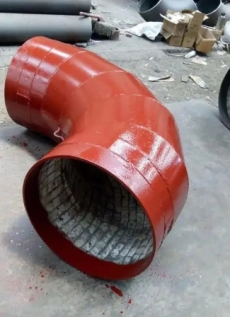
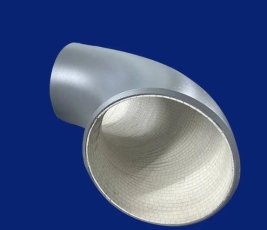
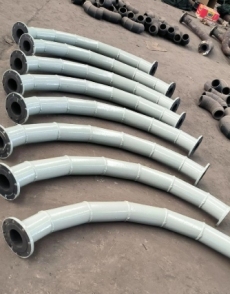
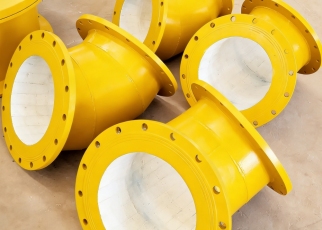
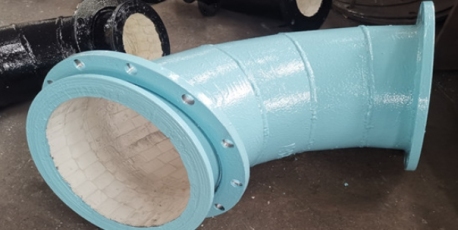
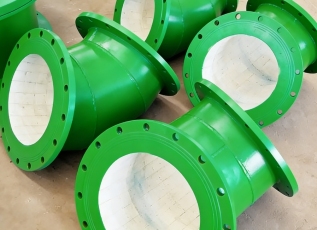
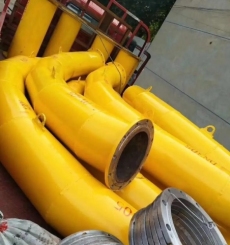
The core advantages of this product lie in its integral sintering production process, which eliminates the risk of ceramic layer falling off caused by adhesive layer failure. With a Rockwell hardness of HRA88 or higher, it has excellent wear resistance, reducing the wear loss caused by high-speed flowing media. The flange connection design ensures good sealing performance, avoiding medium leakage during transportation. It also has good corrosion resistance to most weak corrosive media, and can be customized according to the actual pipe diameter and angle requirements of users, meeting the personalized needs of different thermal power projects.
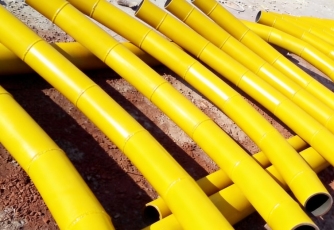
The product specifications cover nominal diameters from DN80 to DN600, conforming to the national standard HG/T20592 for flange dimensions. The alumina content is strictly controlled at 95%±2%, with a material density of not less than 3.6 g/cm³. The pressure rating ranges from PN16 to PN40, adapting to most conventional pipeline pressure requirements. The surface roughness is Ra≤1.6μm, which reduces the resistance of medium flow. It supports optional elbow angles of 15°, 45° and 90°, and can be matched with standard steel pipes for quick installation. Each product has passed strict airtightness and impact resistance tests before leaving the factory.
This ceramic elbow is mainly applicable to the ash delivery system, pulverized coal conveying pipeline and flue gas desulfurization circulation pipeline of thermal power plants. It can also be used in the dust removal system of small and medium-sized steel mills, and the material conveying pipeline of building materials factories. In the actual use process, it can effectively reduce the frequency of pipeline replacement, shorten the downtime of equipment maintenance, and improve the overall operating efficiency of the production line. It is very suitable for power plants with large daily media transportation volume and high requirements for pipeline durability.







 Post RFQ


 Chat
Chat


 ALL CATEGORIES