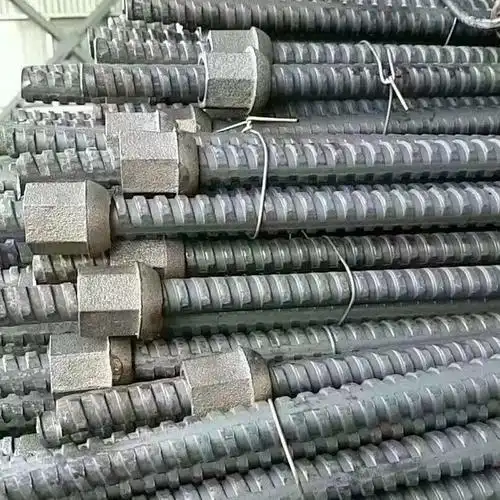





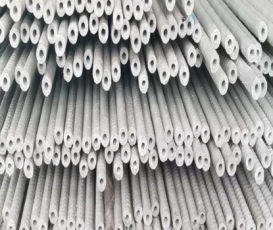
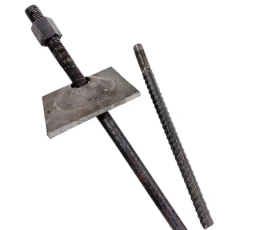
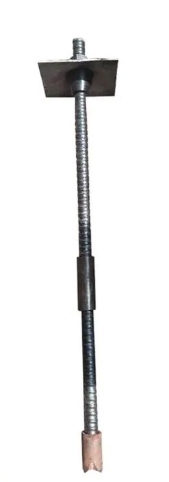
Focused on the high cost-performance ratio demand of conventional engineering scenarios, this anchor rod adopts HRB400 grade hot-rolled deformed steel rebar with stable tensile strength. Optional zinc coating or epoxy coating provides effective corrosion resistance, adapting to most non-extreme underground anti-floating conditions. Compared with ordinary anchor rods, its installation process is simplified without special professional equipment, reducing construction costs and solving the pain point of limited budget for anti-floating reinforcement in small and medium-sized projects. It meets mainstream building codes such as GB50007 and ACI318, and its reliability has been verified by a large number of engineering projects.
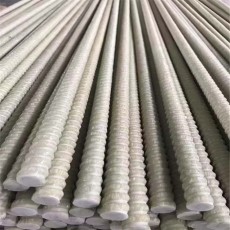
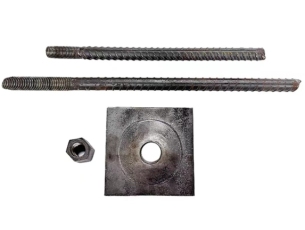
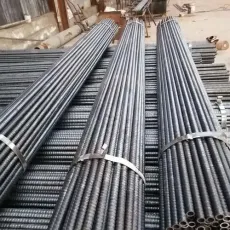
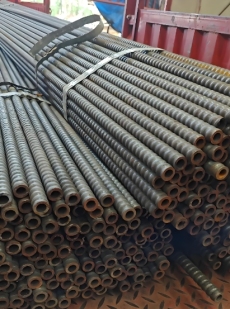
The base material is HRB400 grade hot-rolled deformed steel rebar, with nominal diameters covering three mainstream specifications of 25mm, 32mm and 40mm. The single anchor rod length supports customization of 3m, 5m, 8m, 10m and 15m, with ultimate pull-out load covering 120kN to 500kN. The surface can be selected as bare steel, hot-dip galvanized or epoxy coated. The packaging adopts solid wooden pallets, with a loading capacity of about 200-300 meters per pallet. It adapts to conventional drilling rig construction, with a drilling hole diameter of 30mm-60mm, and uses cement mortar for grouting, adapting to underground working conditions with water depth ≤20m.
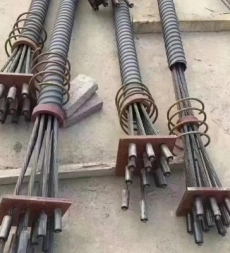
It is suitable for anti-floating reinforcement of non-extreme geotechnical conditions in civil underground garages, small commercial complex basements and urban underground utility tunnels. It adapts to conventional strata such as cohesive soil and sand, and is the most commonly used anti-floating support product in small and medium-sized construction projects. It does not require special construction qualifications, and ordinary engineering construction teams can complete the installation. It is widely used in conventional real estate projects in second-tier and below domestic cities and anti-floating stabilization treatment of small hydraulic anti-seepage engineering projects.







 Post RFQ


 Chat
Chat


 ALL CATEGORIES