


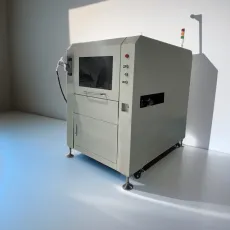
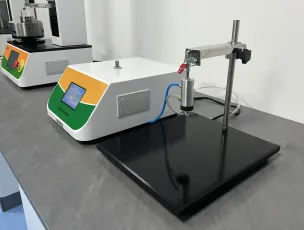
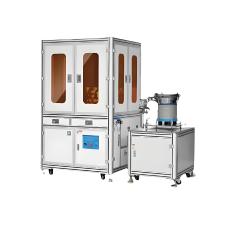
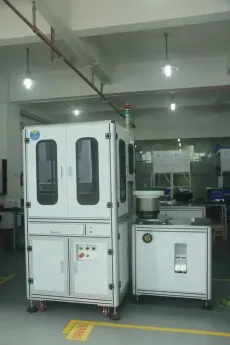
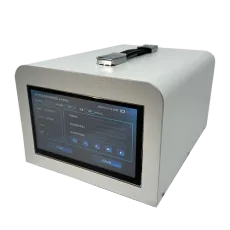

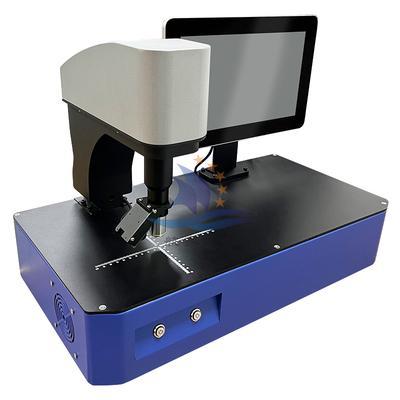
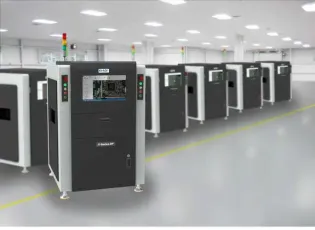
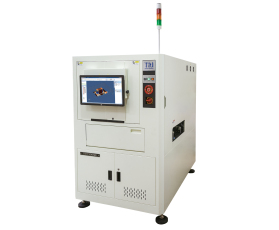
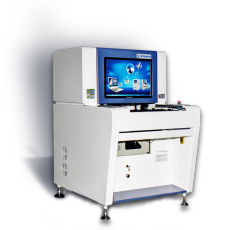
The core advantages of this PCB inspection machine lie in its intelligent adaptive defect recognition and high-speed detection capabilities. Unlike traditional fixed-program visual systems, it uses a pre-trained deep learning model that can adapt to new defect types with minimal additional training, cutting new PCB model setup time by up to 70%. Four industrial cameras capture multi-angle images simultaneously to eliminate inspection blind spots, and the dimmable LED lighting can be calibrated to match different PCB surface finishes such as FR-4, Rogers and flex substrates, reducing false positive detections by 35%. It includes an automatic sorting mechanism that diverts defective PCBs to a dedicated collection bin without interrupting production flow, and supports remote mobile monitoring to allow managers to track inspection status and access reports from any location.
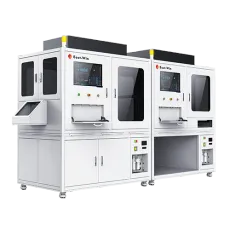
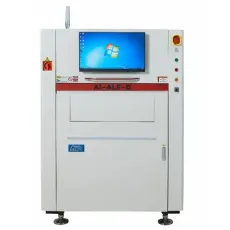
This PCB inspection machine has comprehensive technical specifications: it offers ±0.01mm inspection accuracy, paired with four 12MP industrial cameras for multi-angle imaging. It supports a detection speed of 120 pieces per minute, compatible with high-volume mass production lines. The 5600K dimmable LED light source provides uniform illumination for all PCB surface types, and the 15.6-inch industrial touchscreen interface allows for quick program creation and custom defect template setup. The machine runs on a universal 110/220V power supply, with a net weight of 185kg and overall dimensions of 1200*800*1500mm, fitting most standard workshop layouts. It supports data export in CSV and PDF formats for compliance reporting, and integrates with most mainstream SMT production line control systems.
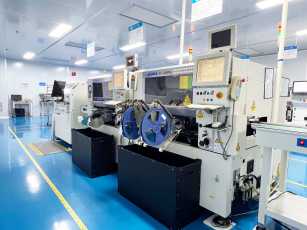
This PCB visual inspection machine is primarily designed for electronic manufacturing scenarios including printed circuit board component factories, smartphone OEM workshops, automotive electronic assembly lines and consumer electronics production plants. It is ideal for quality control of single-sided, double-sided and multi-layer PCBs, as well as flexible PCB prototypes and mass-produced PCB assemblies. It can be integrated into existing SMT production lines, wave soldering lines and component testing lines to provide 100% online inspection of each PCB unit, reducing manual rework workload by 80%. It is also suitable for third-party PCB testing laboratories that require high-precision defect detection and comprehensive inspection reports for client validation.








 Post RFQ


 Chat
Chat


 ALL CATEGORIES