

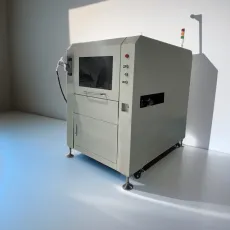
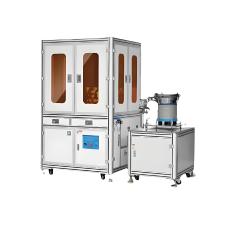
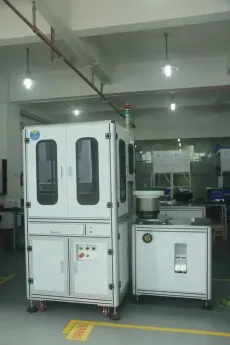
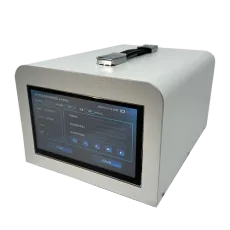

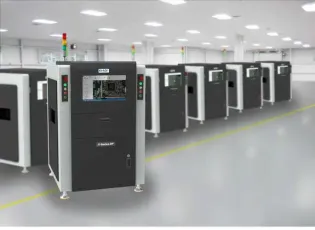
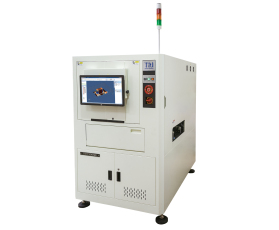
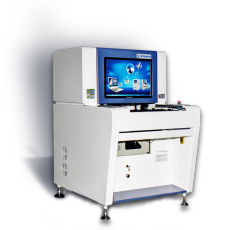
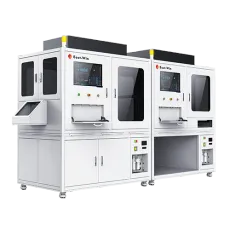
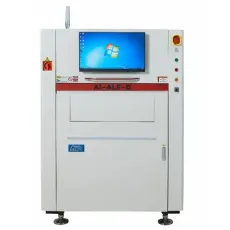
The core advantage lies in its detection capability for large-sized electrode plates, which can adapt to a maximum substrate size of 1200mm×600mm, with a detection speed of up to 200cm²/s, which can meet the detection needs of continuous production lines. It adopts a 6-zone oblique coaxial LED light source, which can accurately capture the fine uneven areas of the electrode plate coating, avoiding misjudgment caused by reflection. It is equipped with AMD Ryzen 9 industrial CPU and FPGA accelerator, which can realize high-speed image processing and real-time detection, support automatic identification of the production batch number and size of the electrode plate, automatically call the corresponding detection program, and has a defect visual positioning function, which can directly display the specific position and type of defects on the inspection interface, facilitating production personnel to make adjustments.
The detection accuracy is ±0.03mm, the maximum inspection speed is 200cm² per second, the compatible substrate size range is 100mm×100mm to 1200mm×600mm, it uses a 6-zone oblique coaxial LED light source, the image processing system is AMD Ryzen 9 industrial CPU with FPGA accelerator, equipped with a 23.8-inch industrial touch screen operating interface, supports three communication interfaces of Ethernet, PROFINET and Modbus RTU, the power supply is 380V 50Hz 3-phase AC, the overall equipment size is 2000mm in length × 1500mm in width × 1700mm in height, and the net weight is 1200kg. It is equipped with automatic feeding and receiving devices, which can adapt to continuous production electrode plate production lines, and has an optional coating thickness detection function.
It is mainly applicable to industries such as power battery manufacturing, energy storage battery production, consumer battery assembly, and new energy vehicle electronic component production. Typical usage scenarios include coating quality inspection of positive electrode plates of power batteries, falling defect inspection of negative electrode plates of energy storage batteries, and alignment error inspection of consumer electronic lithium battery electrode plates. It can be seamlessly integrated into existing battery electrode plate production lines to realize a fully automated quality inspection process, helping manufacturers improve the production yield of electrode plates and reduce the defective rate of subsequent battery cell assembly.

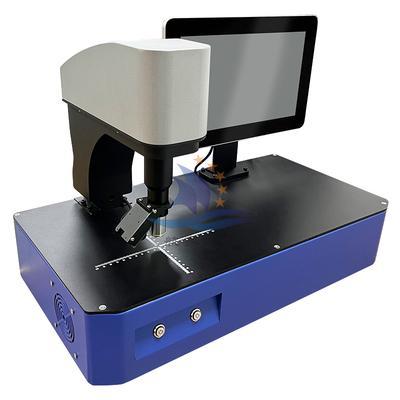








 Post RFQ


 Chat
Chat


 ALL CATEGORIES