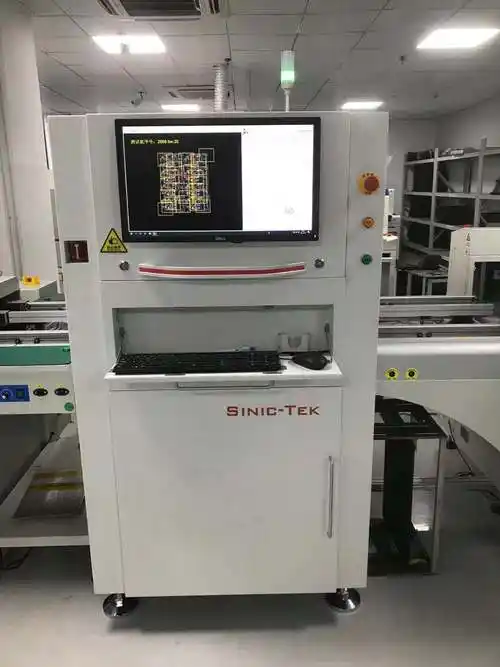


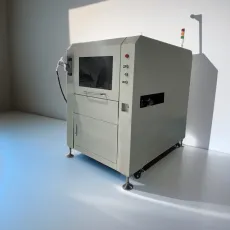
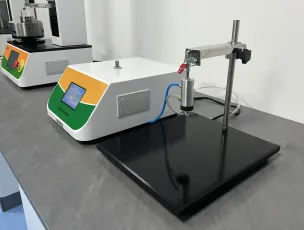
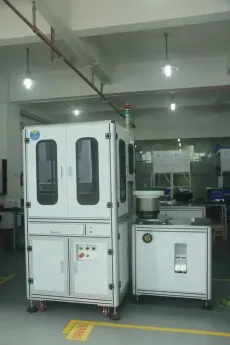
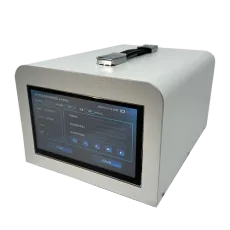

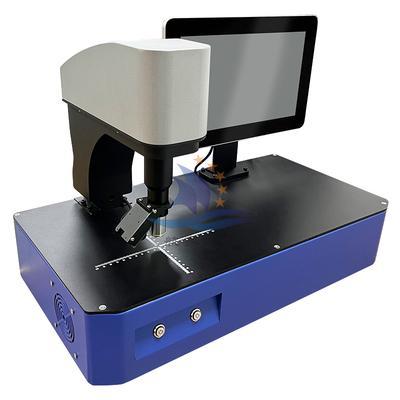
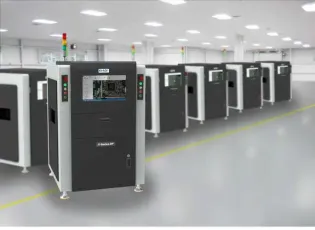
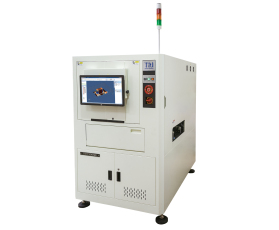
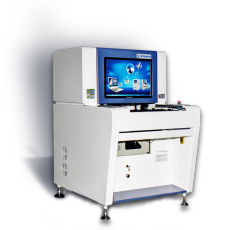
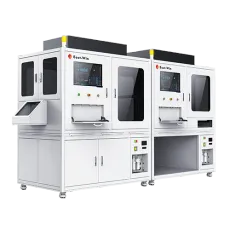
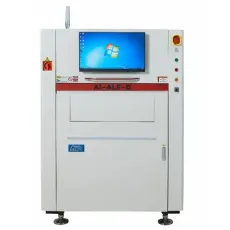
Equipped with 10 sets of 12MP low-light industrial cameras and built-in anti-reflection fill light systems, the device can clearly capture the detail features of solar cells in strong light workshop environments, supporting recognition of 250+ unique solar cell defects including main grid line breaks, secondary grid line missing, cell cracks and uneven silver paste coating. The built-in AI recognition algorithm can generate real-time production data reports, which can be connected to MES systems to achieve production data synchronization, and it supports one-click switching of detection templates for different sizes of solar cells.
The overall machine dimensions are 2800mm(L)*1800mm(W)*1900mm(H), with an operating weight of 950kg. It supports solar cell sizes from 156*156mm to 230*230mm, with a detection accuracy of ±0.01mm and a maximum detection speed of 150 pieces per minute. It runs on 380V AC 50/60Hz power, with a working environment requirement of 18-32℃ temperature and 40-75% relative humidity without condensation. It supports industrial Ethernet and MODBUS TCP data transmission, uses embedded industrial operating system, offers multilingual operation interfaces, and can store over 30,000 historical inspection reports with an automatic defective product sorting channel.
It is mainly used for production process inspection of crystalline silicon solar cells, covering defects such as cell cracks, main/secondary grid line defects, silver paste deficiency, color difference and packaging defects. It applies to solar panel manufacturing, new energy power generation equipment and energy storage equipment production industries, and can be integrated into automated solar cell production lines for online full inspection or used as offline inspection equipment for laboratory quality inspection and finished product sampling.








 Post RFQ


 Chat
Chat


 ALL CATEGORIES