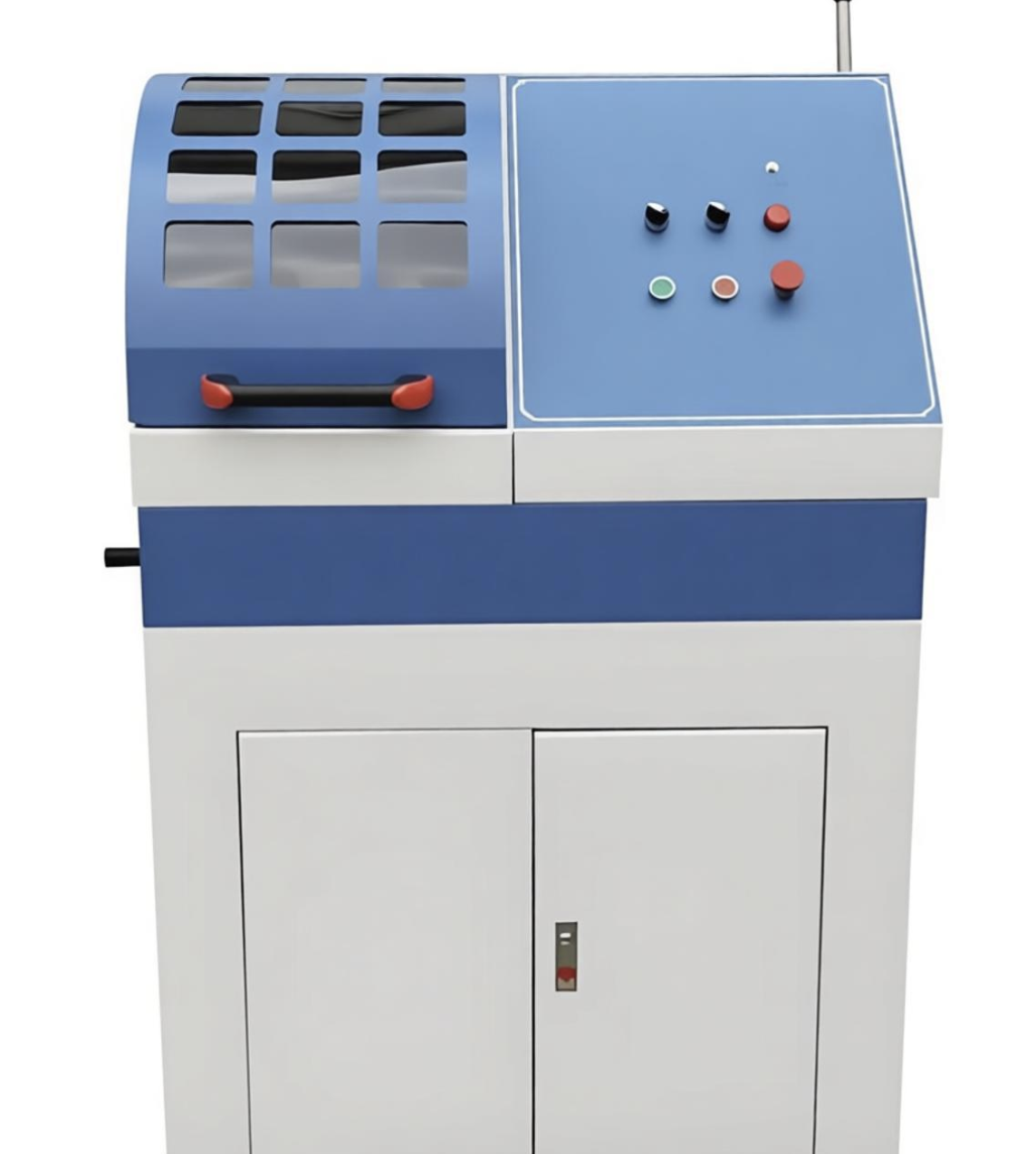
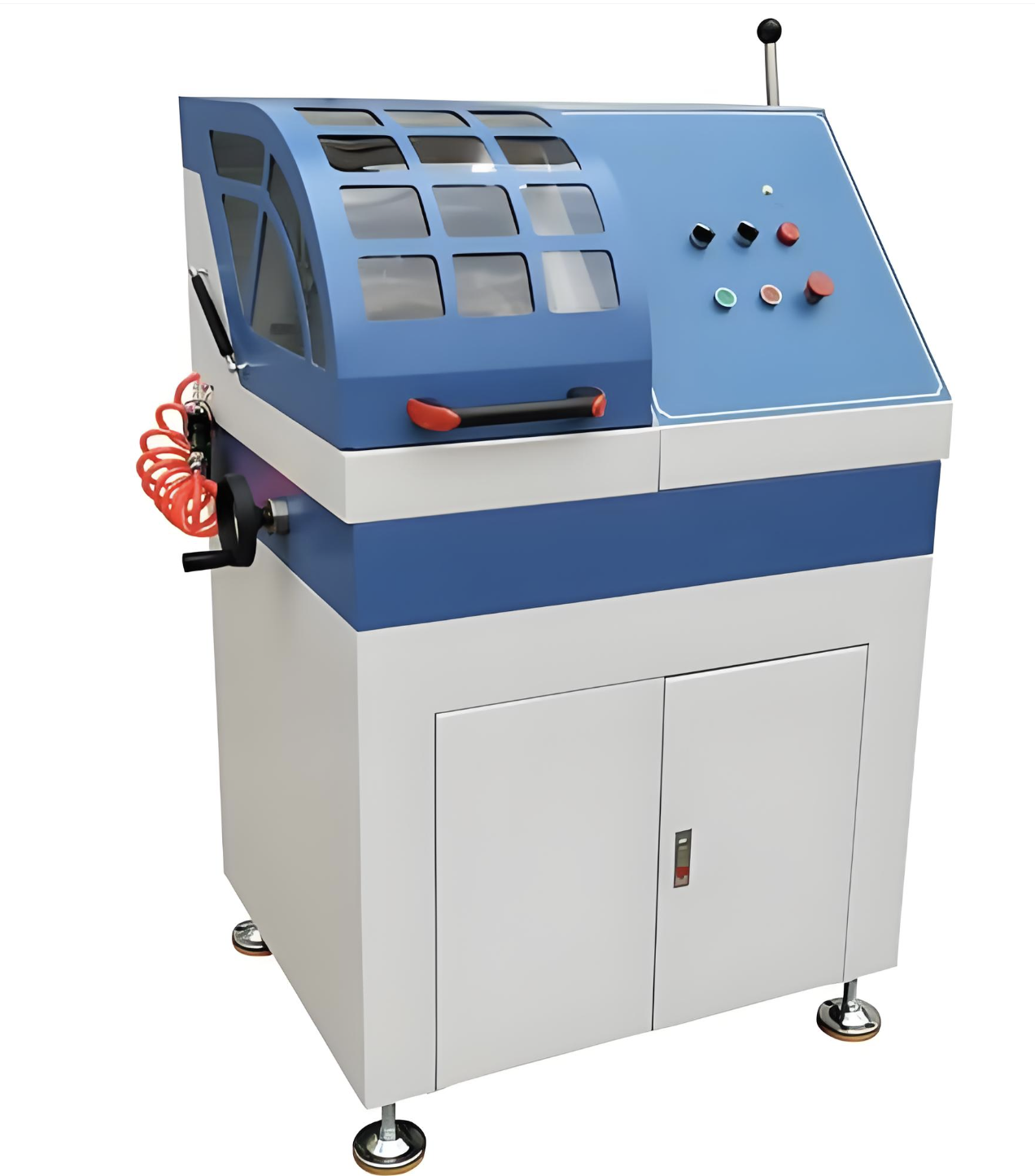


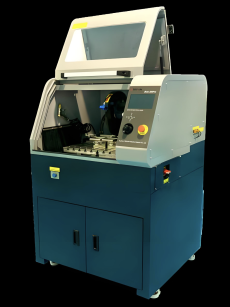
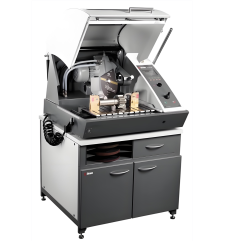
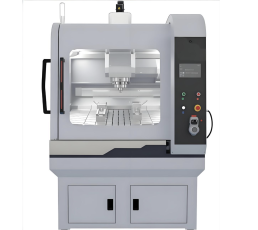
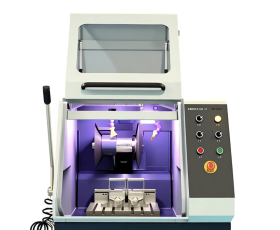

This product focuses on accurate and controllable manual operation, adopting a high-precision lead screw feeding system with a feeding accuracy of up to 0.1mm, effectively ensuring the flatness of the sample cutting surface and avoiding edge chipping and deformation problems. It is equipped with thick alloy steel cutting discs, whose service life is 30% longer than ordinary cutting discs. The fully enclosed water cooling cycle system can cool the cutting area in real time to prevent high-temperature oxidation or phase transformation of the sample metallographic structure. It is equipped with an emergency stop button and protective cover, conforming to CE safety standards, effectively avoiding operation risks, and is suitable for small and medium-sized testing needs with basic requirements for cutting accuracy.
The equipment has a maximum cutting diameter of 120mm and a maximum cutting thickness of 80mm, matching φ200×1.6mm standard metallographic cutting discs. The motor power is 1.5kW with a rated speed of 2800rpm, providing stable cutting power for conventional samples. The operating table size is 450×350mm, providing sufficient placement space for samples. The total weight is 120kg, suitable for fixed laboratory placement, and the power supply is compatible with 220V 50/60Hz universal civilian power. The manual feeding stroke ranges from 0 to 100mm, meeting the cutting needs of most conventional small samples, and the safety protection grade reaches IP20 to block foreign matter intrusion.
This equipment is mainly used in university material science laboratories, small and medium-sized metal parts testing institutions, automotive parts incoming material testing stations and other scenarios. It can cut various small metal samples, ceramic samples, electronic packaging samples and other materials, providing qualified sample cutting surfaces for subsequent metallographic grinding, polishing and microscopic observation. It is one of the core basic equipment in the metallographic sample preparation process, and is suitable for conventional detection and analysis scenarios with low to medium demand.








 Post RFQ


 Chat
Chat


 ALL CATEGORIES