Basic Info
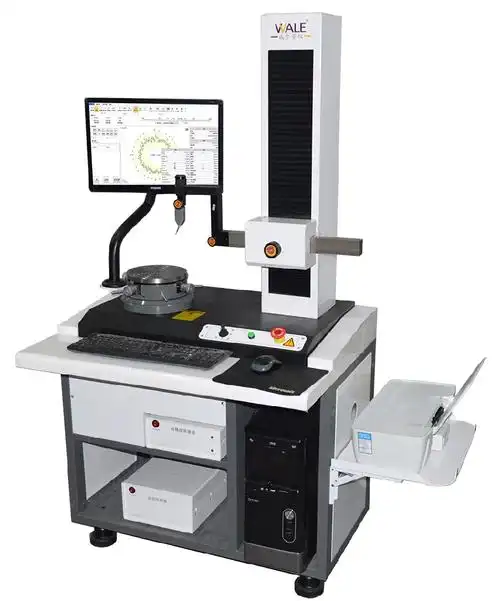
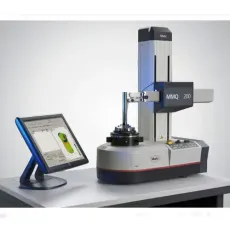
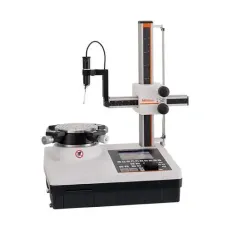
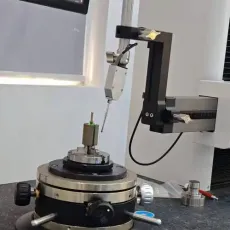
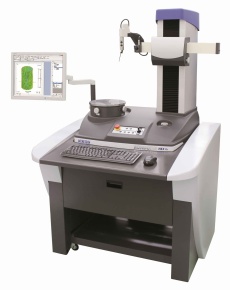
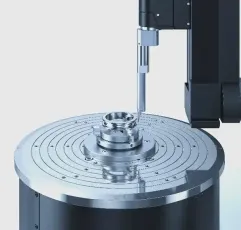
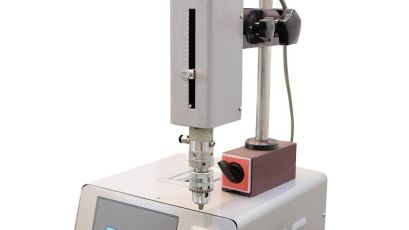
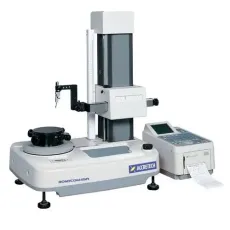
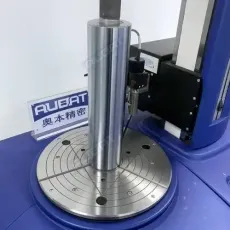
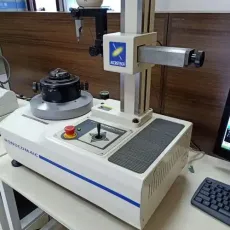
This inline automatic roundness tester is specially designed for automated production lines, realizing non-contact or contact online real-time detection of workpieces. It can automatically complete the measurement, analysis and judgment of form errors during the production process, and timely feedback the detection results to the production management system, effectively reducing manual detection costs and defective product rates, and improving the automation level of the production line.
Customer reviews

Sarah · Manufacturing Supervisor
As someone who oversees precision machining operations, I appreciate how this tester seamlessly integrates into our existing workflow. The real-time data feedback allows immediate process adjustments. Its robust construction withstands our factory environment while maintaining ±0.1μm accuracy - crucial for our aerospace components.
Robert · Plant Manager
The ROI on this equipment exceeded expectations. By catching out-of-round conditions early, we've reduced scrap rates by 22% and improved throughput. The modular design allowed easy retrofitting to multiple production lines. Technical support responded promptly when we had initial calibration questions.
Michael · Quality Control Engineer
The Inline Automatic Roundness Tester has significantly improved our production line efficiency. Its high-precision measurement ensures consistent quality control for our cylindrical components. The automated integration eliminates manual intervention, reducing human error. We've seen a 30% reduction in defective parts since implementation.
Product Description
Product features:
The core advantage of this automatic roundness tester is its high detection efficiency and full automation. It can achieve a maximum detection speed of 50 pieces per minute, which is far higher than manual detection efficiency. It is equipped with a customizable automatic feeding interface, which can be perfectly adapted to different types of production line conveyors. The measurement data can be uploaded to the factory MES system in real time, realizing real-time monitoring of production quality and data traceability. It adopts a precision spindle structure to ensure long-term stable operation in the industrial production environment, and the IP54 protection grade can effectively resist dust and splashing water. It also has an automatic alarm function, which can trigger an alarm when unqualified products are detected, so that operators can timely remove defective products.
Product specifications:
This inline automatic roundness tester has a measuring range of φ10mm to φ200mm, with a resolution of 0.05μm and measurement accuracy of ≤0.05μm. The detection beat can reach up to 50 pieces per minute, meeting the rhythm requirements of most medium-speed automated production lines. It can be customized with conveyor width of 100~500mm to adapt to different workpiece sizes. It uses 380V AC 50Hz power supply, with a protection grade of IP54, suitable for conventional industrial workshop environments. The built-in software can automatically judge qualified products according to set tolerance ranges, and store up to 10000 sets of measurement records for subsequent data analysis. It supports real-time data upload to the factory MES system, realizing remote monitoring and quality management.
Product application:
This inline automatic roundness tester is widely used in automated production lines of automotive parts, precision hardware, bearing manufacturing and other industries. It is suitable for online detection of automotive engine bearings, precision hardware fasteners, miniature bearings and other small and medium-sized workpieces. It can be integrated into the existing production line without changing the original production rhythm, and realizes full-process quality control of the production process. It helps enterprises reduce manual detection labor costs, improve production efficiency and product quality consistency, and meet the high-quality development requirements of modern intelligent manufacturing.
Frequently Asked Questions (FAQ)
Q:What are the main applications of an inline automatic roundness tester?
A:Inline automatic roundness testers are widely used in precision manufacturing industries such as bearings, automotive components, and aerospace parts for real-time quality control of circularity deviations (typically within 0.1-5μm accuracy range).
Q:What key parameters should be considered when selecting an inline roundness tester?
A:Critical parameters include: 1) Measurement range (usually Ø1-200mm), 2) Accuracy (0.1-1μm), 3) Rotation speed (10-60 RPM), and 4) Compatibility with industry standards like ISO 4291 and JIS B7451.
Q:Can inline automatic roundness testers measure other geometric features besides roundness?
A:Yes, advanced models can simultaneously measure concentricity (≤0.5μm), cylindricity (0.5-2μm), and surface roughness (Ra 0.05-1.6μm) through multi-sensor integration and CNC-controlled probe systems.
Q:What maintenance does an inline automatic roundness tester require?
A:Regular maintenance includes: 1) Weekly air purge for measurement heads, 2) Monthly calibration with master spheres (Grade 0.1 or better), 3) Quarterly lubrication of rotary bearings, and 4) Annual system accuracy verification per ISO 9001 standards.









 Post RFQ


 Chat
Chat


 ALL CATEGORIES