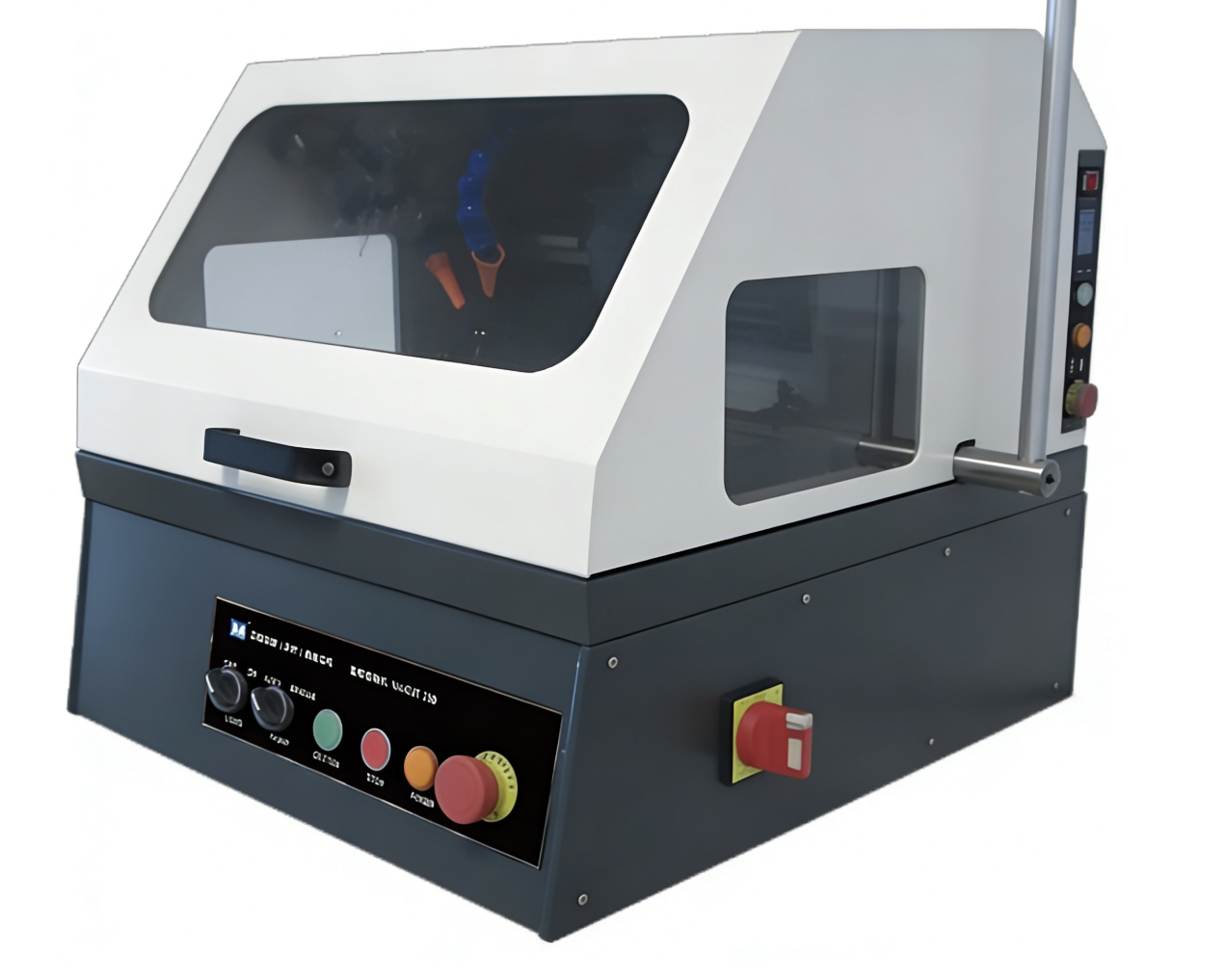
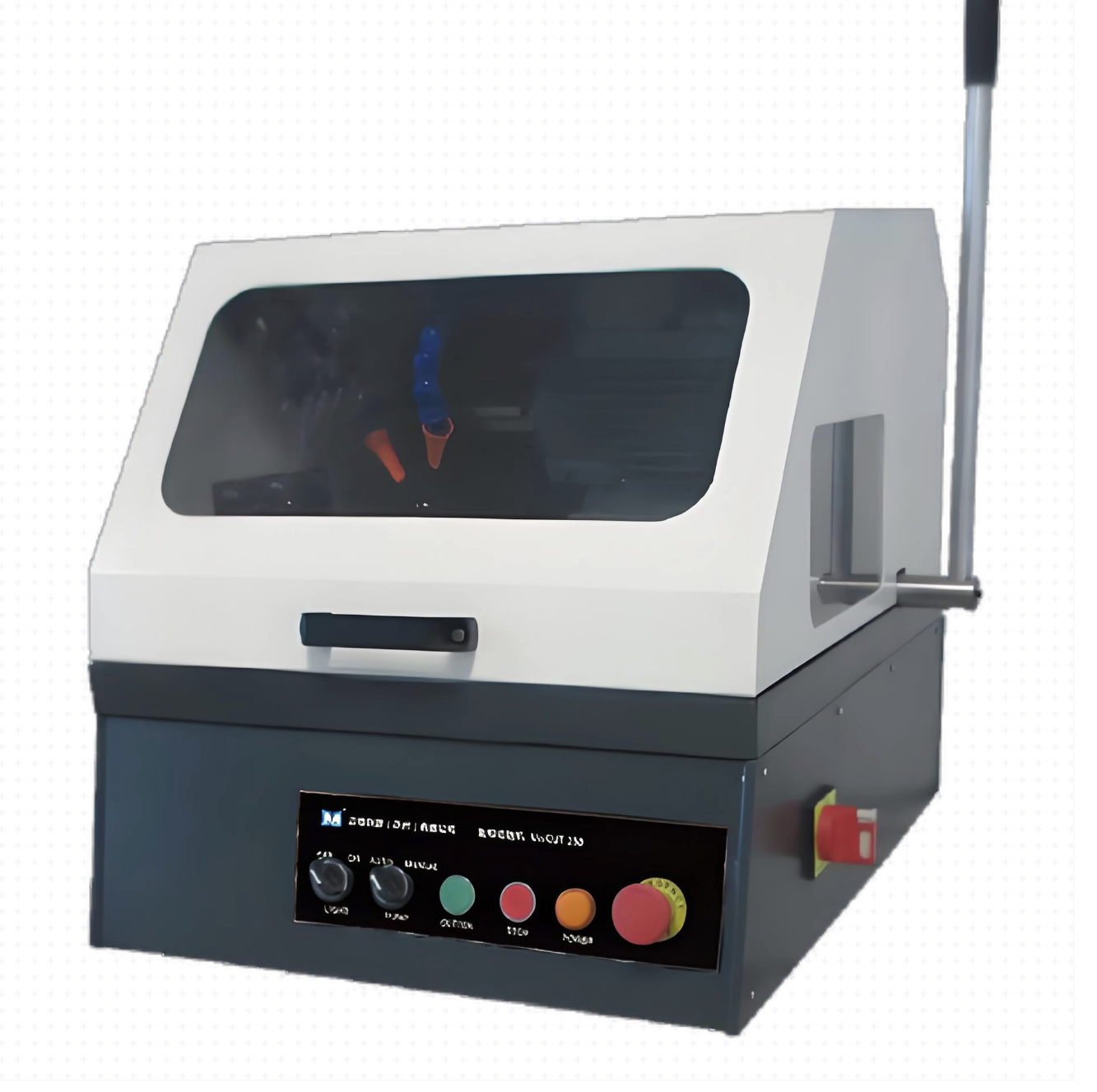


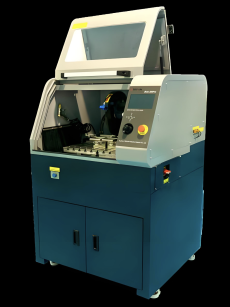
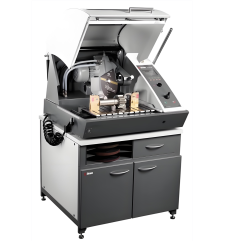
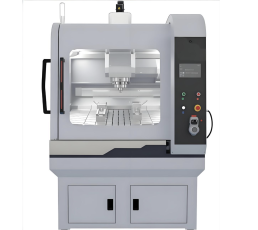
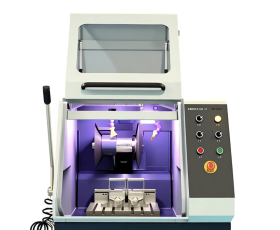

The manual precision metallographic cutter stands out with its manual precision control function, which allows operators to finely adjust the cutting feed speed according to the hardness and type of the sample, solving the pain point of inaccurate cutting caused by automatic feed for soft or brittle materials. It is equipped with a full-coverage safety protection cover and an interlocking safety door, which effectively prevents debris and cooling liquid from splashing, meeting the safety operation standards of industrial and laboratory equipment. The water circulation cooling system not only reduces blade temperature but also collects and filters cutting debris, avoiding secondary pollution to the sample. The cast iron body ensures stable operation at high speeds, with low vibration and low noise, reducing the impact on the surrounding laboratory environment. Additionally, the adjustable blade speed range further expands the applicable range of materials, from soft aluminum alloys to hard high-speed steel materials.
The key specifications of this manual precision metallographic cutter include a maximum cutting diameter of 120mm, a standard blade size of 200mm, and a 0.75kW high-torque motor that provides stable power output. The workbench measures 300mm × 250mm, providing sufficient space for fixing small samples, with adjustable fixing clamps suitable for samples of various shapes. The power supply supports 220V 50/60Hz universal voltage, suitable for most global use scenarios. The protection grade reaches IP54, preventing dust and splashing liquids from entering the interior of the equipment. The blade speed can be adjusted steplessly between 0-2800 RPM, and the noise level is controlled within ≤68dB(A). The net weight of the whole machine is 85kg, and the overall dimensions are 650mm × 500mm × 800mm, which is suitable for placement on standard laboratory benches.
This manual precision metallographic cutter is mainly applicable to academic material science laboratories, university research centers, small-scale metal processing enterprises and electronic component testing institutions. It is suitable for preparing small samples of various materials, including aluminum alloys, copper alloys, high-speed steel, ceramic materials and composite materials. Typical application scenarios include cutting small mechanical parts for metallographic observation, cutting test pieces of electronic packaging materials, and preparing samples for academic teaching experiments. It can also be used for on-site sampling and cutting of small batches of materials in small manufacturing workshops, providing reliable sample preparation support for subsequent hardness testing, microstructure observation and performance analysis.








 Post RFQ


 Chat
Chat


 ALL CATEGORIES