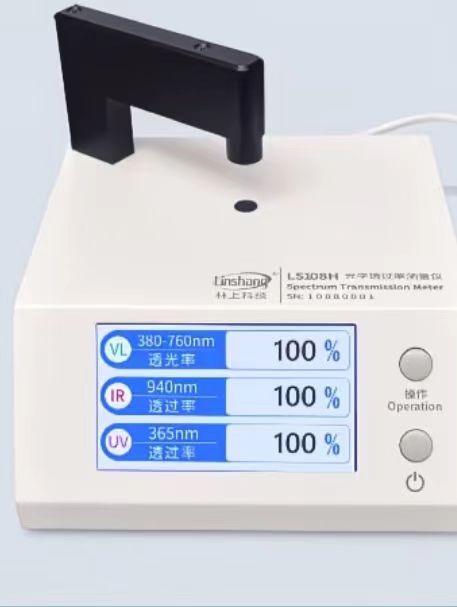
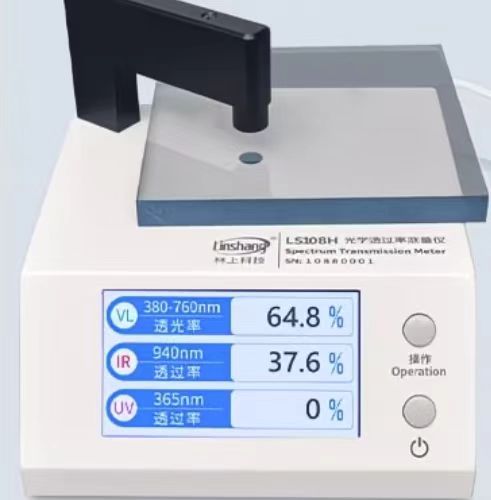


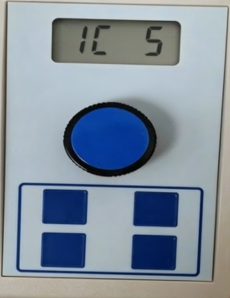
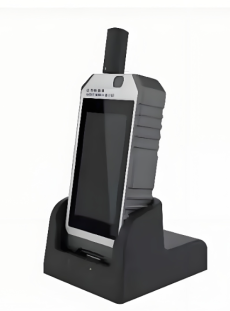
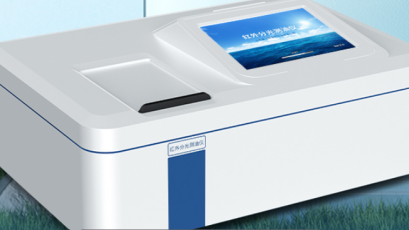
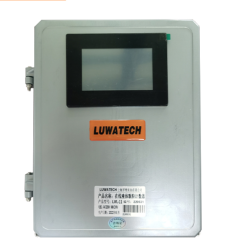
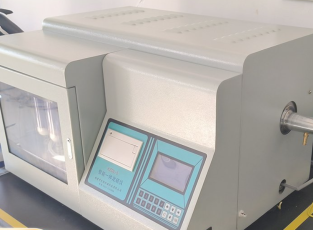

This instrument adopts a medical-grade design, with a fuselage made of non-toxic and harmless medical ABS plastic, which can withstand high-temperature sterilization, meeting the strict hygiene requirements of medical institutions. It detects the light transmittance in the 400nm-700nm visible light band, which is the most concerned band for medical transparent materials. It has a transmittance detection accuracy of ±0.2%, meeting the high-precision testing requirements of the medical industry. The built-in traceable data storage module can save each test data, including test time, sample information and detection results, facilitating medical quality traceability. It is also equipped with a one-key test function, which is easy to operate and meets the testing needs of medical institutions and medical equipment manufacturers.
The instrument has a detection wavelength range of 400nm to 700nm, covering the visible light band required for medical transparent materials, with a transmittance detection accuracy of ±0.2% and a resolution of 0.05%. It supports sample sizes from 10*10mm to 300*300mm, and can be equipped with custom sample slots for special medical samples. The fuselage is made of medical grade ABS plastic, which can withstand high-temperature steam sterilization at 121℃. It has a built-in 2000-group data storage module, and the data can be exported via USB 2.0 interface. The operating voltage is 100-240V AC, 50/60Hz, and the operating temperature range is 15℃ - 30℃, suitable for indoor use in medical institutions. The net weight is 5.2kg, and the dimensions are 300*250*200mm.
This medical-grade instrument is mainly applicable to medical consumable manufacturers, hospital clinical laboratories, medical equipment testing institutions, pharmaceutical packaging material manufacturers and other fields. It can detect the light transmittance of intravenous infusion bags, medical plastic syringes, medical optical lenses, pharmaceutical packaging films and other medical products. In medical consumable manufacturing, it can ensure that the transmittance of products meets medical safety standards; in hospital clinical laboratories, it can detect the light transmittance of test reagents and medical glassware, providing data support for medical testing.









 Post RFQ


 Chat
Chat


 ALL CATEGORIES