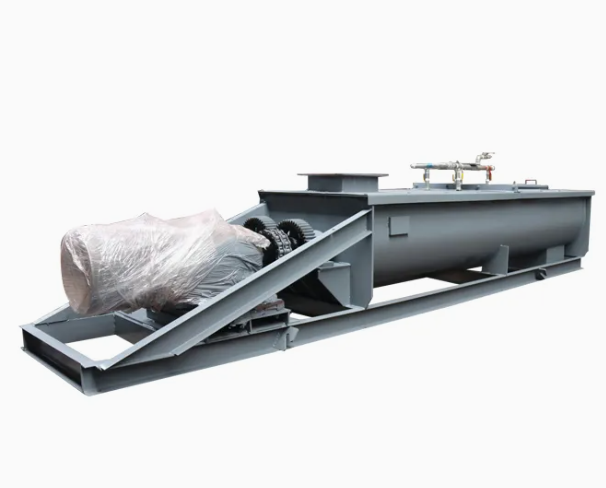
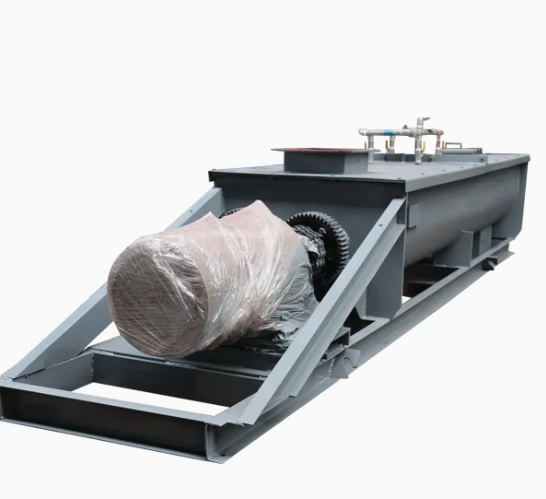


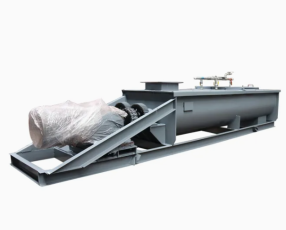
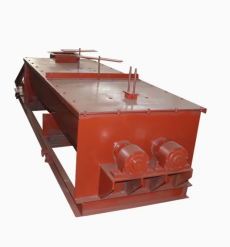
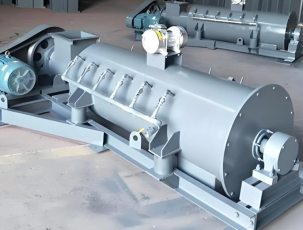
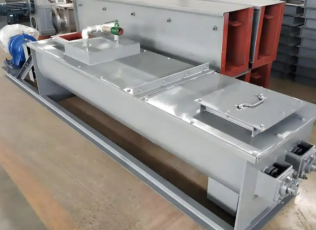
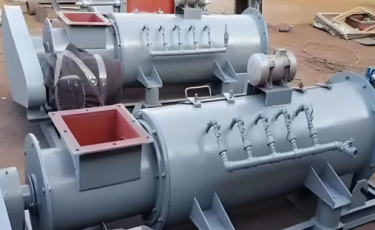
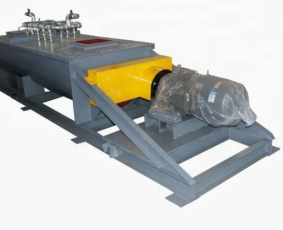
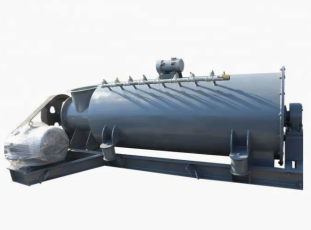
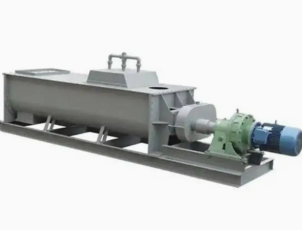
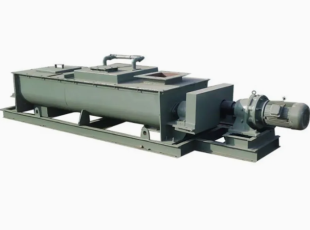
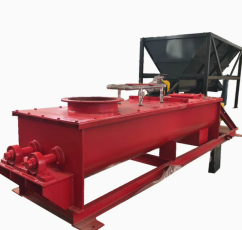
This fly ash dust humidifier adopts wear-resistant alloy steel as the main material, which can withstand long-term abrasion from high-hardness fly ash, improving the service life of the equipment. The single-shaft paddle stirring structure can evenly mix fly ash and water, avoiding the aggregation and blockage of fly ash. The equipment is equipped with a fully automatic DCS control system, which can adjust the water supply flow and processing capacity in real-time according to the fly ash output and humidity, realizing fully automatic operation. The discharge port is designed to be compatible with belt conveyors, which can directly connect to the ash conveying system of thermal power plants, reducing the intermediate transfer links and improving the treatment efficiency. It also has a sealed design to avoid dust leakage during the treatment process.
The main body is made of wear-resistant alloy steel with a thickness of 12mm, ensuring excellent wear resistance and service life. The overall dimensions are 4500*1500*2000mm, with a net weight of 5.2 tons, suitable for fixed-site installation in thermal power plants. The main motor power is 22kW, with a protection grade of IP55, suitable for the harsh environment of thermal power plants. The water supply system is equipped with 8 evenly distributed spray nozzles, which can achieve uniform water distribution and avoid local over-wetting of fly ash. The control system supports remote monitoring and data uploading, and can be integrated with the DCS system of the thermal power plant to realize fully automatic production management. The applicable fly ash particle size ranges from 0.01mm to 0.1mm, which is consistent with the fly ash particle size generated by conventional thermal power plants.
This fly ash special dust humidifier is mainly applicable to thermal power plants, waste incineration plants and other enterprises that generate fly ash from fuel combustion. It is suitable for humidifying and treating fly ash generated during coal combustion, which can effectively reduce dust overflow during ash discharge, transportation and storage links. By improving the humidity of fly ash, it can also prevent fly ash from floating in the air, reduce the risk of environmental pollution and occupational diseases, and meet the national environmental protection emission requirements for industrial waste gas and dust. It can be directly connected to the ash conveying system of thermal power plants, realizing integrated treatment of ash discharge and humidification, improving the treatment efficiency of the whole plant.








 Post RFQ


 Chat
Chat




 ALL CATEGORIES