

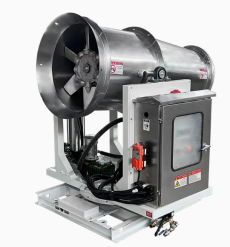
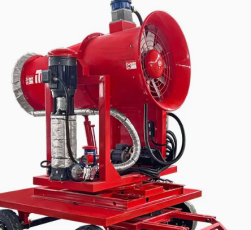
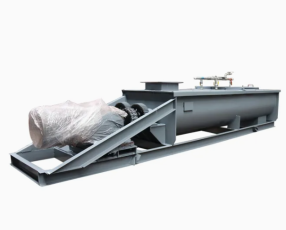
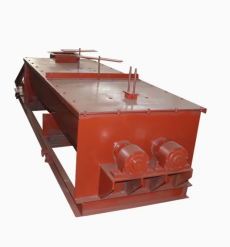
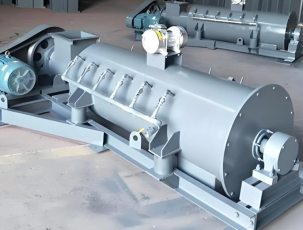
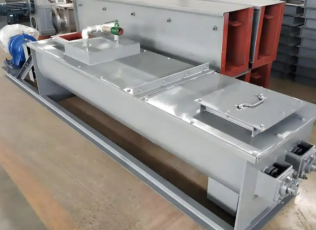
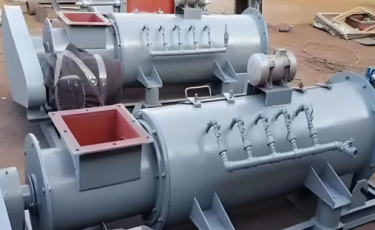
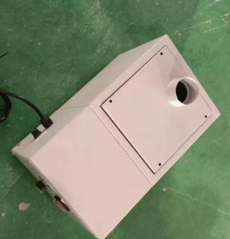
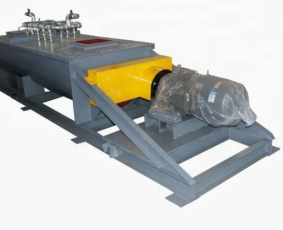
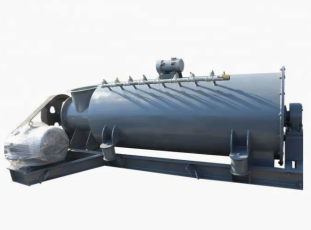
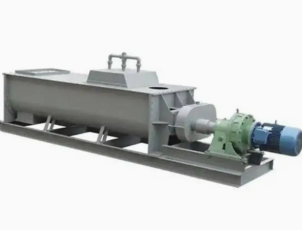
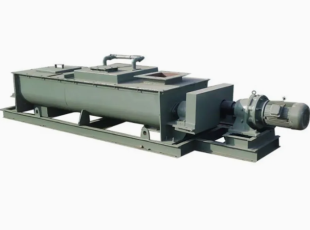
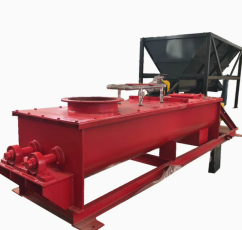
This mobile dust humidifier uses 304 food-grade stainless steel as the main material, which is corrosion-resistant and easy to clean, meeting the hygiene standards of food and pharmaceutical production. The single-shaft spiral pushing structure can evenly mix dust and water, avoiding local over-wetting of materials. The equipment is equipped with universal brake wheels, which can be moved freely and fixed stably, suitable for flexible production scenarios. The control mode supports manual adjustment and optional automatic control, which can meet the operation needs of different production teams. It also has a low-noise design, which will not affect the production environment of small workshops.
The main body is made of 304 stainless steel with a thickness of 3mm, ensuring hygiene and structural strength. The overall dimensions are 1800*800*1200mm, which is compact and suitable for small workshop spaces. The net weight is 0.8 tons, which can be easily pushed by one person. The motor power is 2.2kW, with a protection grade of IP44, suitable for indoor production environments. The water supply system is equipped with an adjustable flow nozzle, which can adjust the water dosage according to the actual dust humidity. The equipment is equipped with a detachable material inlet and outlet, which is convenient for cleaning and maintenance. The applicable dust particle size ranges from 0.05mm to 2mm, suitable for small-bulk food and pharmaceutical dust materials.
This mobile small-scale dust humidifier is mainly applicable to small and medium-sized food and pharmaceutical production enterprises, including flour processing plants, food packaging workshops, pharmaceutical preparation workshops and feed processing plants. It is suitable for humidifying and treating small-bulk dust materials such as flour, food additives, pharmaceutical powder and feed powder, which can effectively reduce dust overflow during feeding, mixing and packaging links. Its mobile design makes it suitable for flexible production scenarios, and the food-grade material meets the hygiene requirements of food and pharmaceutical production, avoiding secondary pollution of materials.








 Post RFQ


 Chat
Chat




 ALL CATEGORIES