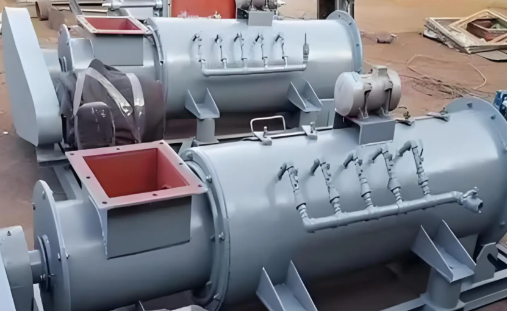
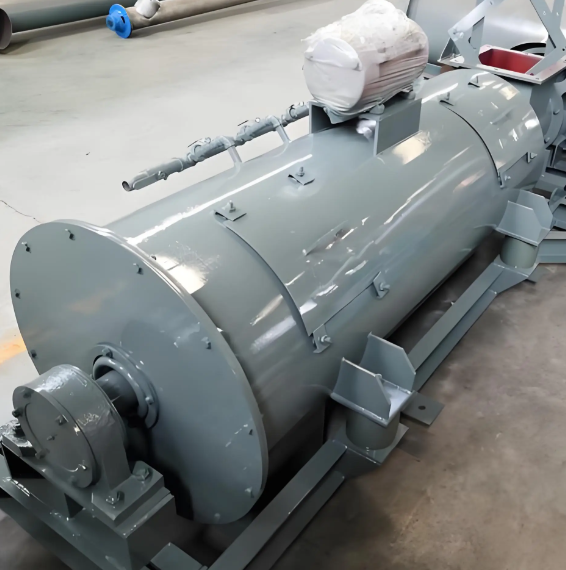


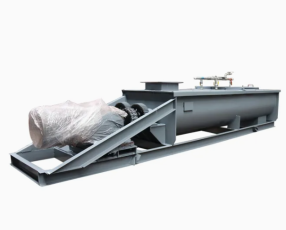
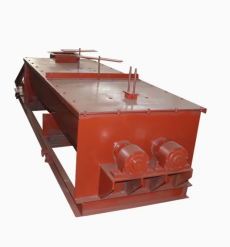
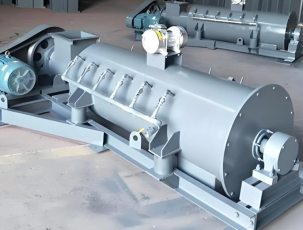
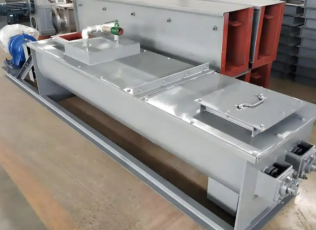
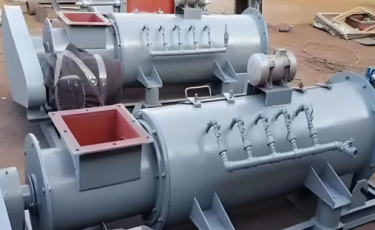
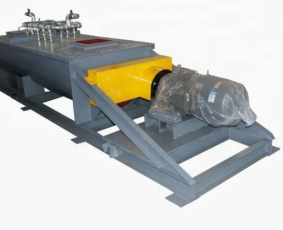
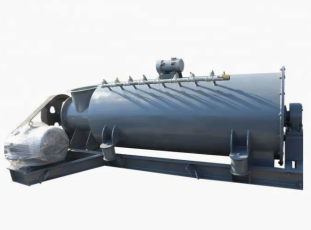
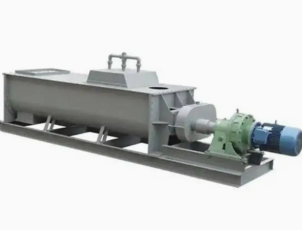
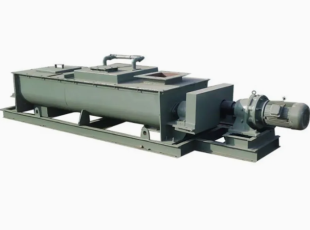
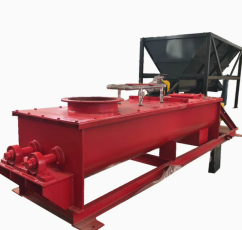
Its core advantage lies in the integrated screw conveying and humidification structure, which completes the whole process of dust feeding, humidification and discharging without additional conveying equipment, greatly simplifying the production line layout. It uses wear-resistant alloy stirring blades, which extends the service life by 3 times compared with ordinary carbon steel blades, adapting to long-term operation of high-hardness dust. It is equipped with an automatic water supply system that automatically adjusts the water addition volume based on the dust feeding volume, avoiding uneven humidification or water waste. The split design of the body facilitates the maintenance and replacement of internal components, reducing operation and maintenance costs. It solves the pain points of industrial dust raising pollution and transportation caking, meeting domestic industrial environmental protection emission requirements.
The processing capacity ranges from 3 to 5 tons per hour, with humidification method combining high-pressure spray and single-shaft screw conveying stirring. The body is made of Q235 carbon steel with 0.8mm thick epoxy anti-corrosion coating. The main motor power is 3kW, and the agitator rotation speed is 22r/min. The water supply pressure ranges from 0.3 to 0.5MPa. The overall dimensions are 3500mm in length, 1200mm in width and 1800mm in height, with a net weight of 850kg. The applicable dust particle size range is 50-500 mesh, with power supply of 380V 50Hz 3-phase and protection grade IP65. The discharge is controlled by a screw discharge port, and it is equipped with a standard automatic flow regulating valve and water shortage alarm device, with optional dust concentration monitoring sensor.
It is mainly suitable for dust treatment workshops of medium-sized cement plants, small coal-fired thermal power plants and metallurgical plants, used for humidifying and curing fly ash, cement dust, smelting furnace dust and other industrial by-product dust. It can be used in conjunction with a dust collection system, and the collected dust can be transported to storage or recycling links after humidification, effectively reducing dust raising risks and meeting industrial environmental protection emission requirements, and can also be used for humidification treatment of mine tailings dust.







 Post RFQ


 Chat
Chat




 ALL CATEGORIES