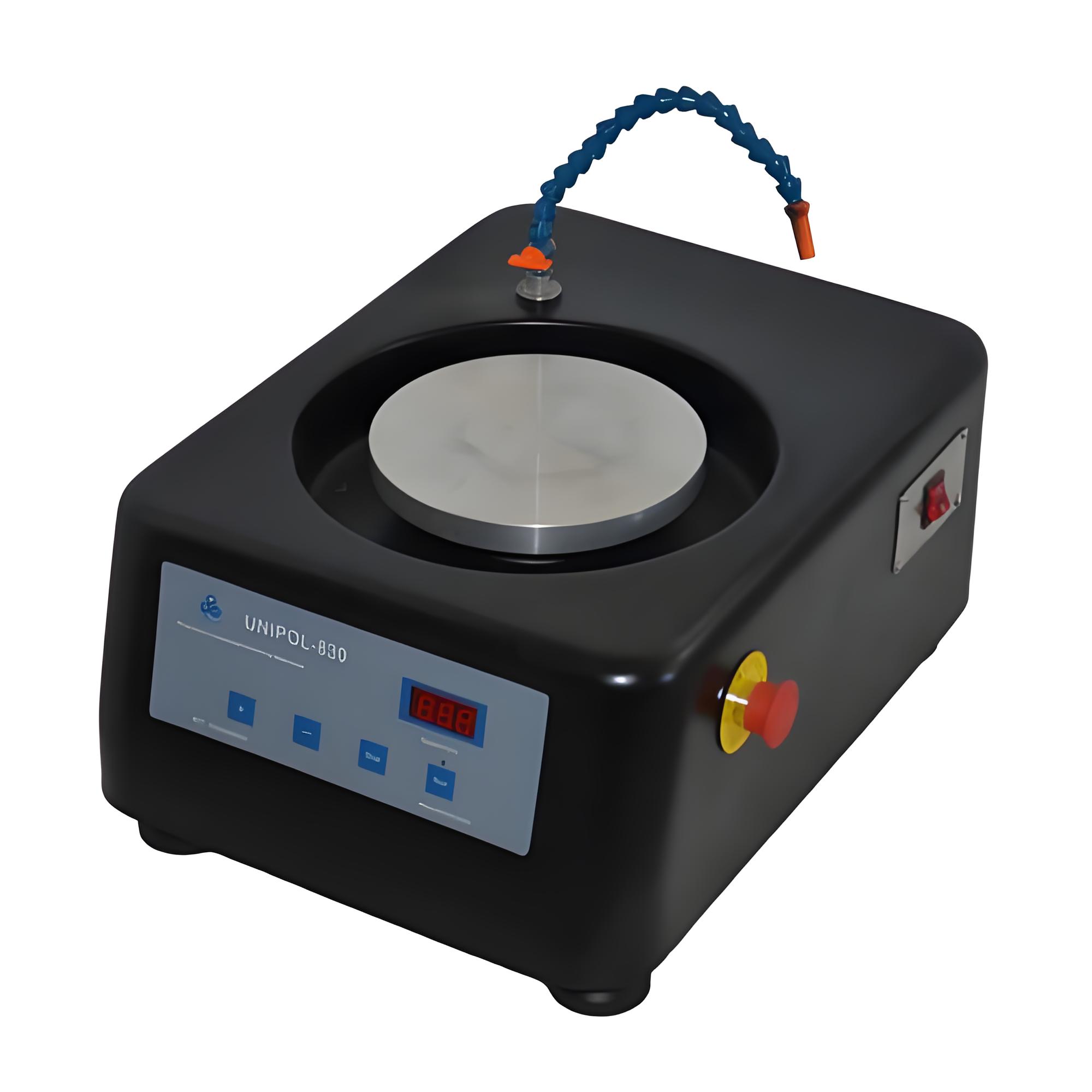
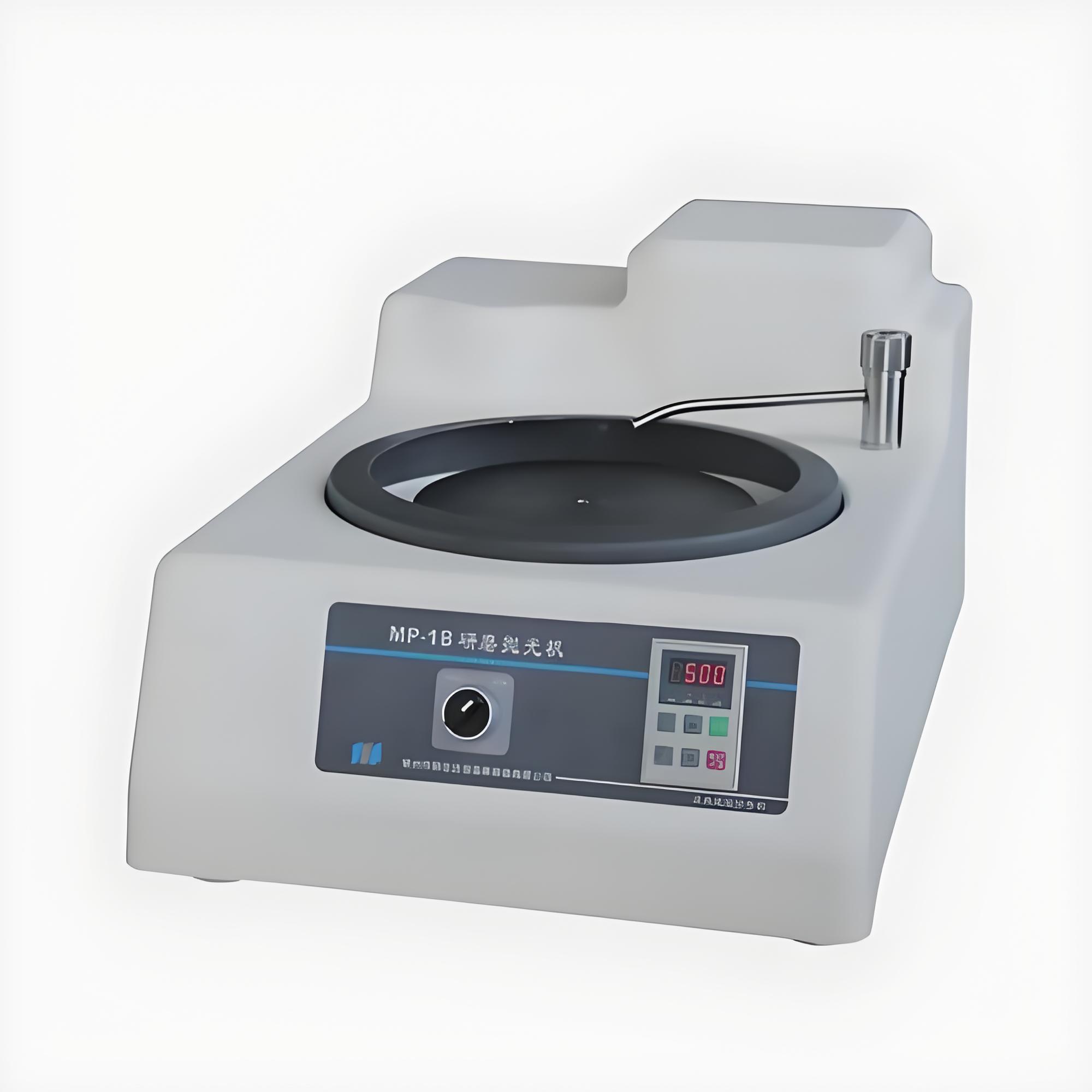


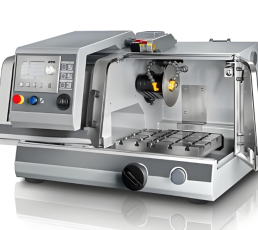
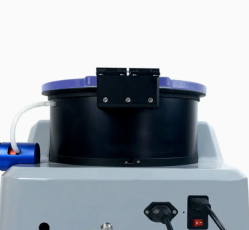
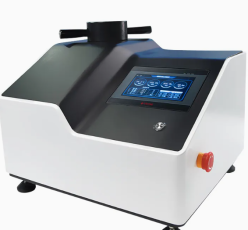
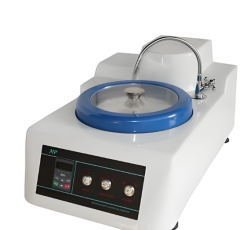

The core advantage of this single-disc automatic metallographic polishing machine lies in its fully automatic control system, which can preset polishing parameters such as speed, pressure and polishing time through the touch screen, realizing fully automatic operation without manual intervention, ensuring the consistency of batch samples. It adopts a high-precision frequency conversion motor, with a wide speed range of 50-2000rpm, which can meet the polishing needs of different materials such as hard alloy, ceramic and high-strength steel. The automatic constant pressure pressing device can adjust the pressure in real time according to the polishing state, avoiding the damage of the sample surface caused by excessive pressure. The built-in dust collector can effectively collect polishing dust, improving the laboratory operating environment, and the detachable polishing disc is easy to replace and clean, reducing maintenance costs.
The polishing disc diameter is 250mm, the rotational speed adjustment range is 50-2000rpm stepless adjustable, the rated power is 1.1kW, the power supply specification is 220V 50/60Hz single-phase AC power, the net weight of the whole machine is 42kg, the overall dimensions are 700mm (length) × 550mm (width) × 900mm (height), the cooling system flow rate is 8L/min, the applicable sample diameter range is φ25mm to φ80mm, the pressing force range is 0-50N adjustable, the operation interface is 7-inch touch screen, the programmable storage parameters can be up to 20 groups, the noise level is ≤62dB(A), and it is standard equipped with a built-in dust collector and anti-slip foot pads.
It is mainly applicable to the batch sample preparation work of quality inspection centers of material processing enterprises, scientific research institutes of universities, and metallurgical testing institutions. It can meet the mass production demand of metallographic samples in industrial quality inspection, such as incoming material inspection of steel plants, product quality inspection of hardware manufacturing, and failure analysis of mechanical parts. It can also be used for sample preparation of academic research projects, ensuring the consistency and accuracy of experimental samples.







 Post RFQ


 Chat
Chat


 ALL CATEGORIES