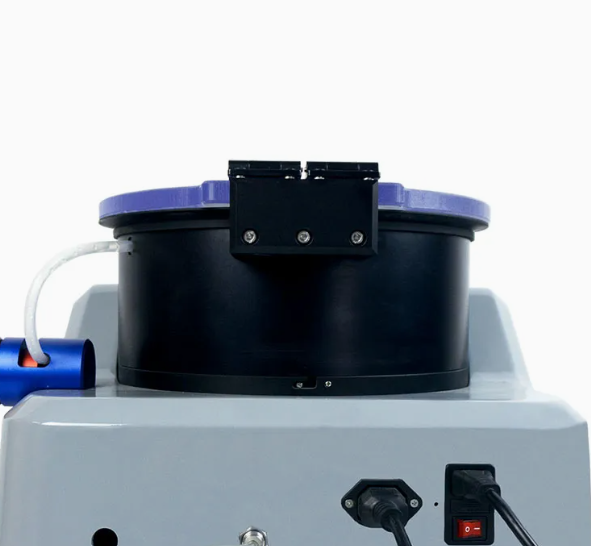
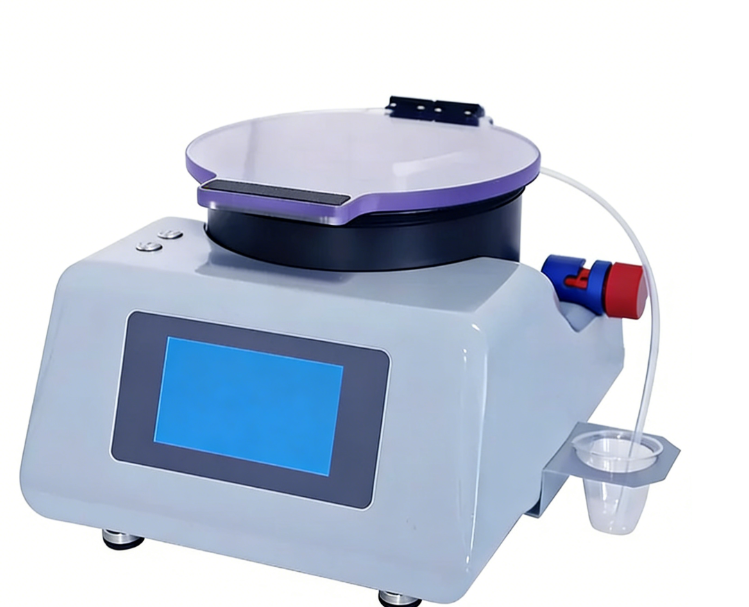





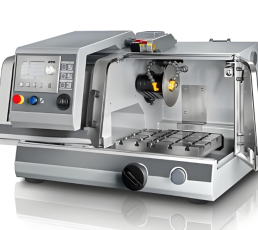
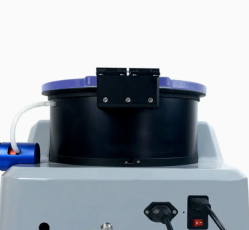
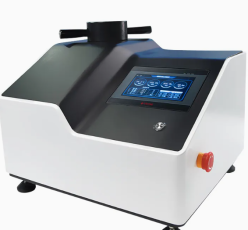
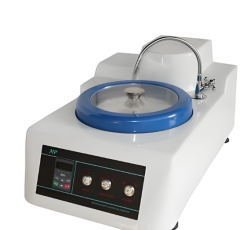

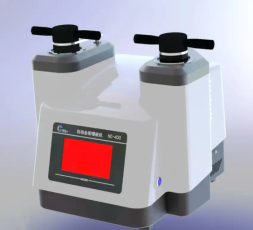
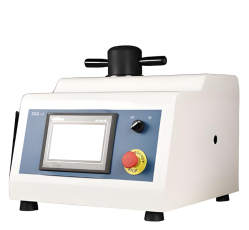
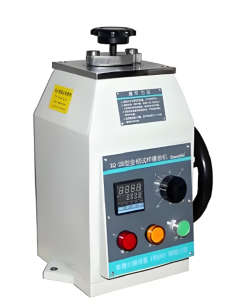
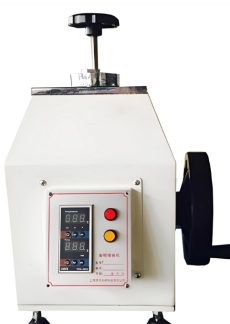
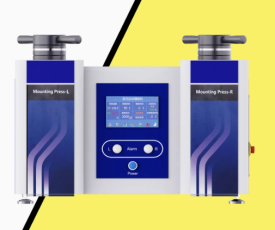
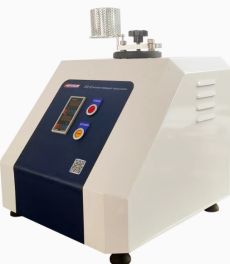
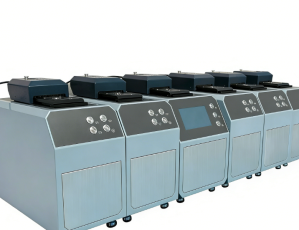
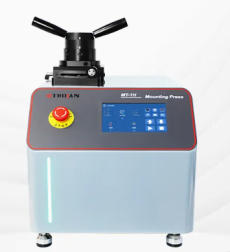
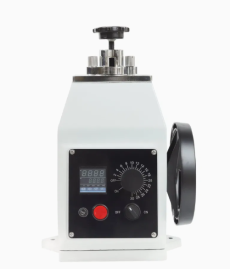
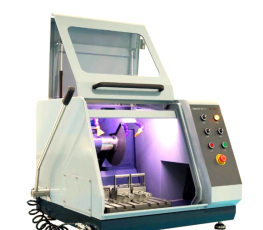
This high-end mounting press stands out for its vacuum hot press integration, which can achieve a vacuum degree of ≤10Pa during the mounting process, effectively removing air bubbles from the mounting resin and ensuring complete penetration into porous or loose materials such as powder metallurgy samples and fiber composites. The 10-inch touch screen PLC control system supports up to 200 custom mounting programs, allowing users to precisely control the vacuum-pressing-temperature-cooling cycle for different sample types. The 304 stainless steel sealed chamber provides excellent corrosion resistance and prevents contamination of the laboratory environment during the mounting process. The multi-level interlock system and vacuum leak detection function ensure safe operation even during long-term high-intensity use, making it suitable for professional material research and high-precision testing institutions.
The vacuum hot press metallographic mounting press has overall dimensions of 720mm in length, 550mm in width and 680mm in height, with a net weight of 78kg. It supports 380V 50/60Hz power supply, with an optional 110V configuration for international use, with a rated power of 2200W. The maximum pressing pressure ranges from 0 to 8000 psi, and the maximum heating temperature can reach 250°C, supporting the use of high-temperature and high-strength mounting materials. It can accommodate a maximum sample size of φ80mm × 50mm, and each batch can process up to 2 specimens simultaneously. The vacuum-assisted cooling system reduces the post-mounting cooling time to 5-6 minutes per cycle, and the system automatically records all parameters including vacuum degree, pressure, temperature and time for each mounting cycle, enabling full traceability of testing data.
This vacuum hot press metallographic mounting press is primarily suitable for professional material research institutes, aerospace component failure analysis laboratories, semiconductor material testing departments, and powder metallurgy manufacturing quality control centers. It is ideal for mounting porous ceramics, fiber reinforced composites, powder metallurgy samples, and loose electronic materials, providing high-quality specimens for subsequent microscopic observation, X-ray testing, and mechanical property analysis. It is also a core equipment for high-precision material research projects, supporting the preparation of specimens for academic papers and industrial quality control standards.







 Post RFQ


 Chat
Chat


 ALL CATEGORIES