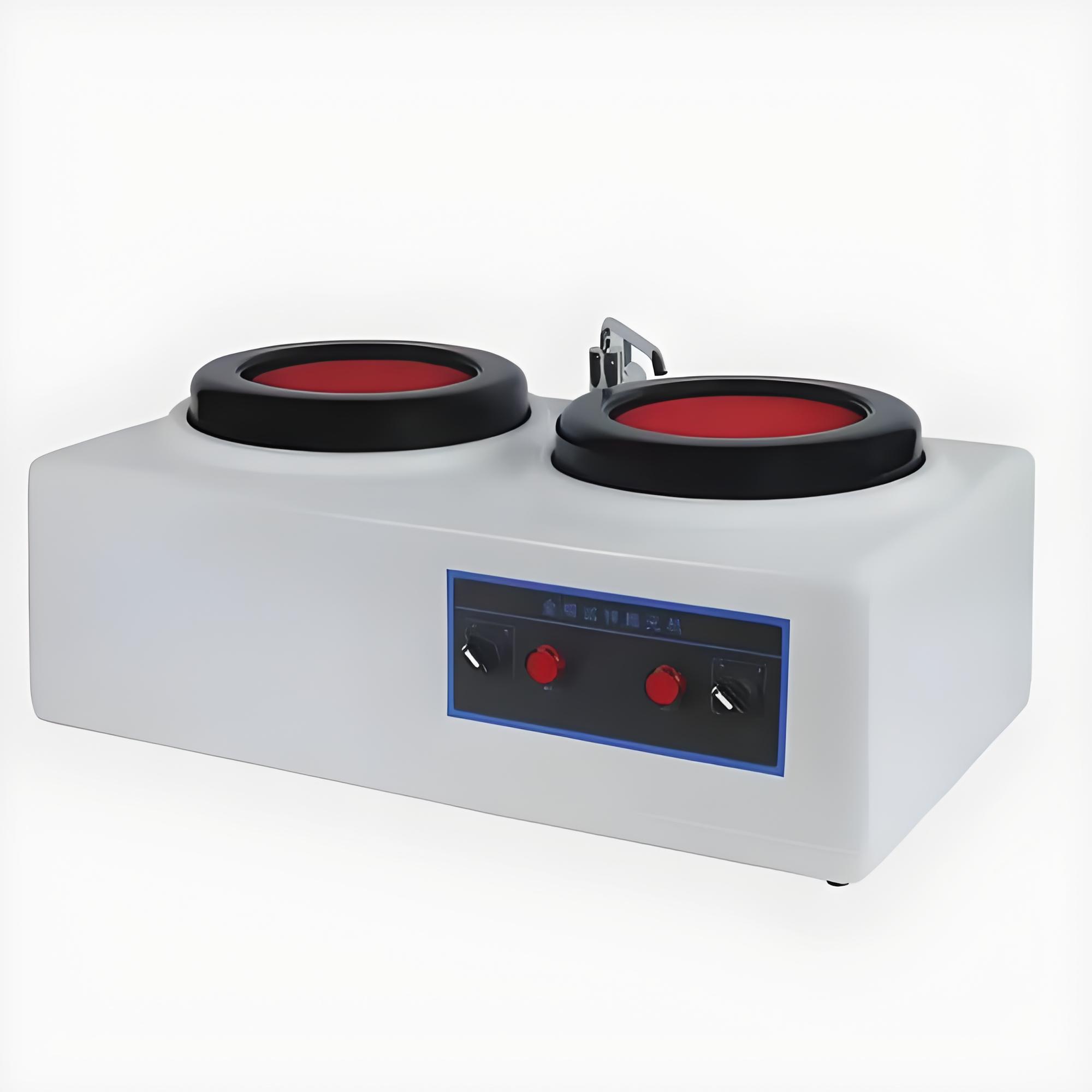


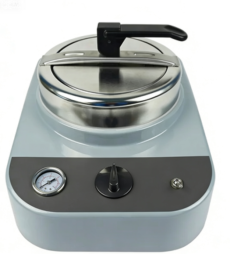
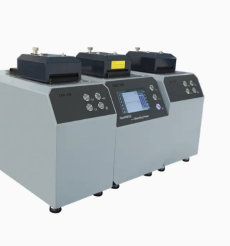
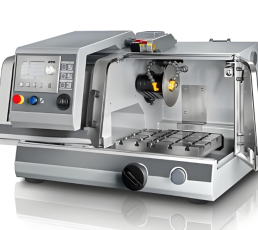
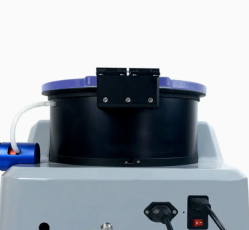
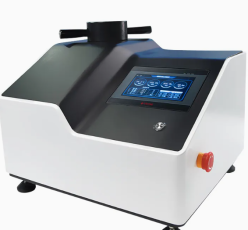
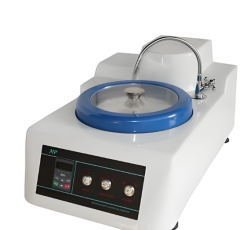

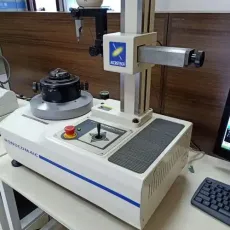
This manual metallographic polishing grinder adopts a modular design, with its core highlight being the adjustable constant pressure pressing device that allows operators to precisely control the polishing pressure, ensuring the uniformity of the sample surface and avoiding grinding marks and deformation caused by uneven pressure. The equipment is equipped with replaceable cast iron polishing base and flannel polishing discs, which have strong wear resistance and are easy to replace, reducing long-term use costs. It is equipped with a stepless speed regulation motor, with a speed range covering 100-1500rpm, which can be flexibly adjusted according to the sample material and process requirements. Matched with the built-in tap water cooling system, it can effectively remove the heat generated during the polishing process, prevent the sample from overheating and annealing, and ensure the integrity of the metallographic structure. The equipment is also equipped with a detachable dust cover to reduce the diffusion of polishing dust and improve the laboratory operating environment, and is equipped with anti-slip and shock-absorbing foot pads to reduce vibration and noise during operation.
The polishing disc diameter is 200mm, the rotational speed adjustment range is stepless adjustable from 100-1500rpm, the rated power is 0.75kW, the power supply specification is 220V 50/60Hz single-phase AC power, the net weight of the whole machine is 35kg, the overall dimensions are 600mm (length) × 450mm (width) × 800mm (height), the maximum flow rate of the cooling system is 5L/min, the applicable sample diameter range is φ25mm to φ50mm, the polishing disc adopts HT200 cast iron base and ultra-fine flannel盘面, the operation control adopts manual knob speed regulation and pressure adjustment, it is standard equipped with a dust cover and anti-slip foot pads, and the noise level is ≤65dB(A).
It is mainly applicable to the metallographic experiment teaching links of material science and engineering majors in colleges and universities, helping students master the basic operations of metallographic sample preparation; it can also be used in the incoming material inspection and failure analysis scenarios of small metal manufacturing enterprises, quickly preparing failure samples to check product defects; it is also suitable for small-scale R&D projects of scientific research institutes, completing metallographic preparation of small batches of samples, and can also be used for surface polishing of jewelry, hardware accessories, meeting the surface finish requirements of small precision workpieces.








 Post RFQ


 Chat
Chat


 ALL CATEGORIES