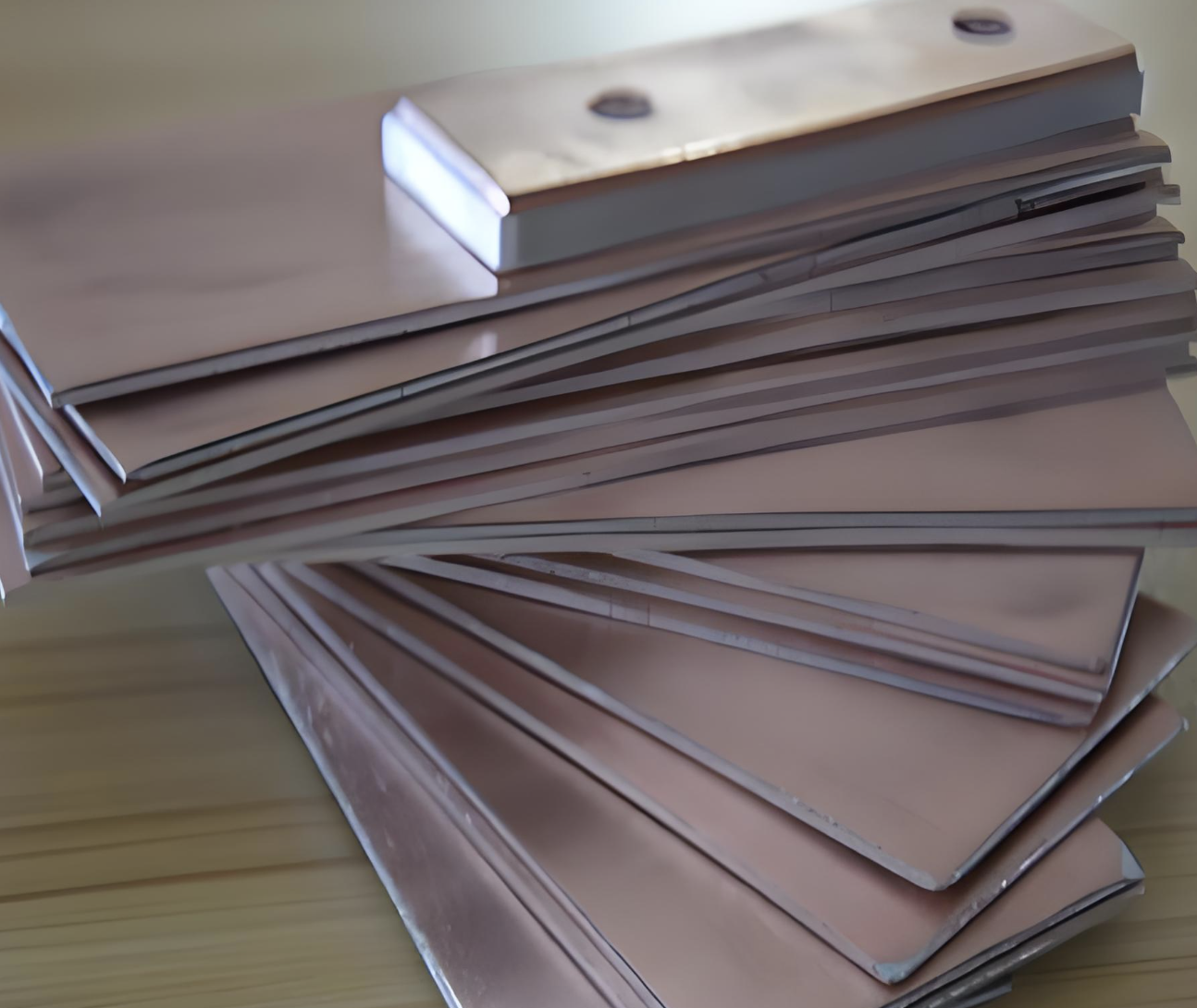
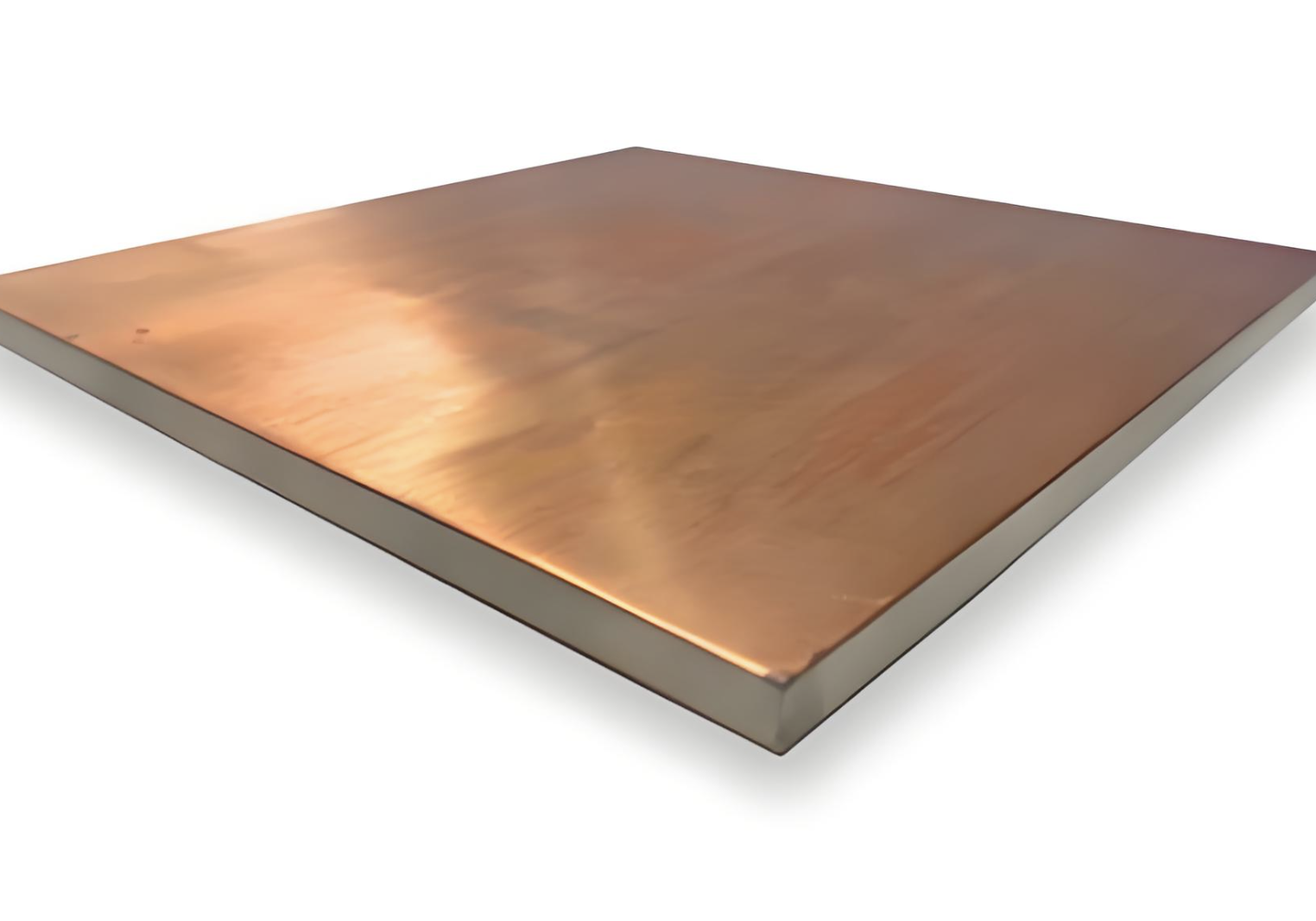





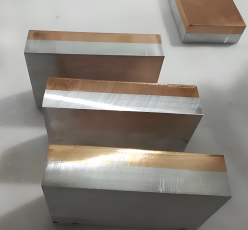
The core advantages of this flexible copper-aluminum composite thin plate lie in its excellent flexibility and electrical conductivity. The thickness ranges from 0.05mm to 0.5mm, and can be bent to a radius of less than 5mm without cracking, which meets the bending requirements of flexible wearable devices and flexible circuit boards. The electrical conductivity reaches more than 98% IACS, which is close to pure copper foil, greatly improving the transmission efficiency of electrical signals. Compared with pure copper foil, it reduces the material cost by more than 30% while maintaining the same electrical conductivity, which has good economic benefits. It has passed RoHS environmental protection certification, and does not contain harmful substances such as lead and cadmium, meeting the environmental protection requirements of electronic products. The surface can be treated with clean rolling or tin plating, which improves the welding performance and corrosion resistance of the material.
This product has a customizable width ranging from 10mm to 1000mm, and the length can reach up to 100m per roll. The total thickness ranges from 0.05mm to 0.5mm, of which the aluminum foil 1060 base layer is 0.03mm-0.3mm and the copper foil C11000 cladding layer is 0.02mm-0.2mm. The tensile strength is not less than 150MPa, the elongation rate is not less than 10%, and the electrical conductivity is ≥98% IACS. The weight per square meter is between 0.13kg and 0.8kg, which is very light and will not increase the overall weight of flexible electronic products. The surface roughness is ≤0.2μm, which can ensure good bonding performance with other electronic components. It also has good weldability, and can be welded with various electronic components by laser welding or resistance welding.
This flexible copper-aluminum composite thin plate is mainly suitable for flexible electronic and new energy scenarios, including flexible wearable devices, such as smart watches, smart bracelets, flexible electronic skins; flexible circuit boards, such as foldable mobile phone circuit boards, flexible display screen connection lines; new energy battery components, such as battery pole pieces, battery connection lines; and flexible sensors, such as pressure sensors, temperature sensors. It can also be used for electromagnetic shielding materials of electronic equipment, which can effectively block electromagnetic interference and improve the stability of electronic equipment. It is widely used in consumer electronics, new energy vehicles, medical electronics and other fields.









 Post RFQ


 Chat
Chat


 ALL CATEGORIES