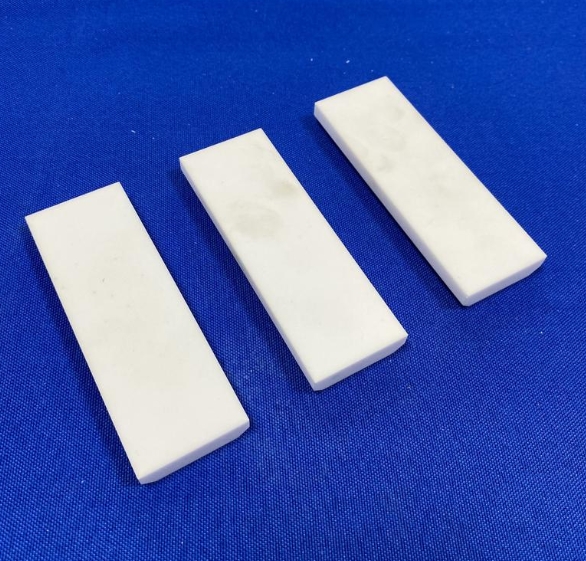
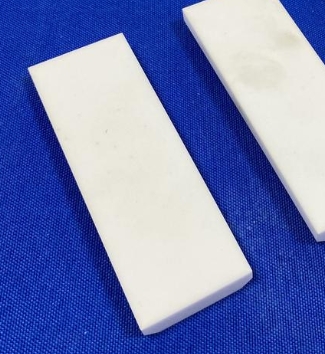


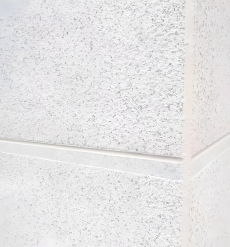
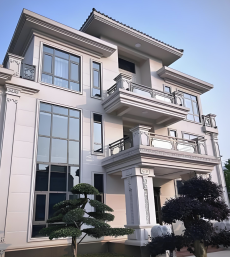

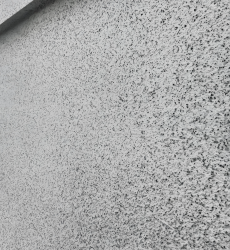

Using high-purity alumina ceramic particles as the wear-resistant main body and matching high-temperature resistant binder, a dense ceramic structure is formed after high-temperature sintering, with a hardness of HV1500 and a very low wear rate. It can withstand a long-term high temperature of 1200℃ without coating softening or peeling, and has excellent oxidation resistance, which can be used for a long time in high-temperature aerobic environments. It adopts plasma spraying or flame spraying construction, and the coating forms a metallurgical bond with the substrate, with extremely strong adhesion, avoiding coating peeling under high-temperature conditions. It has excellent acid and alkali corrosion resistance, suitable for scenarios exposed to sulfur-containing flue gas and industrial waste liquid. It is environmentally friendly with no solvent release after sintering and curing.
The coating thickness ranges from 100μm to 300μm according to the wear degree. It is compatible with refractory brick, carbon steel, alloy steel, cast iron and high-temperature alloy substrates. The hardness is HV 1200-1500 with a Mohs hardness of 9.0. The adhesion meets ASTM C633 Grade 1. The temperature resistance range is -20℃ to 1200℃, and it can withstand a short-term high temperature of 1500℃. The wear rate is ≤0.02g/1000 cycles (ASTM G65 standard). There is no rust or peeling after 100 hours of oxidation test at 1000℃. The acid and alkali resistance complies with HG/T 3792 standard. The coating area per kilogram is about 5-8 square meters (100μm thickness). It supports plasma spraying and flame spraying. The curing process includes 2 hours of curing at 180℃ and 1 hour of sintering at 800℃.
It is suitable for high-temperature friction components such as the rollers of metallurgical kilns, the discharge port of blast furnaces, the heating surface of power plant boilers, the lining of cement rotary kilns, and the grate plates of sintering machines in steel mills. It can be widely used in metallurgy, electric power, building materials and other industries, solving the wear and oxidation problems of high-temperature equipment components, greatly reducing the maintenance cost and downtime of high-temperature equipment.








 Post RFQ


 Chat
Chat


 ALL CATEGORIES