





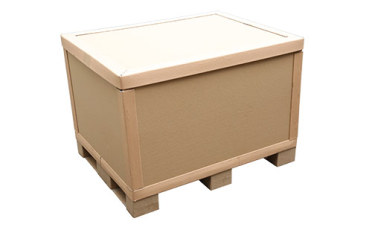
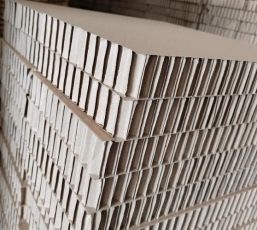
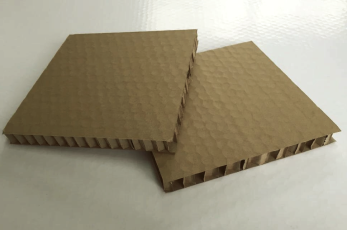
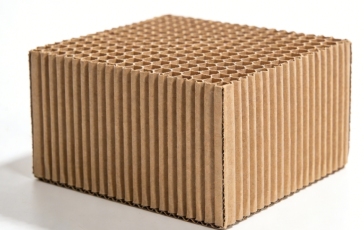


Its core advantage lies in fully biodegradable composting. It can be completely degraded into carbon dioxide and water within 180 days in an industrial composting environment, without microplastic residues. It has food contact safety certification and can directly contact hot food and fresh food. The surface is treated with water-based coating, which has oil and water resistance, and can be used for takeout packaging of hot meals and soup-containing food. The compressive strength can reach 1100kPa, which can stably load fresh fruits and vegetables and baked snacks, avoiding packaging deformation and leakage. The lightweight design reduces transportation costs, and it can be customized into various shapes such as lunch boxes, trays and liners, adapting to the environmental protection packaging needs of the catering industry.
The base material is BPI-certified compostable kraft paper. The standard single sheet size is 1000mm×2000mm, with optional thicknesses of 8mm, 10mm and 15mm. The compressive strength ranges from 1000-1300kPa, and the oil resistance grade reaches level 3, which can resist mild oil penetration. The temperature adaptation range is -20℃ to 80℃, which can be used for refrigerated fresh food and hot meal packaging. It complies with FDA and EU OK Compost composting certification. 8 boards are loaded per pallet, with a total weight of about 140kg per pallet, and supports die-cutting customization into various food packaging containers.
It is suitable for takeout lunch box production, cushioning packaging of fresh fruits and vegetables, inner trays of baked food, and raw materials of fast food packaging boxes. It can also be used as packaging pads in the supermarket fresh food area, adapting to the environmental protection packaging upgrade needs of catering brands. It can be completely processed in industrial composting systems, replacing traditional disposable plastic packaging and helping the catering industry achieve carbon neutrality goals.










 Post RFQ


 Chat
Chat


 ALL CATEGORIES