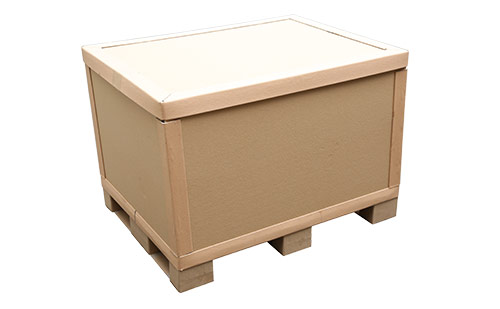
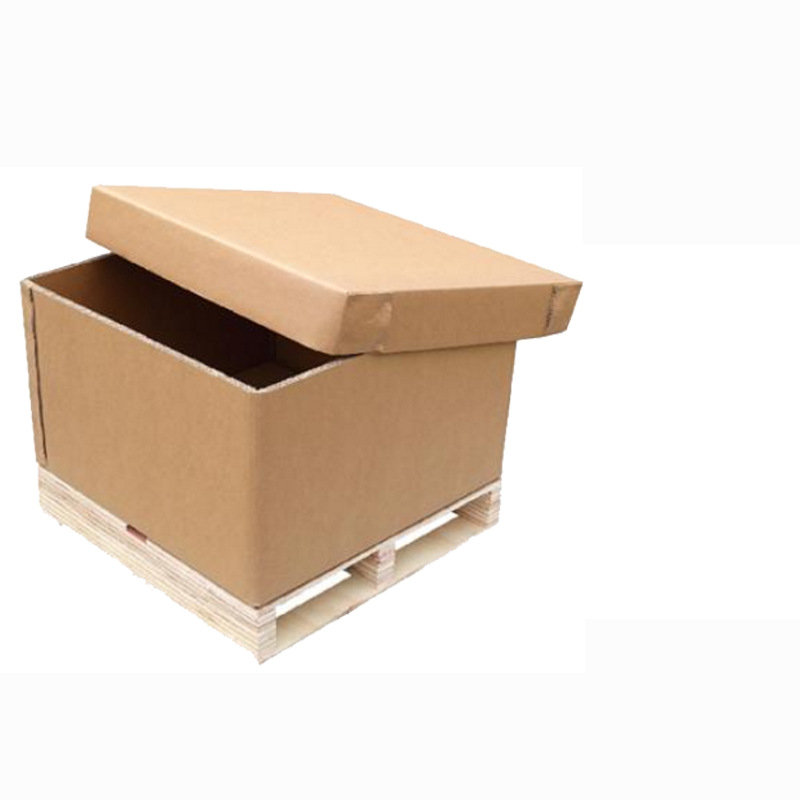





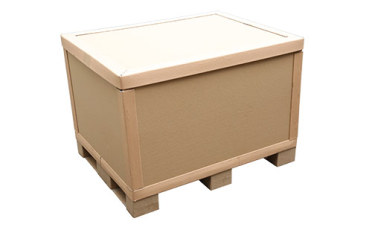
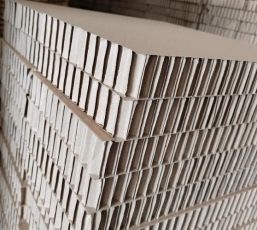

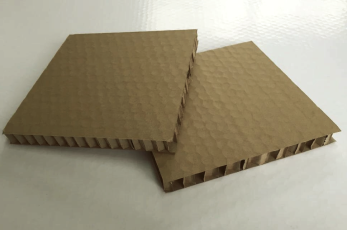
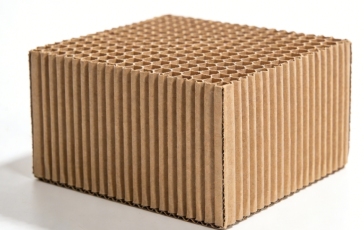

The core advantage of this product lies in its three-layer composite honeycomb structure, which provides exceptional structural stability and load-bearing capacity. Unlike ordinary corrugated cardboard, it resists deformation and compression even under heavy loads, solving the pain points of traditional paper packaging such as insufficient load capacity and easy deformation. It is 100% recyclable and complies with EU CE environmental protection certification standards, allowing it to be used for international export packaging without additional quarantine treatment. It can be cut and customized to any size to fit different packaging container specifications, and has excellent processing performance, enabling easy die-cutting, binding and other processing operations to reduce manual costs for packaging production.
The standard specification is 1220mm (width) x 2440mm (length), with optional thicknesses of 20mm, 30mm and 40mm. The weight per sheet ranges from 2.2kg to 3.5kg, with an edge crush strength of 850N/m and compressive strength of 1200kPa. The surface layer uses 300g bleached kraft paper, and the core layer uses 120g recycled linerboard, with a moisture content controlled between 8% and 12%, complying with the GB/T 31303-2014 national standard. The flatness error of each cardboard sheet is ≤0.5mm, with no degumming, core breaking or other quality problems. It is suitable for a variety of processing technologies such as flat pressing, die-cutting and bonding, and can be adapted to different packaging production lines.
It is mainly applicable to the packaging of heavy industrial products, such as hardware tools, engineering machinery parts, large furniture and other goods. It can also be used as a liner plate for logistics pallets, replacing traditional pine pallets and reducing packaging costs by more than 30%. It is suitable for long-distance transportation scenarios such as domestic land transport and sea transport, and can effectively buffer the collision and vibration of goods during transportation to avoid damage to the goods. It meets the requirements of international environmental protection packaging and meets the import quarantine standards of the European and American markets, making it suitable for export packaging of industrial goods.










 Post RFQ


 Chat
Chat


 ALL CATEGORIES