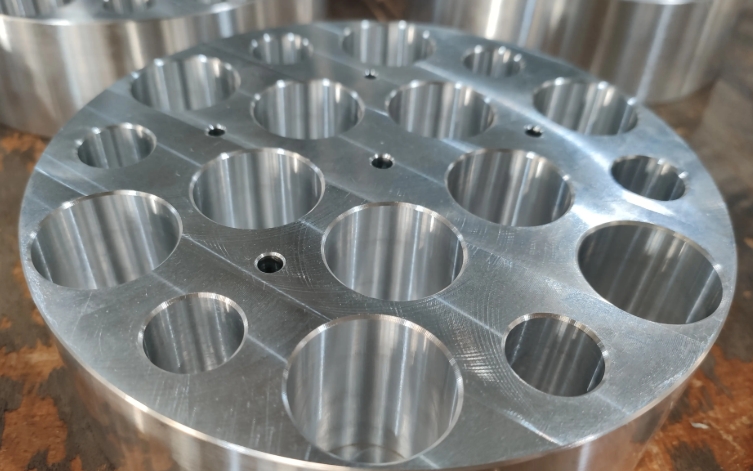
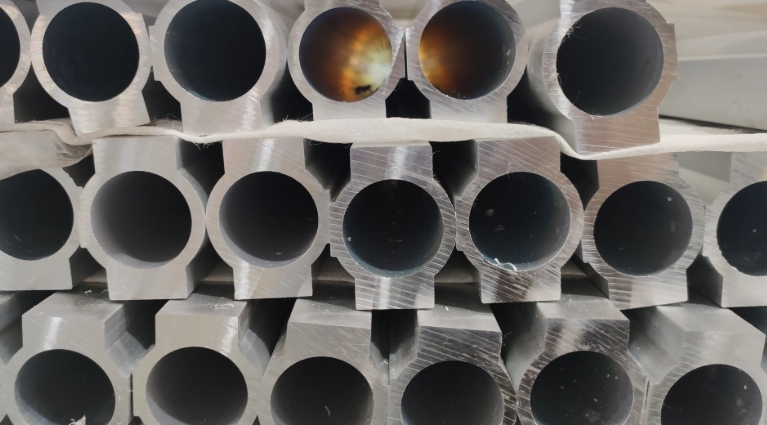


The core advantages of this mold lie in three aspects: first, the use of H13 hot work mold steel with high hardenability and thermal fatigue resistance, combined with gas nitriding surface treatment to improve the surface hardness to HV1000 or above, effectively improving the wear resistance and anti-sticking performance of the mold cavity, reducing the generation of surface scratches on aluminum profiles. Second, the built-in circulating water cooling system can quickly reduce the temperature of the mold cavity, shortening the single molding cycle by 15% compared with traditional molds, and improving production efficiency. Third, the optimized demolding angle design and precise cavity machining ensure that the aluminum profile has no deformation and burrs after molding, meeting the high-quality requirements of building aluminum products. In addition, it is compatible with 800-1600ton aluminum extrusion production lines, adapting to the production of various specifications of aluminum profiles.
The overall dimensions of the mold frame are 1200mm in length, 800mm in width and 350mm in height, with a total weight of 850kg. The maximum processing width of the profile is 350mm, and the adjustable wall thickness range is 1.2-6mm. It supports single-cavity and multi-cavity mold design, and can be customized according to the specific profile cross-sectional shape required by customers. The mold is equipped with a standardized quick-change mold interface, which can reduce the mold replacement time of the production line by 20%, and the dimensional accuracy of the processed aluminum profile can be strictly controlled within ±0.02mm, meeting the national standard for building aluminum profiles.
This extrusion die is mainly applicable to the production of building aluminum profiles, including doors, windows, curtain wall frames, balcony railings and other construction aluminum components. It is suitable for large-scale aluminum profile processing enterprises, building material manufacturers and metal structure processing plants, and can meet the mass production needs of high-quality building aluminum products. In addition, it can also be used for the production of aluminum components for rail transit passenger cars, with good promotion and application value in the rail transit manufacturing industry.








 Post RFQ


 Chat
Chat




 ALL CATEGORIES