Basic Info
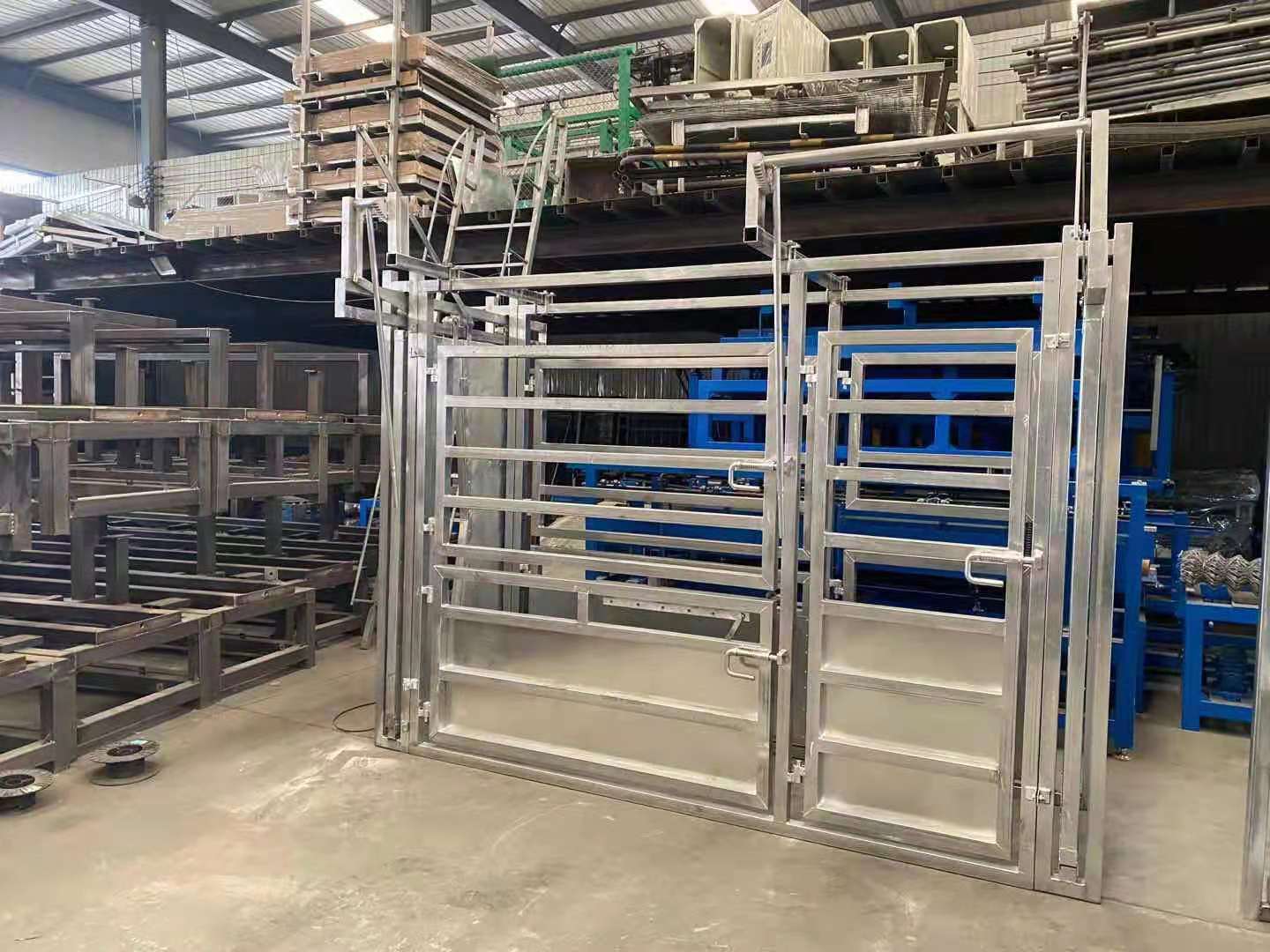
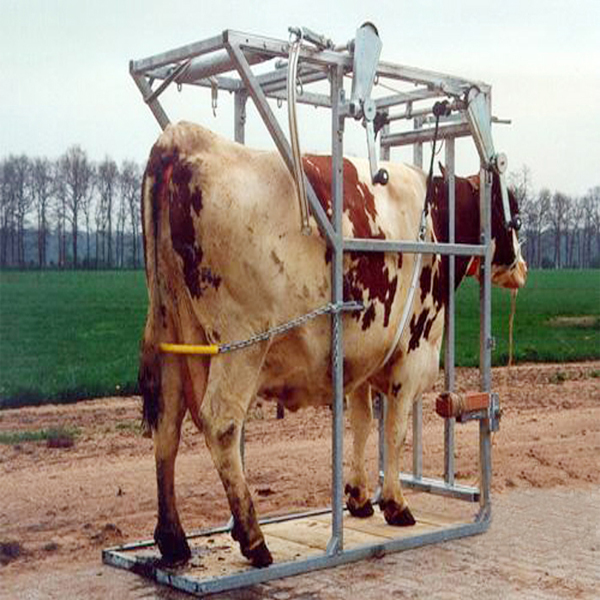
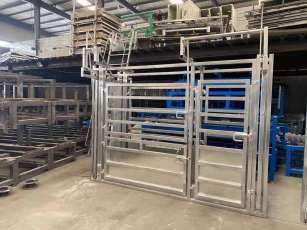
A movable metal framework used to safely and humanely restrain large animals like cattle and horses for veterinary procedures such as vaccination,treatment,hoof trimming,and ultrasound,protecting both personnel and animals.
Product Description
Product Features:
Modern chute design prioritizes safety,efficiency,and low stress.Robust steel construction withstands vigorous animal struggle.Ergonomic design uses adjustable side panels,breast bars,and rump bars to restrain the animal comfortably and securely,minimizing panic and injury.Hydraulic(or mechanical lever)systems allow smooth,effortless control of panel opening/closing and lifting,enabling single-person operation.Key safety features include:mechanical locks that hold panels in any position,even without power;emergency release levers for instant opening;and designs that prevent undue abdominal pressure.Effective restraint significantly improves the speed and quality of various procedures.
Product Specifications:
A standard cattle chute has an internal width of 70-80 cm,length of≈2.2m,and height of≈1.6m.The main frame is welded from high-strength rectangular tubing with a corrosion-resistant finish(e.g.,powder coating).The hydraulic system typically includes a manual or electric pump,control valves,cylinders,and hoses,operating the side panels and optional floor plates(for hoof trimming).The frame is mounted on heavy-duty casters with retractable stabilizer legs for mobility and secure positioning.It often has accessory mounts for IV stands or tool trays.
Product Applications:
An essential facility for veterinary work and routine management on dairy,beef,and equine operations.When an animal requires procedures like IV injection,drenching,pregnancy checks,hoof trimming,dehorning,tagging,or blood sampling,it is guided into the open chute,and the panels are closed smoothly to secure it.Secure restraint ensures procedural accuracy(e.g.,successful venipuncture),reduces the risk of injury from animal movement,and allows for more thorough work.A well-designed chute greatly improves workflow and animal welfare on the farm.
Frequently Asked Questions (FAQ)
Q:What are the safety points for using a portable veterinary animal restraint stand?
A:Choose aviation-grade aluminum for light weight and ensure reliable joint locking mechanisms. It must fit the animal's size, and the forelimbs should be fixed above heart level to avoid circulatory issues.
Q:How to ensure safety for both handler and animal during restraint?
A:The frame structure must be stable with reliable locking mechanisms. Adjust restraint straps based on animal size (girth, weight) to limit movement without excessive pressure, and provide constant supervision.
Q:How is portability achieved?
A:Uses lightweight aluminum alloy or high-strength steel tubing, quick-folding design, total weight 15-30 kg. Compact design fits in a vehicle trunk, suitable for farm calls and field use.
Q:What are the considerations for main materials?
A:Frame: High-strength aluminum alloy/steel, lightweight and strong. Restraint straps: Wide nylon or canvas, wear-resistant and easy to clean. Connectors: Stainless steel, rust-proof. Contact surfaces should be smooth and burr-free.
Q:Which animals and scenarios is it suitable for?
A:Primarily for medium to large animals: cattle, sheep, horses, deer, etc. Suitable for veterinary procedures requiring brief restraint like vaccination, blood sampling, minor wound treatment, hoof trimming, and ultrasound exams.
Q:How to clean and disinfect after use?
A:Rinse off dirt and manure with water, then wipe all surfaces, especially straps, with a low-concentration disinfectant (e.g., quaternary ammonium). Allow to dry completely before folding for storage to prevent mold.











 Post RFQ


 Chat
Chat


 ALL CATEGORIES