Basic Info
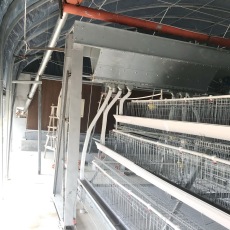
An integrated system for housing egg-laying hens in vertically stacked tiers of cages,incorporating automated feeding,watering,egg collection,manure belt cleaning,and environmental control for high-density,high-efficiency egg production.
Product Description
Product Features:
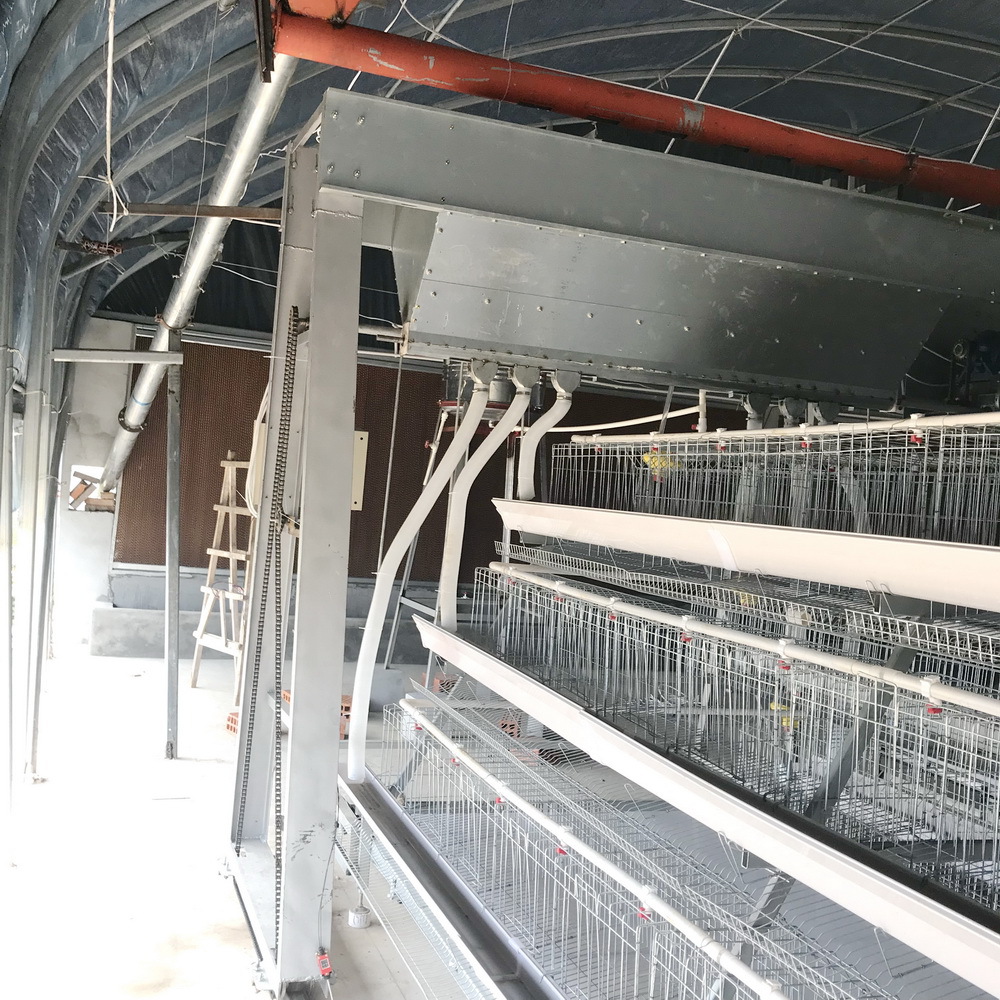
This system is a comprehensive solution for industrial egg production,aiming to maximize land/building use while reducing labor through automation and improving consistency.A central or individual chain feeder delivers feed to each tier.Nipple drinker lines provide water.Laid eggs roll onto an inclined collection belt,gently transported to a central egg handling area for counting,grading,or packing.Multi-tier manure belt systems remove waste from each level separately,maintaining dry,hygienic conditions.The system integrates with environmental controllers to operate fans,cooling pads,and heaters.Durable hot-dip galvanized materials ensure long service life.
Product Specifications:
A typical 6-tier system can be over 100 meters long per row,with a total cage height around 2 meters.Cage floor area per bird is designed to meet animal welfare regulations(e.g.,for enriched colonies).Feed chain speed is adjustable for even distribution.Slow-moving egg belts(1-2 m/min)minimize breakage.Manure belts typically run 1-2 times daily,moving waste to cross-conveyors or pits.The entire system's electrical,control,and mechanical drives require professional design and installation.Cage structures must be extremely robust to withstand seismic activity,fan vibration,etc.
Product Applications:
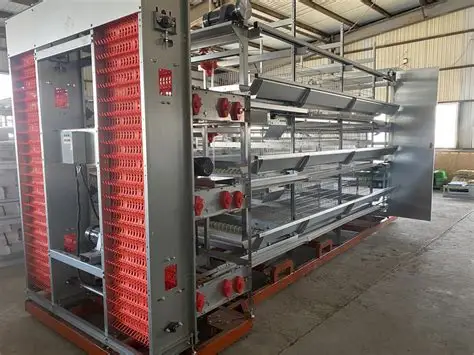
The dominant system for global commercial egg production,used in large-scale specialized layer farms.Day-old chicks are reared in pullet houses until transfer to the laying house system.The birds'basic needs are largely managed by automation.Stockpersons focus on monitoring equipment,observing flock health,handling exceptions(e.g.,trapped birds,repairs),and performing necessary vaccinations.This system enables highly standardized production,with eggs moving via central collection directly to packing facilities with great efficiency.While facing animal welfare debates and a shift towards cage-free systems,it remains a primary system for ensuring a stable egg supply.
Frequently Asked Questions (FAQ)
Q:What are the advantages of an automated layer cage battery system?
A:It enables automated feeding, egg collection, manure cleaning, and environmental control, increasing stocking density by over 30%. Key points are the egg breakage rate (should be <0.5%) and the hot-dip galvanizing anti-corrosion process of the cages.
Q:What safety precautions are needed during operation?
A:Never approach the spinner area while the machine is running. Lock the lift arms and lower the center of gravity during transport. Exercise extreme caution on slopes to prevent rollover. Wear necessary protective gear.
Q:What aspects are automated?
A:Core processes: automatic feeding (chain or trolley), automatic watering, automatic egg collection (central egg belt), automatic manure removal (multi-tier scrapers or belts), and automated environmental control.
Q:What is the stocking density for multi-tier cage systems?
A:Modern multi-tier cages meeting welfare standards typically provide ≥750 cm² per layer. Specific density depends on cage design and local regulations, and is higher than conventional cage systems.
Q:How does the egg collection system reduce breakage?
A:Uses flexible egg belts, cushioned corners, and a slow, steady central collection line. High-quality systems can keep daily breakage below 0.5%. Eggs are quickly moved to a cooling room after collection.
Q:What are the special requirements for cage material?
A:The cage mesh and frames are typically made of hot-dip galvanized steel wire for durability and corrosion resistance. The floor slope is carefully designed (approximately 7-8°) for smooth egg rolling and comfort for the birds.










 Post RFQ


 Chat
Chat


 ALL CATEGORIES