Basic Info
A large axial fan used to create high-velocity longitudinal airflow(tunnel ventilation)in enclosed livestock buildings(especially poultry and swine houses)to provide cooling through wind-chill effects during hot weather.
Product Description
Product Features:
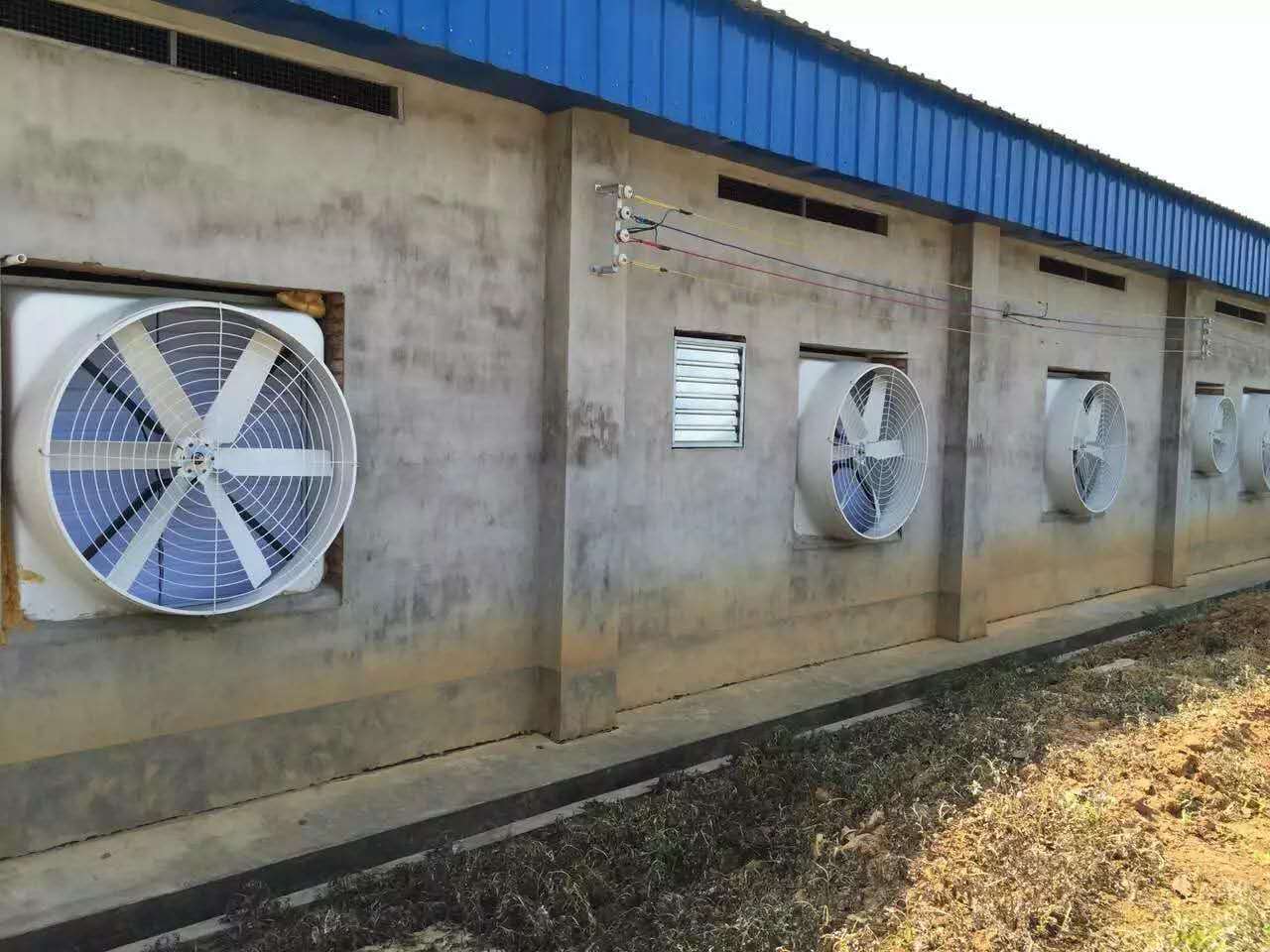
The core of a tunnel fan is its high energy efficiency ratio(airflow per watt).Its aerodynamically optimized aluminum or composite blades are lightweight with low inertia for quick starts and smooth operation.Efficient airfoil shapes maximize airflow while minimizing noise.The robust galvanized steel housing offers corrosion resistance in harsh,ammonia-rich,and dusty environments.High-quality,waterproof motors and permanently lubricated bearings ensure reliable,continuous operation in hot,humid conditions.Some models feature automatic shutters to prevent backdraft when off.
Product Specifications:
A standard 54-inch(≈1.37m)fan typically delivers over 36,000 CFM at 0.05"static pressure with a≈1.5 kW motor.Blade pitch is often adjustable for fine-tuning airflow and power use.The housing seals to the wall via a flange to prevent air leakage.Fans are installed on the end wall of a building,working with air inlets on the opposite wall to create a longitudinal flow.Noise level is a key metric,with quality fans operating below 65 dB.
Product Applications:
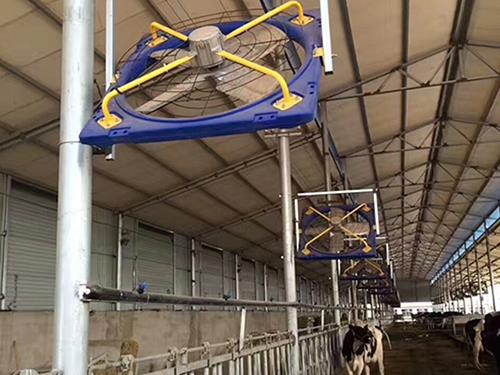
Widely used for summer cooling in enclosed layer,broiler,breeder houses,and finishing pig barns.When the outside temperature exceeds a set point,the ventilation system switches to tunnel mode:all end-wall fans operate at full capacity,side curtains close,and evaporative cooling pad inlets open.The powerful negative pressure draws air through the pads,cooling it before it flows at high speed over the animals,providing a wind-chill effect to alleviate heat stress.Correctly calculating the total required fan capacity(typically aiming for a cross-sectional air speed of 2-3 m/s in poultry houses)is critical for effective cooling.It is a vital component of modern environmental control.
Frequently Asked Questions (FAQ)
Q:How often should tunnel ventilation fans in livestock housing be maintained?
A:It's recommended to monthly check blades for cleanliness/balance and belt tension; lubricate motor bearings quarterly; and conduct a full annual inspection of electrical connections and motor insulation. Increase cleaning frequency in high-dust environments to maintain optimal airflow and energy efficiency.
Q:How to calculate the number of fans and required ventilation rate?
A:Calculate based on livestock type, weight, and maximum stocking density. Core metric: achieve a cross-sectional air speed of 2.5-3.0 m/s in summer. Total ventilation rate (m³/h) = House cross-sectional area × Target air speed × 3600.
Q:What is the suitable "negative pressure" for negative pressure ventilation?
A:Typically 20-40 Pascals for poultry houses, 15-30 Pascals for pig houses. Too low, insufficient air speed; too high increases energy use and may cause air leaks at doors. Controlled by adjusting inlet curtain openings.
Q:How to achieve energy efficiency?
A:Use variable frequency drive (VFD) controllers to automatically adjust the number of fans running and their speed based on temperature sensor signals. Combined with cooling pads, summer cooling energy use can be reduced by over 30%.
Q:What protective measures do fans need?
A:Must install protective screens (against birds/debris) and rain hoods. In houses with corrosive gases, choose fiberglass (FRP) fans or those with anti-corrosion coatings.
Q:How to ventilate in winter without causing cold stress?
A:Use minimum ventilation mode. Timed, intermittent operation of some fans, combined with small roof or side-wall inlets, primarily removes moisture and harmful gases while maintaining air quality.












 Post RFQ


 Chat
Chat


 ALL CATEGORIES