Basic Info
Used to thoroughly blend roughages(e.g.,haylage,silage),concentrates,vitamins,and mineral supplements in scientifically balanced proportions to prepare a nutritionally complete feed.It is a core piece of equipment for modern,intensive dairy and beef cattle farming.
Product Description
Product Features:
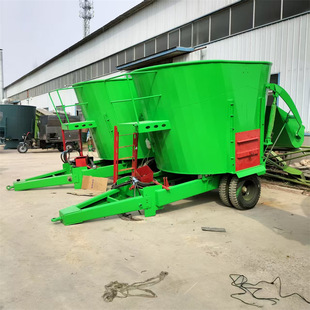
The core of a modern TMR wagon lies in precise nutritional management and high-quality mixing.The integrated smart weighing and control system accurately records the amount of each ingredient loaded,ensuring recipes are followed exactly.Unique auger and knife designs cut long fibrous materials while providing gentle yet thorough mixing,preventing feed separation and guaranteeing consistent nutrition in every bite.Durable,abrasion-resistant steel construction and efficient drivetrains ensure longevity and low failure rates in heavy-duty,corrosive environments.Some high-end models feature data management capabilities for integration with farm management software.
Product Specifications:
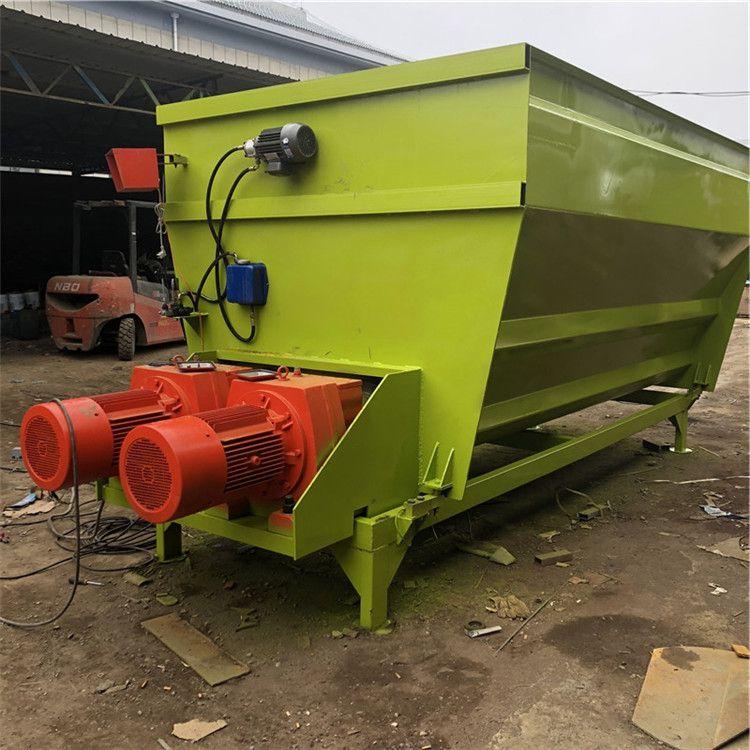
A typical mid-sized,20-cubic-meter trailed model requires a tractor with at least 150 HP.The tub is constructed from 6-8 mm thick high-strength steel plates.The mixing system,usually comprising a main auger,pre-cutting rollers,and knives,can complete a batch mix in 5-15 minutes.Load cells mounted on axles or suspensions,paired with a display,enable dynamic weighing.The unit is typically 8-10 meters long and 2.5 meters wide.A standard hydraulic system drives the adjustable-height discharge belt to fit various feed bunk heights.Professional installation on a solid foundation is required.
Product Applications:
Primarily used on dairy and beef feedlots with over 100 head.Daily operations involve loading precise quantities of corn silage,alfalfa hay,concentrate supplements,distillers'grains,and premixes according to the nutritionist's formula.The thoroughly mixed TMR is then delivered directly into barn feed bunks.This ensures all animals receive identical nutrition,leading to improved milk yield,better herd health,and reduced metabolic disorders.It is an indispensable tool for achieving high productivity and efficient cattle farming.
Frequently Asked Questions (FAQ)
Q:When choosing a TMR mixer wagon, how do you determine if its mixing uniformity meets standards?
A:A preliminary "sensory test" can be done by sampling feed from different parts of the wagon to check for even distribution of long/short fibers and concentrate without clumps. A more professional method is the Penn State Particle Separator test, which evaluates if the material proportion on each sieve meets the standard.
Q:How to choose a TMR mixer wagon with the right capacity?
A:Select based on farm scale and daily ration preparation volume. The core principle: single batch feed volume should not exceed 80% of the rated mixer capacity, and it must match tractor power (approximately 10-12 HP per cubic meter required).
Q:How to ensure the mixing uniformity of TMR?
A:The key lies in the feeding sequence (long hay → concentrate → silage → liquids) and mixing time. Using a horizontal "blade-auger" structure, the coefficient of variation (CV) should be less than 5% after 5-10 minutes of mixing.
Q:What are the key points for daily use and maintenance?
A:Thoroughly clean residual feed daily to prevent mold. Regularly check and tighten blades and chains, and lubricate bearings. A comprehensive inspection of the transmission system is required every 500 working hours.
Q:Can it handle high-moisture materials?
A:Yes. However, choose models with reinforced blades and side discharge. It is recommended to keep the proportion of wet materials like silage within 40%-50% of the total weight to ensure smooth mixing and discharge.
Q:Is it suitable for small and medium-sized farms?
A:Yes. There are various models like trailed and small vertical mixers. The key is to choose a small mixer (e.g., 3-8 cubic meters) based on herd size (e.g., under 100 head) paired with a suitable tractor.










 Post RFQ


 Chat
Chat


 ALL CATEGORIES