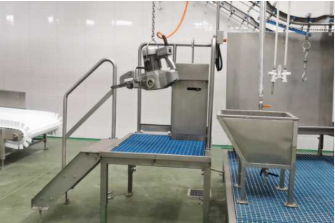
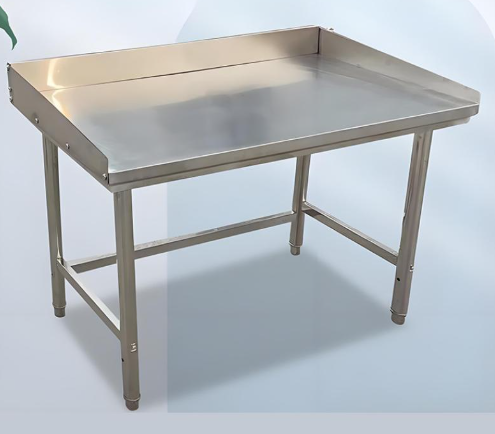


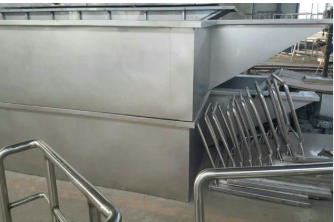
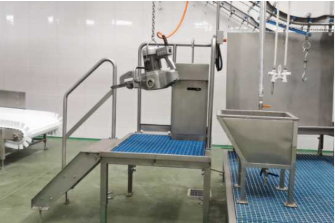
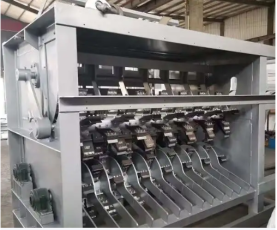
This workstation is centered on hygiene, stability, and adjustability. The all-stainless steel construction with seamless/full-weld processes eliminates hygiene dead spots, allowing it to withstand daily high-pressure hot water and chemical sanitizer washdown. The perforated tabletop and central drainage ensure blood, wash water, and fluids are rapidly removed, keeping the work area dry. The adjustable sternum clamp securely grips the breastbone, providing the operator with a stable point for forceful and precise splitting. Height and angle adjustability allow operators of different statures to work in a comfortable posture and utilize gravity to aid in viscera exposure and cleaning, significantly reducing physical strain. Integrated knife sterilizer and waste troughs enable tool placement and immediate waste segregation, complying with SSOP (Sanitation Standard Operating Procedure) norms.
Standard tabletop dimensions (L*W) are typically 1500mm * 800mm (for cattle) or 1200mm * 600mm (for hogs). Load capacity is ≥300kg. For hydraulic or pneumatic lift mechanisms, operating pressure is 6-8 bar with adjustable speed. All edges and corners are rounded to prevent injury to carcasses or personnel. Frame legs can be fitted with locking casters (optional) for easy relocation and thorough cleaning underneath. It can be optionally equipped with load cells connected to a display for online weighing of carcasses or offal.
This equipment is positioned on the slaughter line after bleeding/draining and before thoracic organ (pluck) removal. Specific application: The suspended, pre-skinned (cattle) or dehaired (hog) carcass is transferred from the overhead rail and temporarily rested on the table -> The operator uses a sternum saw or splitting knife to split along the sternum midline, aided by the clamp -> After opening the thoracic cavity, separation and removal of the pluck (heart, lungs, esophagus, trachea) is performed -> The cavity is then thoroughly inspected and rinsed. This station is a critical point for viscera inspection; the table's stability and hygiene provide inspectors with a clear, uncontaminated view and work interface, crucial for early disease detection and food safety. It standardizes the high-precision, repetitive task of brisket opening and is an essential specialized workstation in high-quality slaughter lines.








 Post RFQ


 Chat
Chat




 ALL CATEGORIES