Basic Info
The STS-105 is a cost-effective and efficient cattle carcass conveying system utilizing a robust single-rail design. It forms the backbone of the slaughter production line, using gravity to smoothly move trolleys carrying suspended carcasses throughout the entire process from stunning and bleeding to splitting and trimming. Known for its outstanding reliability, ease of installation, and low maintenance, this system is a preferred choice for small to medium-sized slaughterhouses and specific processing segments.
Product Description
Product Features:
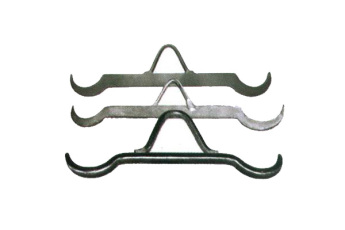
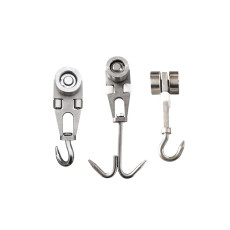
The core advantages of this system are its durability and low-cost maintenance. A single, heavy-duty QU100 steel rail provides sufficient rigidity to withstand the weight of cattle carcasses and operational impacts. Trolley wheels made from forged alloy steel and surface-hardened, combined with permanently sealed and lubricated bearings, exhibit minimal wear in damp, high-load environments, ensuring long-term smooth operation. The anti-derailment safety hook is a critical design feature for preventing production accidents, guaranteeing the hook remains securely locked under all circumstances. The system employs standardized modular design where all components are quickly replaceable, and the hot-dip galvanizing process offers superior corrosion resistance, significantly reducing the total lifecycle cost.
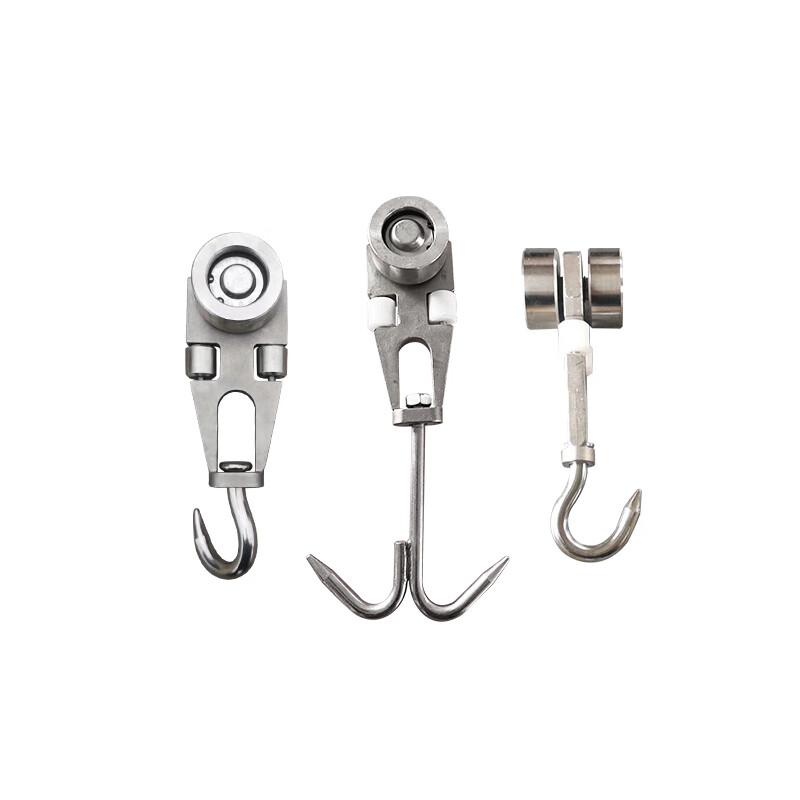
Product Specifications:
The standard mounting height is between 3.8 and 4.2 meters, adjustable based on workshop clearance. Trolley spacing is typically 1.5 to 2 meters, accommodating different production rhythms. A single trolley assembly has a dynamic load capacity of ≥400 kg. Rails come in standard lengths of 12 meters each, connected via fishplates with minimal alignment error. The system can be designed with a natural gradient (1-3%) for gravity-driven movement or equipped with auxiliary drives for level sections. All metal components comply with hygiene requirements for food plant environments.
Product Application:
This system is widely used in the core processing stages of cattle slaughter. After stunning and bleeding, the carcass is hoisted and hooked, then moves via gravity along the rail sequentially through the pre-skinning area, mechanical hide pulling station, evisceration zone, official inspection point, carcass trimming/rinsing station, and finally to the splitting saw. Its continuous and orderly conveyance not only streamlines the production line, improving operational efficiency, but more importantly ensures the carcass remains suspended, preventing cross-contamination with floors or equipment. This meets the HACCP system's sanitary requirements for product contact surfaces, making it fundamental infrastructure for building a standardized slaughterhouse.
Frequently Asked Questions (FAQ)
Q:What is the main difference between a single-rail and a double-rail system?
A:The single-rail system is simpler and more cost-effective, suitable for straight or simple-turn layouts. The double-rail system offers greater stability, torsional resistance, and is better for complex layouts with heavy loads. The choice depends on your workshop layout and budget.
Q:What are the workshop height requirements for installing the rail?
A:The recommended standard mounting height is between 3.8 and 4.2 meters. Sufficient clearance (typically >2 meters) must be maintained from the lowest point of the carcass to the floor for operator access and equipment movement.
Q:How is the corrosion resistance of the rails and trolleys?
A:Key components feature hot-dip galvanizing and sealed bearing designs, effectively resisting the corrosive environment of humid, high-temperature slaughterhouses and regular chemical sanitization, ensuring a long service life.
Q:Can the operating speed of the system be adjusted?
A:Yes. Stable gravity-fed speed is achieved by precisely designing the rail installation gradient (typically 1-3%). Variable frequency drive (VFD) auxiliary units can also be added to horizontal sections for speed control.
Q:Can it connect with our existing production line equipment?
A:Yes. The modular system design allows seamless integration with your equipment, such as stunning boxes, hoists, and hide pullers, via standard switches and turntables for a unified production line.
Q:Is daily cleaning and maintenance complicated?
A:No, it's straightforward. The open design facilitates thorough cleaning with high-pressure water guns. Regular checks for trolley bearing lubrication and rail connection tightness are recommended as part of a preventive maintenance plan.









 Post RFQ


 Chat
Chat




 ALL CATEGORIES