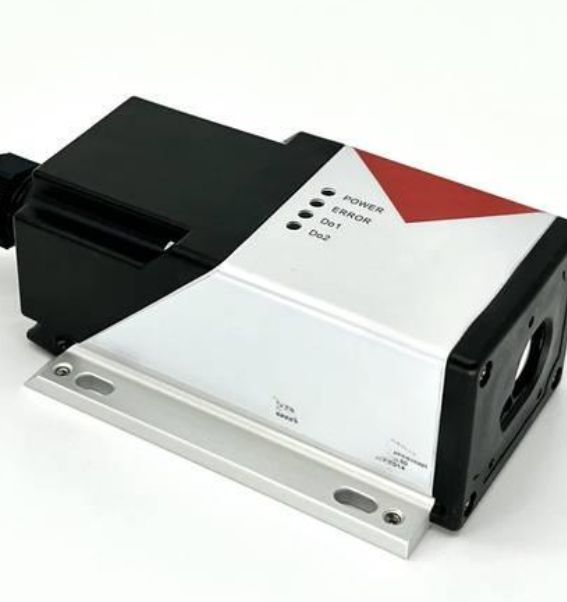
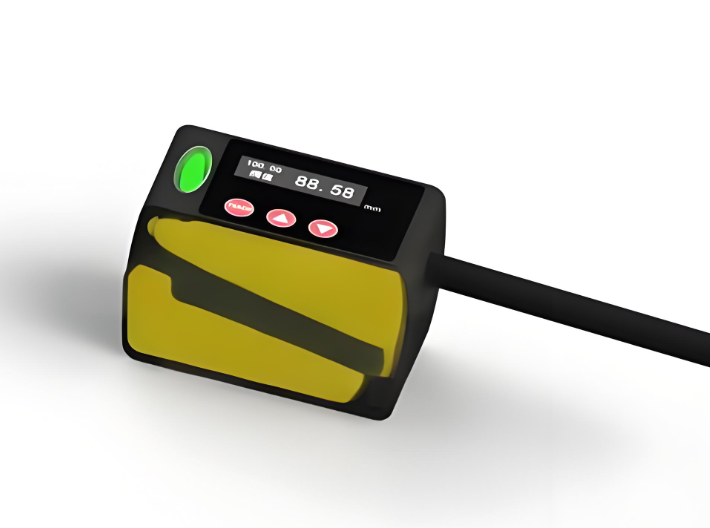


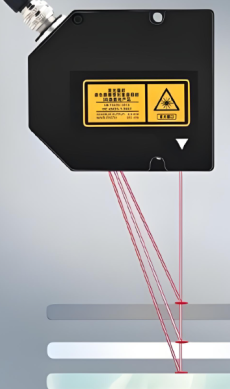
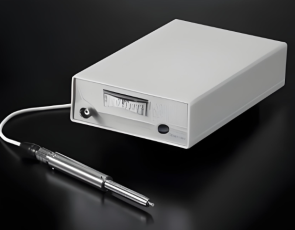
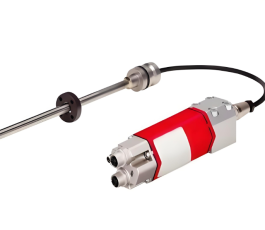
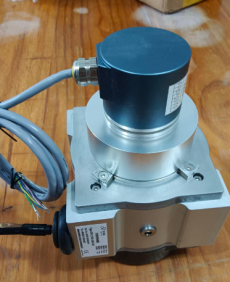
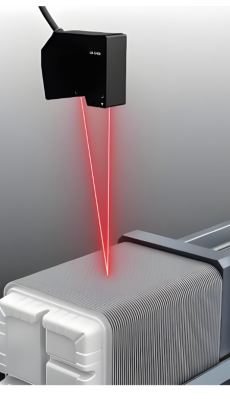

The core competitiveness of this laser displacement sensor lies in its micron-level measurement accuracy, which can meet the detection requirements of ultra-precision parts. The non-contact measurement method has no mechanical wear, so it can be used for long-term continuous detection without affecting the surface quality of the measured workpiece. It adopts Class II eye-safe laser, which is harmless to human eyes. The built-in environmental light compensation circuit effectively eliminates the interference of ambient light, ensuring stable measurement accuracy in different lighting environments. Compared with traditional contact displacement sensors, it solves the pain point of damaging the surface of precision parts during measurement, and greatly improves the production quality of precision manufacturing.
The laser displacement sensor has a measuring range of 0-100mm, with a resolution of 0.1μm and an accuracy of ±0.5μm. The sampling frequency can reach 10kHz, which can meet the requirements of high-speed dynamic displacement detection. The laser wavelength is 650nm, with a spot diameter of 0.1mm, which is suitable for measuring small and micro-sized parts. It has an IP54 protection rating, suitable for general industrial environments, and is powered by 24V DC. The interface supports RS485 and Modbus protocols, which can be seamlessly connected to industrial control systems. The housing is made of aluminum alloy, with a size of 120*60*40mm and a weight of 0.8kg.
This product is widely used in semiconductor wafer thickness detection, 3C electronic component displacement measurement, precision machine tool tool wear monitoring, film surface flatness detection, and robot end position calibration. In semiconductor manufacturing, it can accurately detect the thickness of silicon wafers to ensure the quality of chip production. In 3C electronics manufacturing, it can detect the displacement of mobile phone shells and electronic components to improve the assembly accuracy of products. It is also suitable for the quality inspection of precision parts and the calibration of industrial robot positions.








 Post RFQ


 Chat
Chat


 ALL CATEGORIES