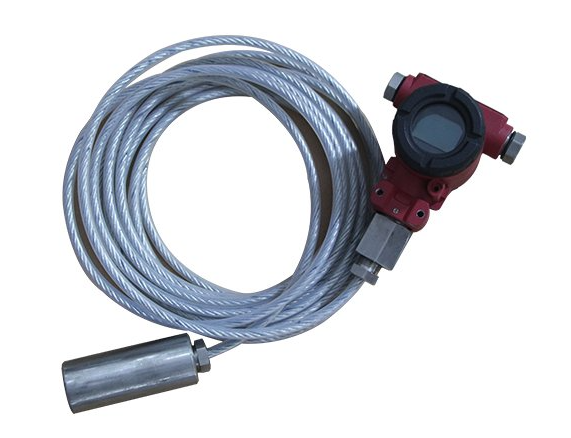
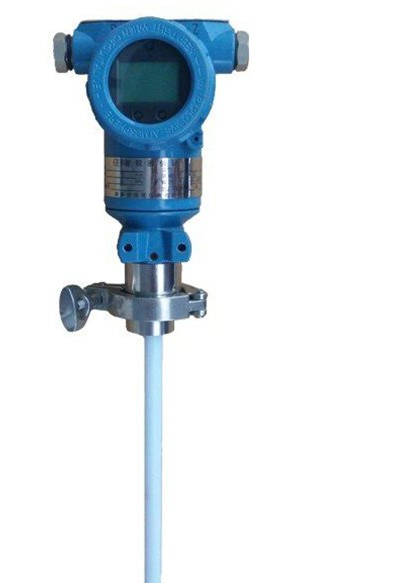


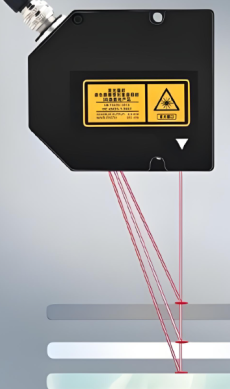
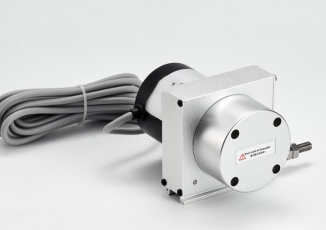
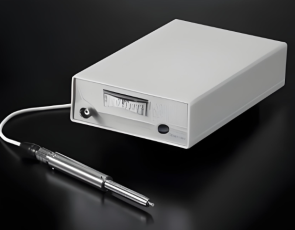

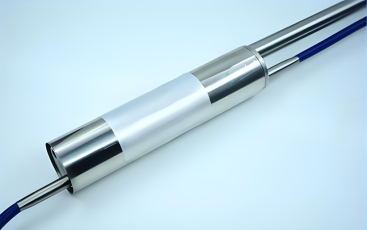
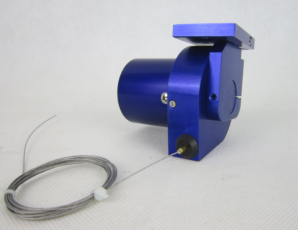
The core advantage of this capacitive displacement gauge is its ultra-high precision, with a resolution of 0.0001mm and linear accuracy of ±0.001% of full scale, far exceeding the performance of general-purpose displacement sensors. It supports automatic one-key calibration, eliminating the need for complex manual calibration operations. The device has excellent anti-interference performance, with a noise level of less than 0.0005mm in a 50Hz industrial environment, ensuring stable measurement results even in laboratory settings with multiple electrical devices. The stainless steel and acrylic housing provides good protection while maintaining high sensitivity, and the fixed clamp mount ensures stable and adjustable installation positions. It solves the pain points of low precision and complex calibration of traditional laboratory displacement measuring tools.
The measuring range is 0.01mm to 100mm, with a resolution of 0.0001mm and linear accuracy of ±0.001% of full scale. The device has dimensions of 180mm × 120mm × 80mm and weighs 1.5kg. It operates on 110V/220V AC or 24V DC power supply, and the recommended working temperature is 18°C to 25°C, which is suitable for standard laboratory environments. It supports multiple output interfaces including USB, Ethernet, and analog voltage output, allowing seamless connection to laboratory data acquisition systems and analysis software. The capacitive sensing probe has a diameter of 10mm, with a working distance of 0mm to 50mm depending on the measuring range.
This lab-grade capacitive displacement gauge is widely used in material testing laboratories for measuring the tensile and compressive deformation of metal, plastic, and ceramic materials. It is also used in precision component manufacturing for inspecting the dimensional accuracy of micro-components such as micro-mechanical parts and semiconductor wafers. In academic research, it is used for studying the thermal expansion of materials, the deformation of structural components under load, and the vibration characteristics of micro-devices. It is also suitable for calibration and testing of other precision measuring instruments such as micrometers and laser interferometers.








 Post RFQ


 Chat
Chat


 ALL CATEGORIES