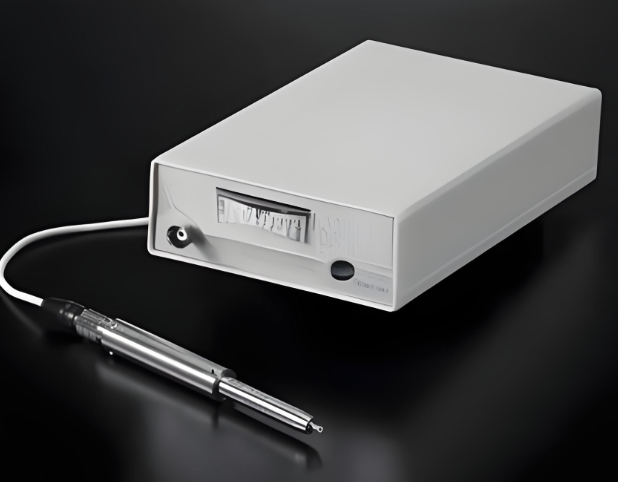


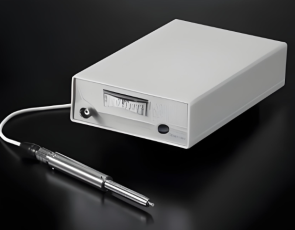
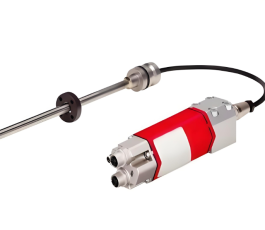
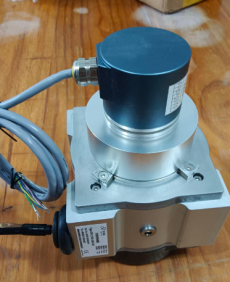
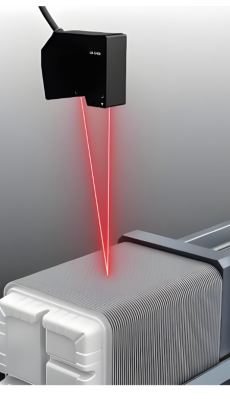

This capacitive displacement meter has multiple core advantages in micro-nano measurement scenarios. First, it has ultra-high measurement accuracy up to ±0.001μm, which can meet the detection requirements of nanometer-level displacement. Second, it adopts non-contact capacitive sensing technology, which will not cause damage or wear to the measured surface. Third, it has good anti-electromagnetic interference performance, which can maintain stable measurement in high-electromagnetic environment workshops. Fourth, it supports automatic calibration function, which can reduce manual operation errors and improve measurement stability. It solves the pain points of traditional displacement sensors such as low precision, poor anti-interference ability and difficult micro-displacement detection, and provides a reliable solution for ultra-high precision displacement measurement.
The specific technical parameters of this capacitive nanometer displacement meter are as follows: Measurement range: 0.01μm to 10mm; Measurement accuracy: ±0.001μm of full scale; Resolution: 0.0001μm; Output signal: 0-10V analog voltage or 4-20mA current signal; Probe diameter: 8mm; Housing material: POM insulation material to avoid electromagnetic interference; Power supply: 5V DC ±5%; Protection rating: IP54, suitable for general workshop environments; Operating temperature: 0℃ to 50℃; Relative humidity: 30% to 70% RH without condensation; Calibration period: 12 months; Overall size: 120mm * 60mm * 30mm.
This capacitive nanometer displacement meter is suitable for multiple high-precision industrial scenarios. In the semiconductor manufacturing industry, it can be used for precision calibration of wafer processing equipment and alignment detection of chip packaging; in the precision machine tool industry, it can be used for positioning detection of CNC machine tools and tool wear monitoring; in the biomedical field, it can be used for micro-displacement detection of biological samples and precision control of medical equipment; in the optical manufacturing industry, it can be used for flatness detection of optical lenses and lens assembly positioning. It can provide ultra-high precision displacement data for high-end manufacturing industries to help enterprises improve product quality and production accuracy.








 Post RFQ


 Chat
Chat


 ALL CATEGORIES