


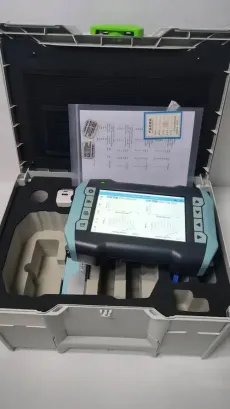

This comprehensive test chamber has multiple core competitive advantages. First, it integrates three testing functions of temperature, humidity and vibration, avoiding the need for multiple separate test equipments, saving laboratory space and testing costs. Second, it adopts a three-in-one control system that can simultaneously adjust temperature, humidity and vibration parameters, supporting coordinated control of multiple parameters to simulate real comprehensive environmental conditions. Third, it uses imported high-precision sensors and compressors, with fast temperature and humidity adjustment speed and high vibration control accuracy. In addition, it is equipped with multiple safety protection devices such as over-temperature alarm, over-vibration protection and leakage protection, to ensure the safety of equipment and test samples. It also supports remote monitoring and data export functions, solving the pain points of traditional comprehensive test equipments that cannot coordinate multiple parameters and have low testing efficiency.
The main technical parameters of this integrated temperature, humidity and vibration test chamber are as follows: working chamber size is 600mm (length) × 800mm (width) × 750mm (height), total volume is about 360L; vibration frequency range is 1~3000Hz, maximum acceleration is 50g, maximum load is 100kg; temperature range is -70℃~150℃, temperature rise rate is 1~4℃/min, temperature drop rate is 1~3℃/min; humidity range is 20%RH~98%RH, control accuracy is ±2%RH; power supply is AC380V 50/60Hz, rated power is 15KW; the whole machine weighs about 800kg, and the external dimensions are 1800mm × 2000mm × 2200mm. It complies with international testing standards such as IEC 60068-2-6, GB/T 2423.10 and other comprehensive environmental testing standards.
This comprehensive test chamber is widely used in high-end industries such as aerospace, military industry, electronic communications and automotive manufacturing. In the aerospace field, it is used to test the reliability of aerospace components under comprehensive environmental conditions of temperature, humidity and vibration; in the electronic communications industry, it is used to test the stability of mobile phones, base station equipment and other products during transportation and use; in the automotive industry, it is used to test the performance of automotive parts under complex environmental conditions. Typical application scenarios include new product development verification, batch product quality inspection, military equipment environmental adaptability testing and other links, helping enterprises to comprehensively evaluate the reliability of their products under comprehensive environmental conditions.







 Post RFQ


 Chat
Chat


 ALL CATEGORIES