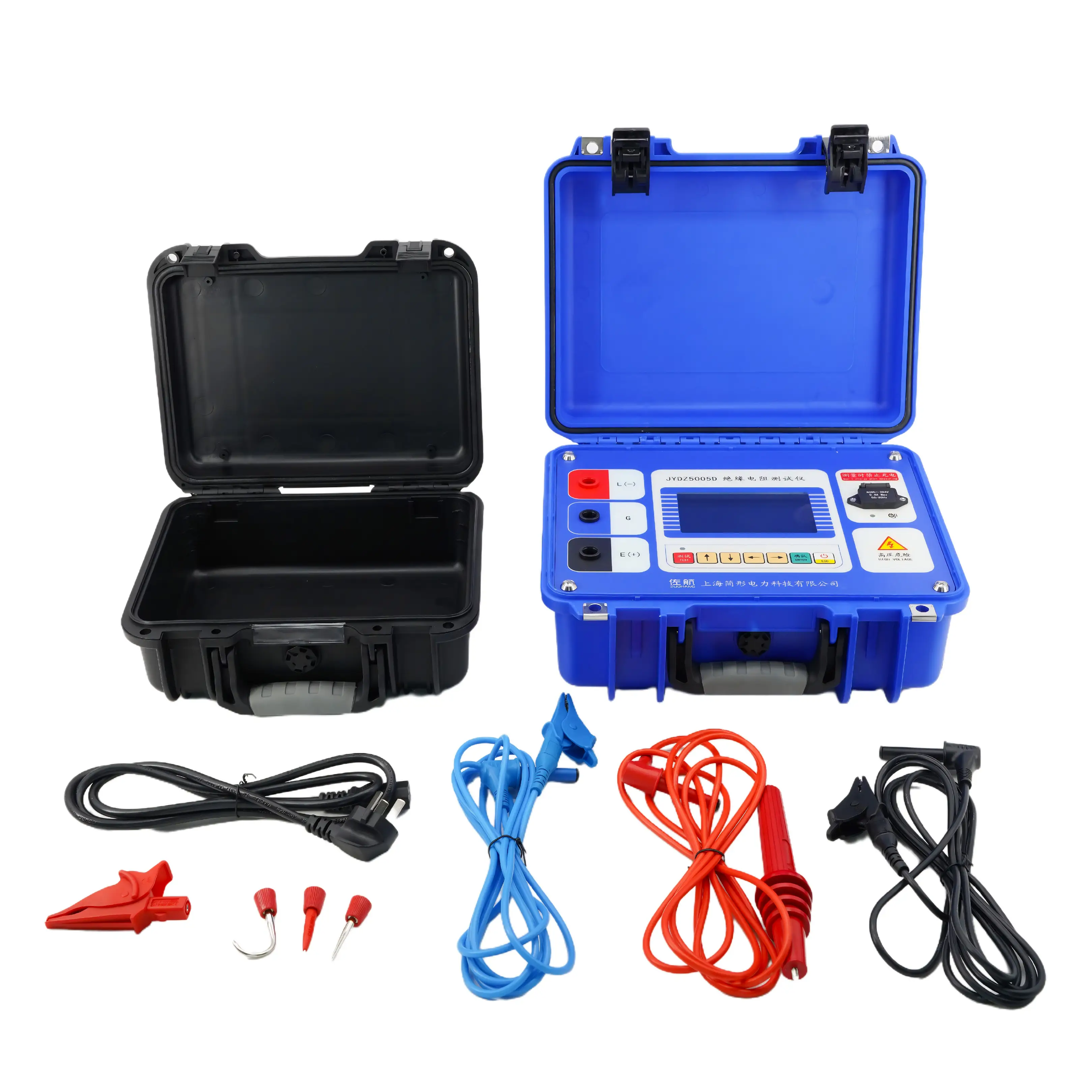
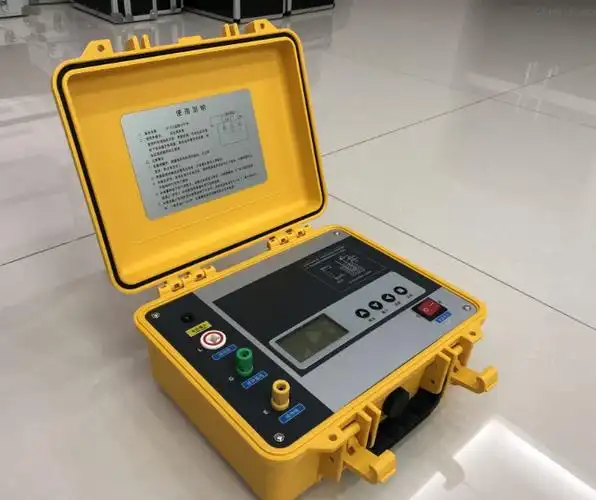


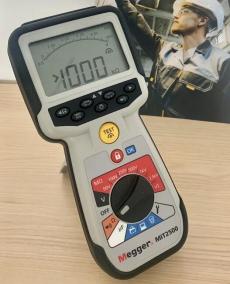
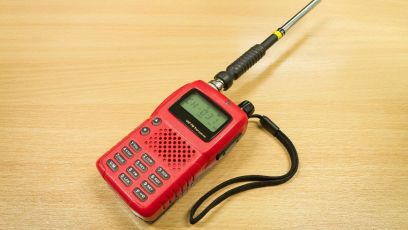
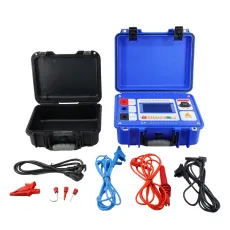
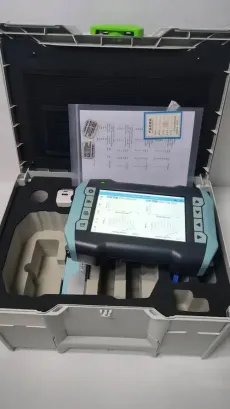

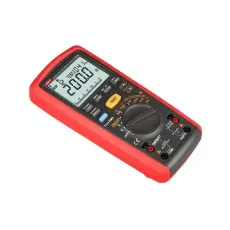
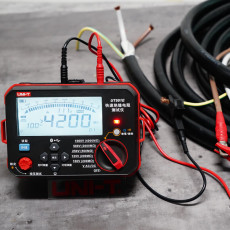
It features a composite structure with an aluminum alloy shell and ABS engineering plastic, has passed the ISO 9227 NSS 1000-hour salt spray test and offers an IP67 ingress protection rating, allowing immersion in 1‑meter‑deep water for up to 30 minutes under controlled conditions to help enhance reliability in high‑salt‑spray and humid marine environments. Equipped with a night‑vision LCD screen that supports detection in low‑light or dark conditions, it also includes a portable lanyard for easy attachment to a waist or tool bag, convenient for crew members to carry. Supporting dual power supply modes of solar charging and a built-in lithium battery, it can be continuously powered by ship deck solar panels without an external power supply, helping meet long‑term operation requirements. The device can store up to 2000 data sets, and test data can be exported for use in ship safety audit reports.
The test voltage gears are 500V/1000V/2500V adjustable, the insulation resistance range is 0.1MΩ~500GΩ, and the measurement accuracy is ±3% (reading); the body is made of aluminum alloy shell + ABS engineering plastic, anti-corrosion and salt spray resistant; the ingress protection rating is IP67, which can resist dust and water immersion; it has a built-in 3.7V 2500mAh lithium battery, with a battery life of up to 72 hours with solar charging panel; the body size is 170mm×75mm×38mm, and the total weight is 380g; it has a built-in portable lanyard and night vision display; it supports storage of 2000 sets of data, which can be exported through the Type-C interface; it is equipped with special anti-salt fog test pens to avoid corrosion of the pens by salt fog.
It is suitable for ship electrical systems, offshore drilling platform electrical equipment, coastal wind turbine towers, port cranes and other scenarios. The core user groups include ship operation and maintenance companies, offshore wind power operation and maintenance teams, offshore engineering companies, port mechanical and electrical departments, etc. It can be used for daily electrical maintenance of ships, insulation acceptance of new ships, regular safety detection of offshore platform equipment, helping users accurately detect insulation performance in harsh environments of high-salt fog and humidity, avoiding electrical accidents caused by insulation failure and ensuring the safety of offshore operations.







 Post RFQ


 Chat
Chat


 ALL CATEGORIES