

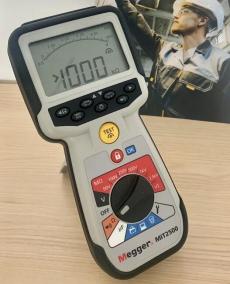
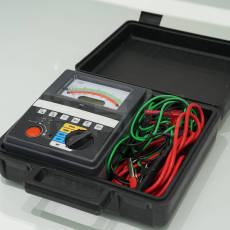
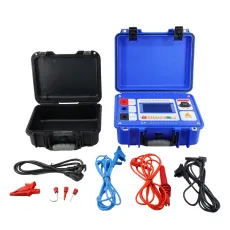
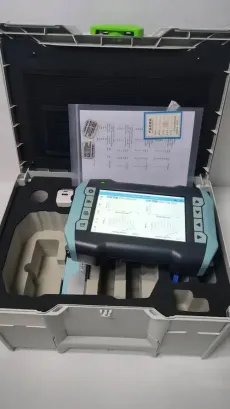

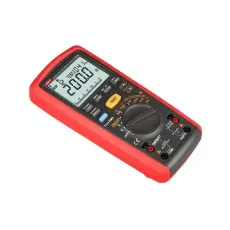
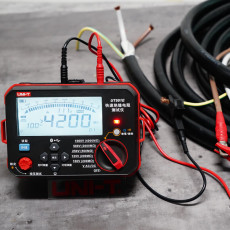
It is equipped with a Bluetooth 5.0 communication module, which can realize real-time data synchronization with iOS/Android supporting apps, and supports one-click generation of standardized test reports and export to PDF format. It supports 5 adjustable test voltage gears, covering multiple detection needs from low voltage to high voltage. It has a built-in automatic discharge function to avoid residual voltage from causing harm to operators after testing. It is equipped with a high-definition LCD screen that can display test voltage, resistance value, test time and other parameters at the same time, and supports polarity detection and automatic test mode, reducing the technical threshold for operators. Compared with similar equipment, this model uses built-in lithium battery power supply, with a battery life of up to 10 hours, no need to replace batteries frequently, adapting to long-term outdoor operation needs.
The test voltage gears are optional: 250V/500V/1000V/2500V/5000V, the insulation resistance range is 0.01MΩ~1000GΩ, and the measurement accuracy is ±2% (reading) +5 digits; the Bluetooth version is 5.0, and the transmission distance can reach 10 meters without obstruction; it has a built-in 3.7V 2000mAh lithium battery, supporting Type-C fast charging, and the charging time is about 2 hours; the body size is 180mm×85mm×40mm, and the total weight is 420g; the ingress protection rating is IP54, which can cope with mild outdoor environment; it supports automatic discharge, polarity detection, storage of 1000 sets of data and other functions; the supporting APP supports historical data query, trend analysis and report generation.
It is suitable for offline insulation detection of high-voltage transformers, high-voltage cables, generators, wind turbine tower electrical systems and other equipment. The core user groups include power maintenance companies, wind power operation and maintenance teams, electrical equipment manufacturers, electrical engineering construction teams, etc. It can be used for insulation acceptance detection of new electrical equipment, regular safety detection of in-use equipment, and insulation performance verification after fault troubleshooting, helping users quickly and accurately obtain insulation data and improve detection efficiency and data management level.







 Post RFQ


 Chat
Chat


 ALL CATEGORIES