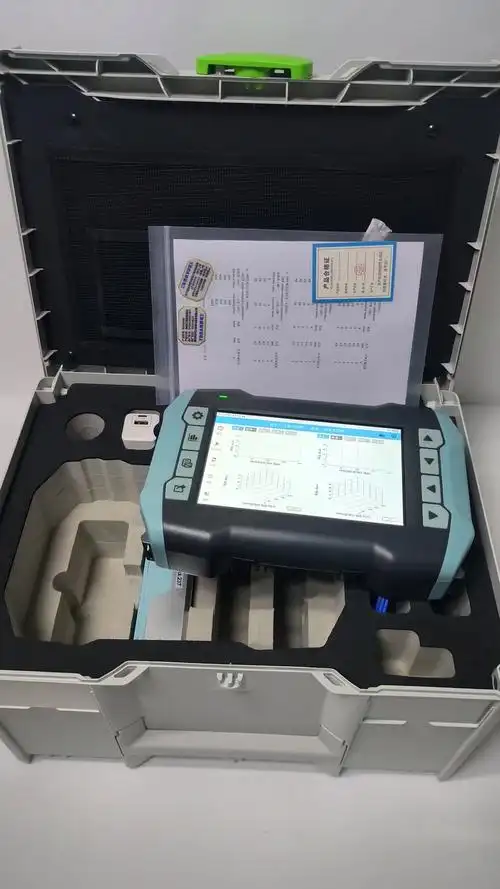
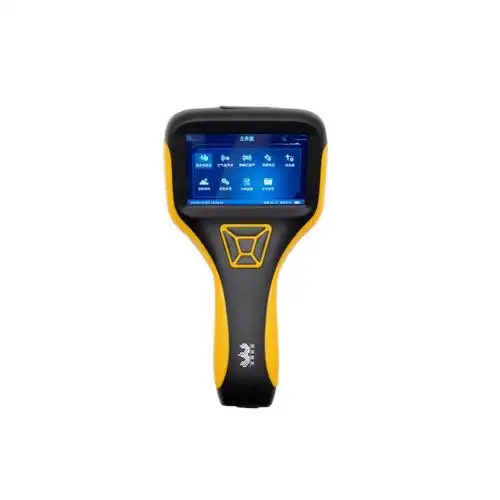


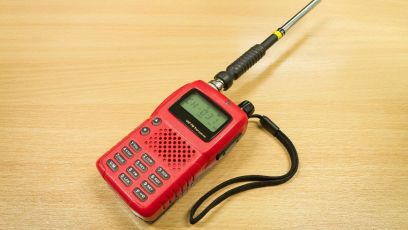
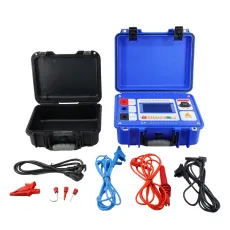
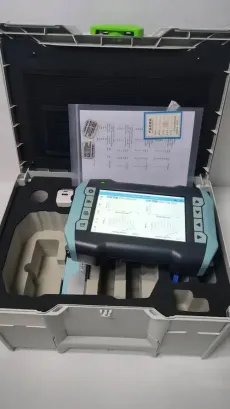

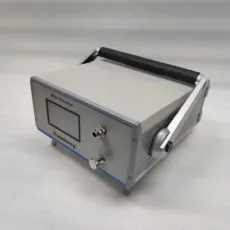
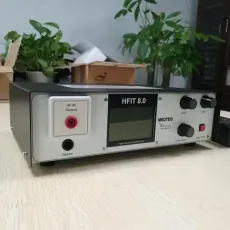
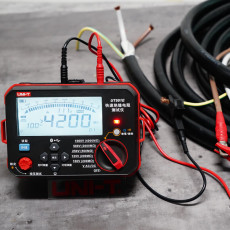
It adopts a 10kHz~300MHz wide-band detection design, which can accurately capture partial discharge signals of electrical equipment, with a detection sensitivity of up to -70dBm, and can detect early subtle partial discharge defects. It supports two detection methods: non-contact and contact. The non-contact method can quickly scan the surface discharge of electrical equipment without power failure, and the contact method can conduct accurate detection on key parts. It has a built-in spectrum analysis function, which can distinguish different types of partial discharge signals, helping operation and maintenance personnel judge the fault type and severity. It is equipped with sound and light dual alarm function, which will immediately remind operators when abnormal discharge signals are detected, and the auto range switching function can automatically adapt to discharge signals of different intensities without manual adjustment.
The detection frequency band ranges from 10kHz to 300MHz, and the detection sensitivity can be adjusted from -70dBm to -20dBm; it supports two detection modes: non-contact and contact, equipped with non-contact sensing probe and contact electrode; the 2.8-inch color LCD screen can display spectrum curve, discharge amplitude, detection frequency and other parameters in real time; it has a built-in 3.7V 2200mAh lithium battery, with a battery life of up to 8 hours, supporting Type-C fast charging; the body size is 165mm×80mm×36mm, and the total weight is 350g; the ingress protection rating is IP54, which can cope with mild outdoor environment; it supports storage of 1000 sets of partial discharge data, which can be exported to CSV format files; it has built-in spectrum analysis and fault type recognition functions, which can quickly judge the type of partial discharge.
It is suitable for early insulation hidden danger detection of electrical equipment such as power transformers, high-voltage switch cabinets, cross-linked cables, asynchronous motors. The core user groups include power operation and maintenance companies, electrical maintenance technicians, electrical equipment manufacturers, university electrical laboratories, etc. It can be used for factory acceptance detection of new electrical equipment, regular preventive detection of in-use equipment, fault location detection of faulty equipment, helping users detect hidden insulation faults in advance, avoiding major economic losses and safety risks caused by sudden equipment failure.







 Post RFQ


 Chat
Chat


 ALL CATEGORIES