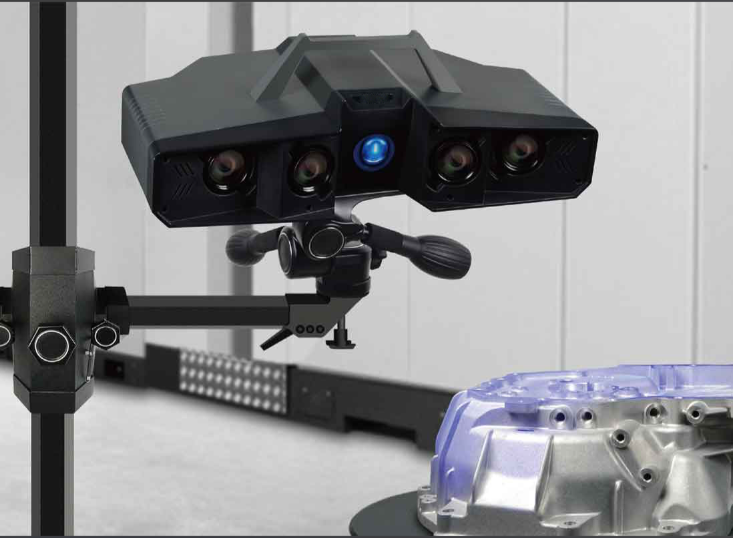
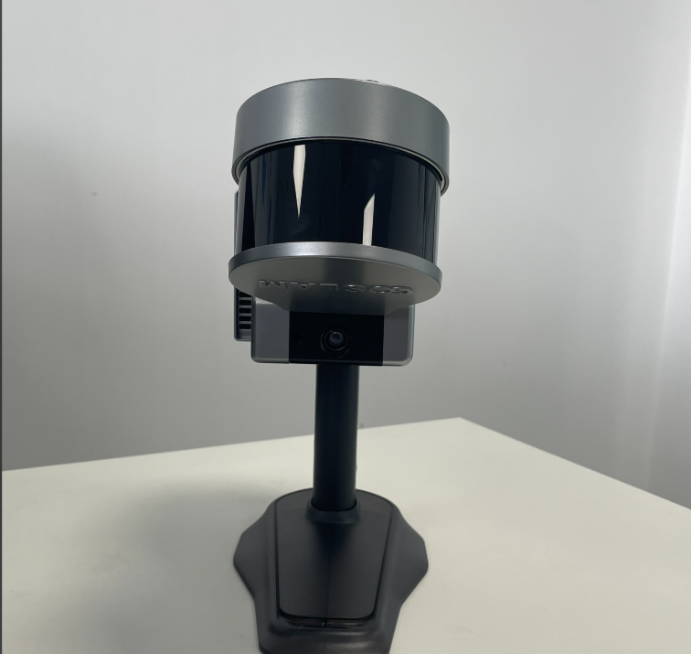





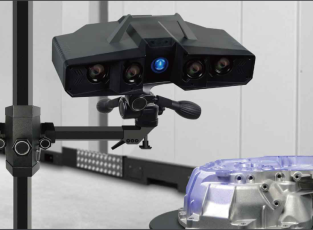
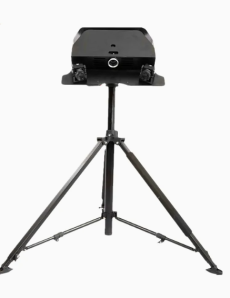

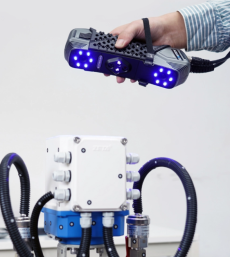
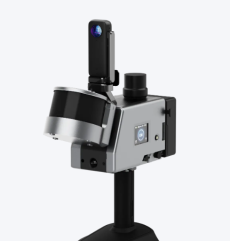
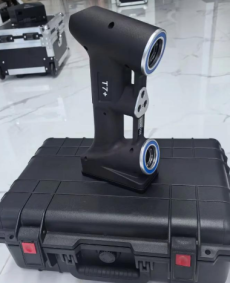
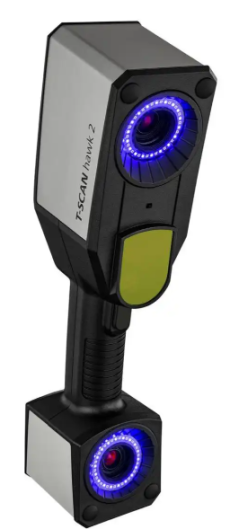
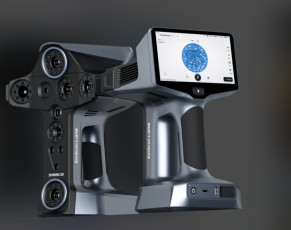
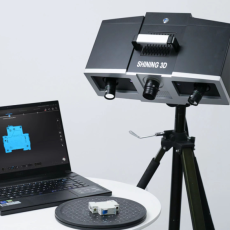
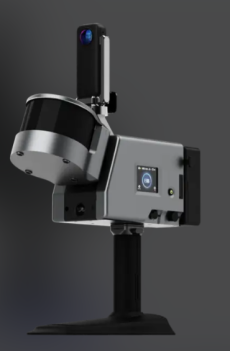
This desktop scanner features dual-mode operation (manual and automatic) for flexible scanning of both simple and complex small parts. Its sub-millimeter scanning accuracy ensures that even tiny surface details like engravings, micro-features, and fine textures are captured. The integrated tempered glass workbench provides a stable scanning platform, while the aluminum alloy body ensures long-term durability. It supports real-time point cloud preview during scanning, allowing users to adjust scanning parameters on the fly. Compatible with major CAD and reverse engineering software, it streamlines the transition from scanned data to production-ready models, the need for third-party data conversion tools.
The scanner delivers a scanning accuracy of ±0.03mm at a 0.3m working distance, with a maximum scanning size of 30cm × 20cm × 15cm. It uses a combined white structured light and laser pointer light source for high-contrast scanning of small parts, with a scanning speed of up to 800,000 points per second. It supports USB3.0 and HDMI data interfaces for fast file transfer and real-time preview, and its body is constructed from aluminum alloy and tempered glass for durability. The device has a compact footprint of 40cm × 30cm × 25cm, making it suitable for small workshop or office environments. It is compatible with Windows 10 and 11 operating systems, and supports multiple common 3D file formats including .stl, .obj, .step, and .iges. It features both manual and automatic scanning modes, allowing users to choose the optimal scanning method for their specific project needs.
This desktop 3D mapping scanner is ideal for jewelry design and manufacturing, dental prosthetic production, electronic component quality inspection, reverse engineering for small mechanical parts, educational 3D modeling projects, and museum digital collection of small cultural relics. Jewelry craftsmen can use it to create accurate 3D models of custom designs, while dental technicians can use it to scan patient impressions for prosthetic production. Manufacturing teams can use it to inspect the dimensional accuracy of tiny industrial parts, and educational institutions can use it to teach 3D modeling and precision measurement courses.







 Post RFQ


 Chat
Chat


 ALL CATEGORIES