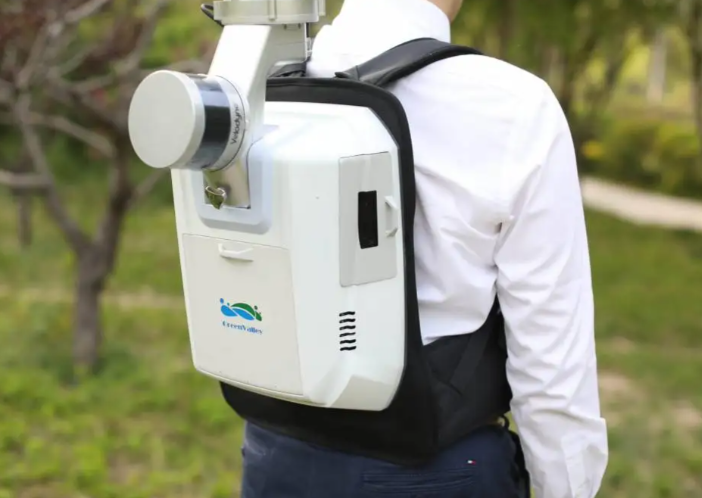
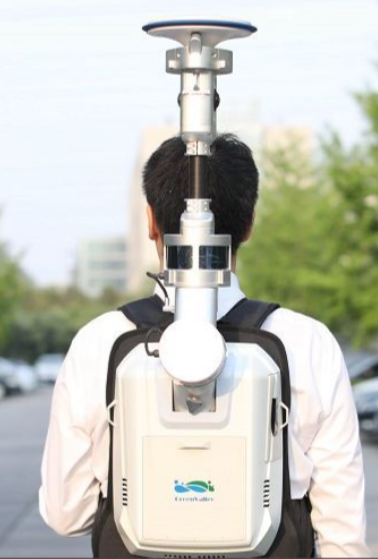





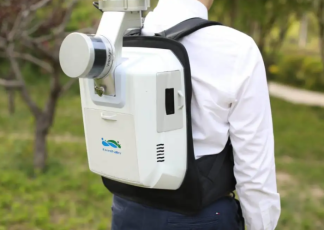

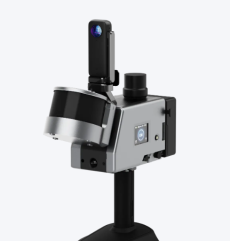
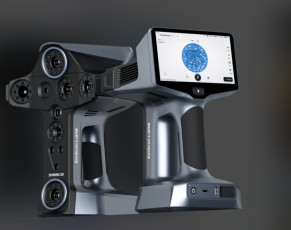
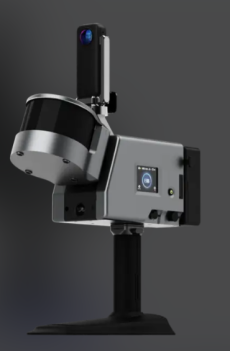
This backpack mobile scanner features built-in GPS/GLONASS/BeiDou GNSS positioning modules, allowing users to collect accurate spatial positioning data during mobile survey operations. It has a long working duration of up to 10 hours with two 20000mAh rechargeable batteries, supporting full-day outdoor survey operations. The 2TB internal SSD provides ample storage space for large-scale point cloud data, and the Thunderbolt 4 data interface allows for fast file transfer after survey operations. Its IP53 protection rating makes it resistant to light rain and dust, making it suitable for use in outdoor environments. The device supports automatic point cloud stitching and registration, reducing post-processing time and improving workflow efficiency.
The scanner delivers a scanning accuracy of ±2cm at a 10m working distance, with a scanning range of 0.5m to 100m. It has a total device weight of 3.8kg including the backpack rig, and is powered by two 20000mAh rechargeable batteries that provide up to 10 hours of continuous working time. It has a 2TB internal SSD for large-capacity data storage, and supports Thunderbolt 4 data interfaces for fast file transfer. The device has an IP53 protection rating, making it resistant to light rain and dust, and is compatible with major 3D mapping software such as CloudCompare and RealityCapture. It supports built-in GNSS positioning for accurate spatial data collection, and features automatic point cloud stitching and registration for streamlined post-processing.
This backpack mobile 3D mapping scanner is ideal for urban street view mapping and digital city creation, scenic area digitization and tourism development, road network survey and transportation planning, cultural heritage site outdoor documentation, and emergency disaster area mobile survey. Urban survey teams can use it to create accurate street view maps for digital city projects, while tourism development companies can use it to digitize scenic areas for virtual tourism applications. Transportation departments can use it to survey road networks for planning and maintenance, and cultural heritage conservators can use it to document large outdoor archaeological sites.







 Post RFQ


 Chat
Chat


 ALL CATEGORIES