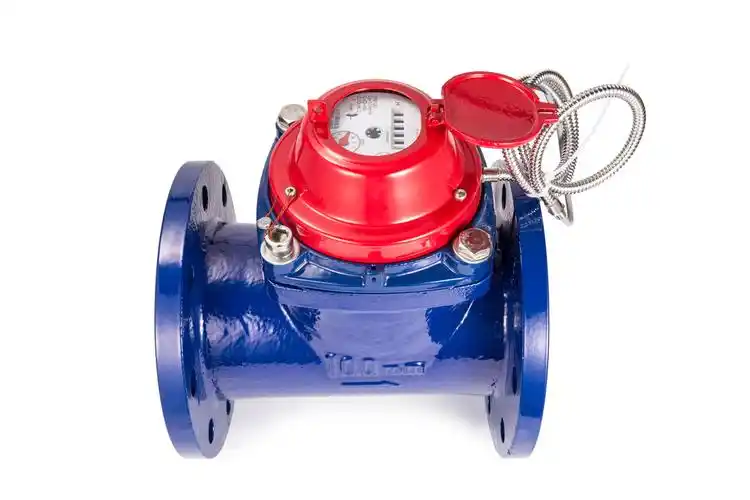
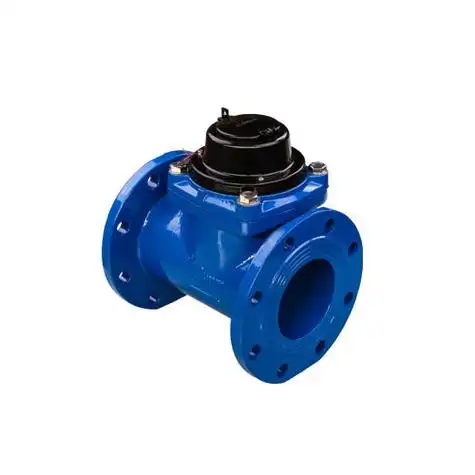


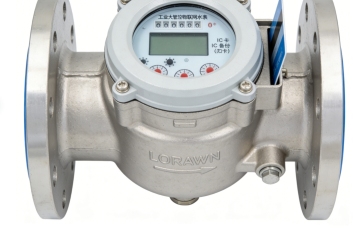
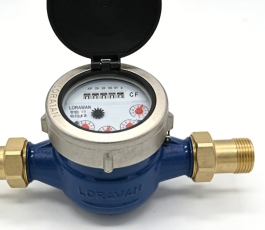
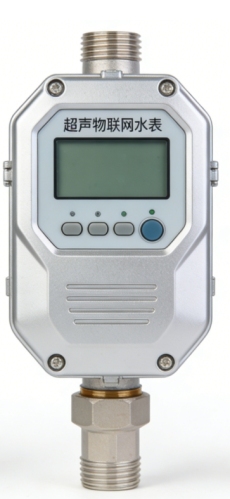
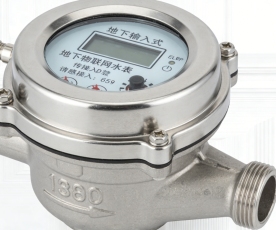
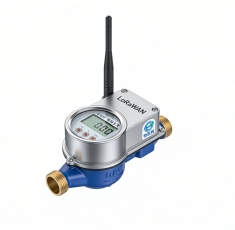

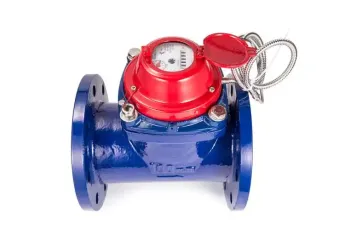
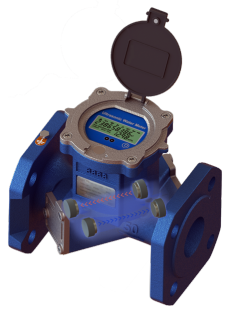
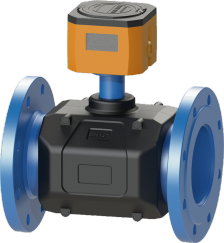
This meter uses the ultrasonic measurement principle with no mechanical transmission components, helping reduce wear issues commonly found in traditional mechanical water meters and supporting a longer service life. It achieves Class 0.5 metering accuracy, which compares favorably with common industry standards. It is equipped with an AC220V main power supply and lithium battery backup, helping maintain stable metering and data storage when main power is interrupted. The large LCD screen shows real-time heat, flow, temperature and other parameters clearly, while supporting MODBUS RTU and pulse output for convenient integration with building automation systems. It features a flange connection structure suitable for large-diameter pipelines, with simple installation and reliable sealing performance, helping address common challenges such as limited accuracy and maintenance difficulties in large-diameter pipeline metering. Its corrosion-resistant ductile iron casing allows it to be used in complex industrial pipeline environments.
Nominal diameter range from DN50mm to DN300mm. The maximum working pressure is 2.5MPa, with an applicable medium temperature range of 5℃ to 130℃. The shell is integrally cast from ductile iron, with the internal movement being a copper alloy ultrasonic sensing assembly. The total unit weight ranges from 15kg to 120kg depending on the caliber. For the DN100 model, the dimensions are 450mm × 300mm × 280mm. The flow measurement range is 0.6m³/h to 100m³/h, with a metering resolution of 0.0001 MWh. The power supply mode is AC220V±10% + 3.6V lithium battery backup, with an IP67 protection rating. It supports two data transmission methods: MODBUS RTU and 4-20mA analog output, and adopts flange connection for industrial-grade pipeline systems.
It is mainly used for centralized heat metering in large shopping malls, hospitals, schools, industrial plants and central heating stations. It can be used for heat accounting of large-scale hot water supply systems and heating circulation systems, helping property managers or heating enterprises accurately count energy consumption in large areas and provide data support for energy management. It complies with relevant certification standards for industrial measuring instruments, and can pass third-party metrological verification, meeting the compliance requirements of large public buildings. It is suitable for trunk pipeline metering projects of urban centralized heating systems.







 Post RFQ


 Chat
Chat


 ALL CATEGORIES