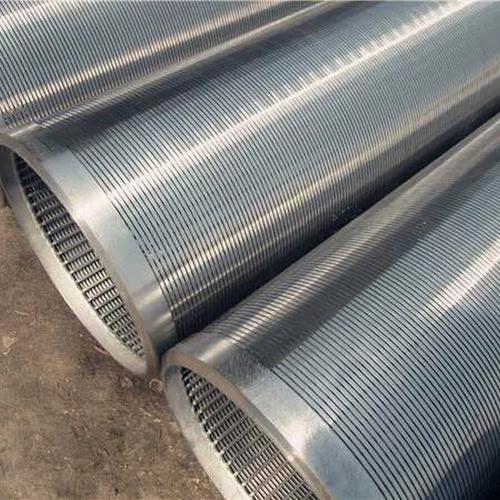
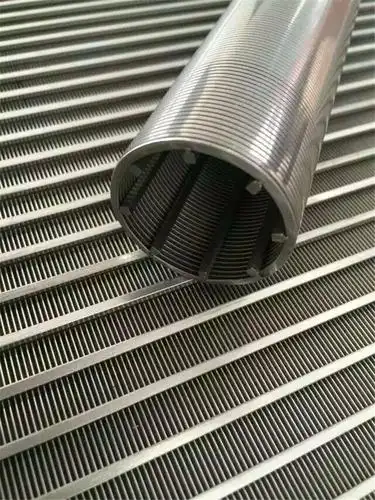


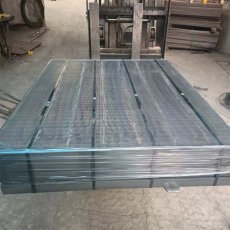
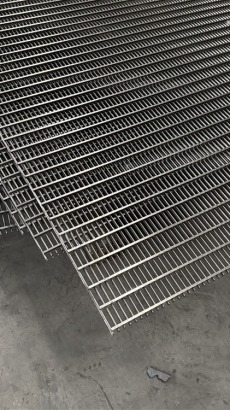
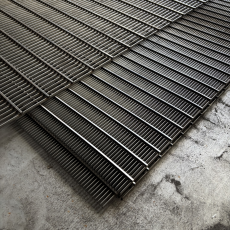
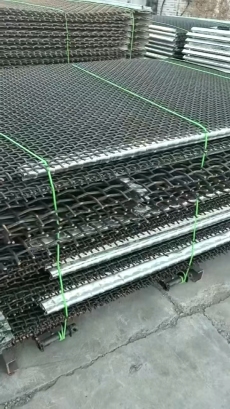
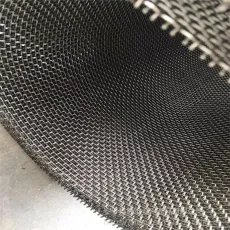
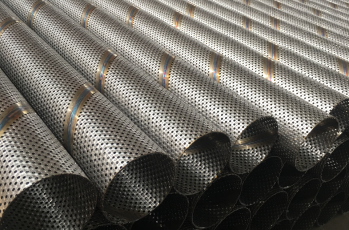
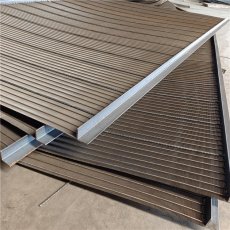
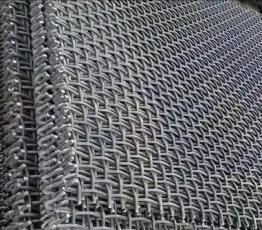
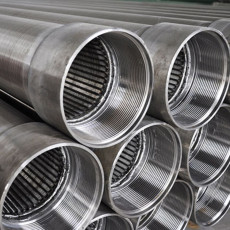
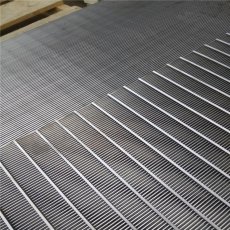
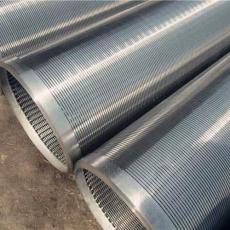
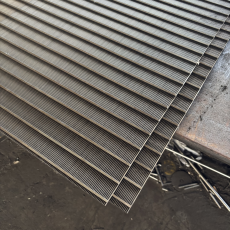
Made of duplex stainless steel 2205, it has a yield strength of ≥690MPa and a tensile strength of ≥830MPa, which can withstand downhole high pressure (≤70MPa) and high temperature (≤250℃) environments, while resisting corrosion from corrosive media such as H2S and CO2, meeting the NACE MR0175 standard, and the service life is increased by more than 4 times compared with ordinary stainless steel screens. The slot is formed by laser cutting and cold bending technology, with a tolerance controlled within ±0.03mm, which can effectively intercept formation sand with a particle size ≥0.2mm, avoiding sand sticking pumps and casing wear.
The material is duplex stainless steel 2205 with a chromium content of 22% and a nickel content of 5%, which has excellent corrosion resistance and mechanical properties; the slot width can be customized in the range of 0.2-1.5mm, with a tolerance of ±0.03mm, accurately intercepting formation sand; the wire diameter is 2-6mm, which is matched according to downhole pressure and sand hardness; the open area ratio is 20-35%, balancing sand control effect and oil-gas flow rate; the temperature resistance range is -30℃ to 250℃, adapting to downhole working conditions of different depths; the H2S resistance grade meets NACE MR0175/ISO15156; the surface treatment is nitriding treatment and anti-corrosion coating, with a surface hardness of HRC58 or above, further improving wear resistance; the connection method is API standard threaded connection or welding, adapting to different casing sizes; conventional sizes are outer diameters of 114mm, 127mm, 140mm, and lengths of 1000mm, 2000mm, 3000mm; the weight is 15-40kg per piece; the impact resistance is ≥40J/cm²; the sealing grade is V class (API 607).
Widely used in sand control production links of land oil wells, offshore platform oil wells, horizontal wells, and directional wells, it is compatible with completion sand control systems and oil production sand control equipment in oil drilling. Typical application scenarios include production sand control in high-sand-content oil wells, formation sand interception in gas wells, and segmented sand control in horizontal wells. In addition, it can also be used for sand control production in coalbed methane wells to intercept coal bed sand particles and ensure smooth coalbed methane extraction. For downhole harsh working conditions with high temperature, high pressure, and high corrosion, this screen can operate continuously and stably, especially suitable for oil wells with a daily oil production of 50-500 tons, helping users reduce well repair frequency, increase oil and gas production, and reduce equipment damage and production losses caused by sand sticking.








 Post RFQ


 Chat
Chat


 ALL CATEGORIES