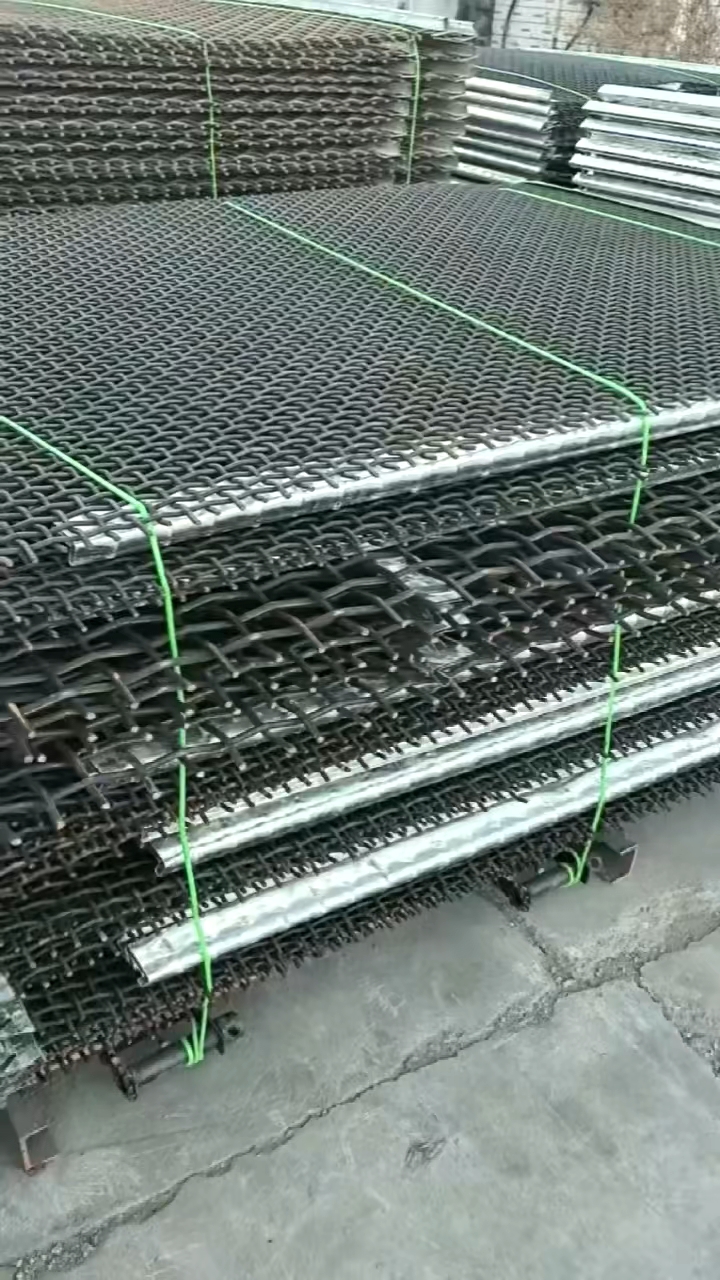
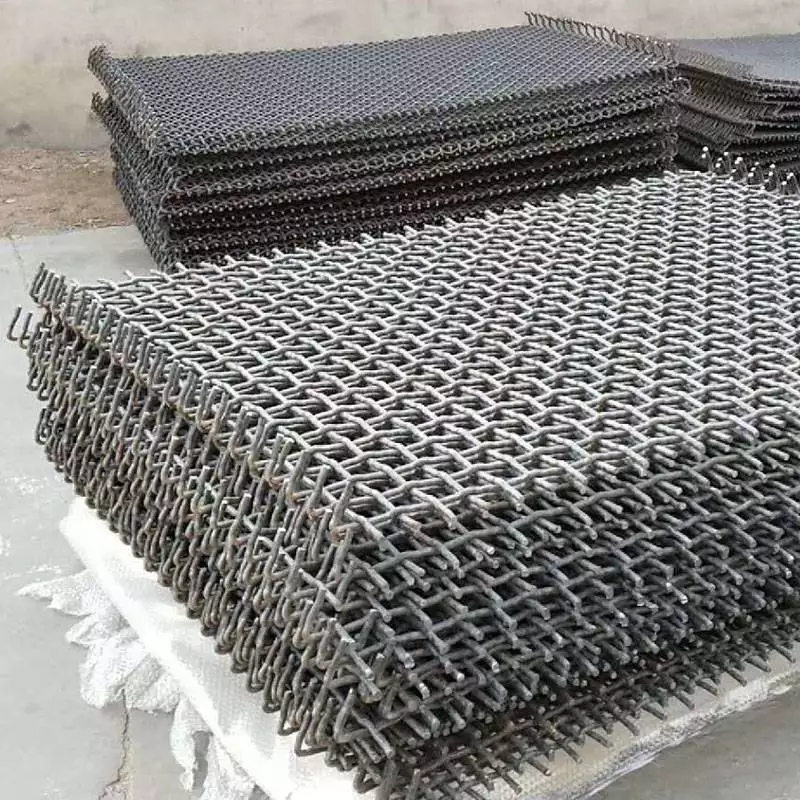


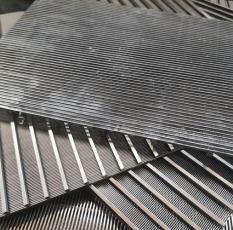
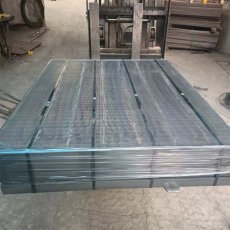
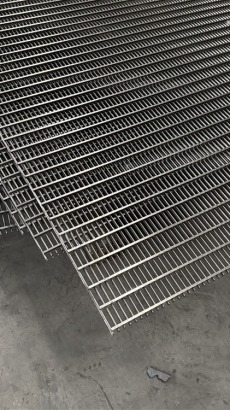
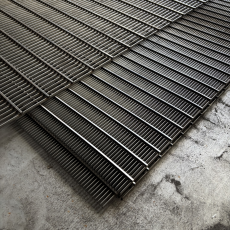
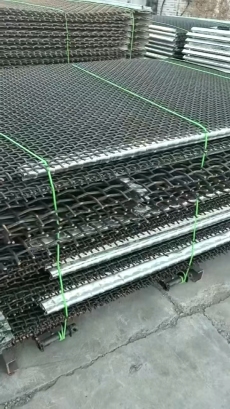
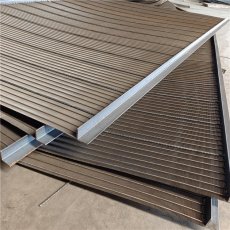
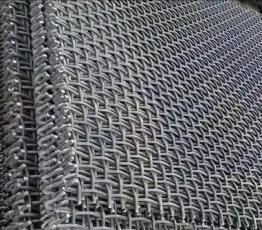
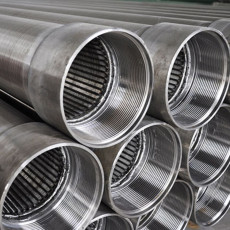
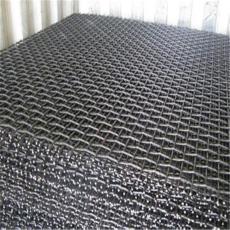
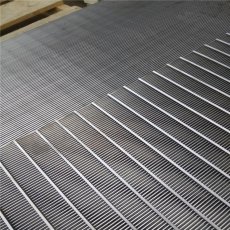
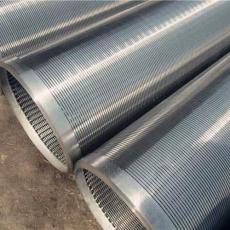
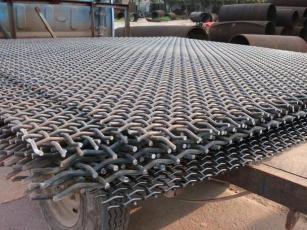
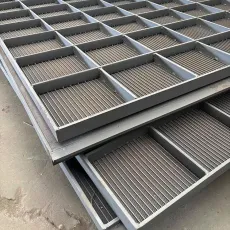
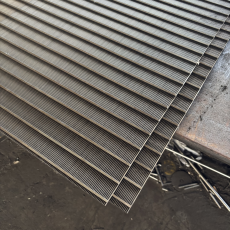
The core advantage of this wedge wire screen lies in its high manganese steel (Mn13) material, which offers 3-5 times longer service life compared to ordinary stainless steel screens in abrasive scenarios. The welded construction between support bars and wedge wires, preventing material clogging and deformation under heavy impact loads. With a 35% open area ratio, it maximizes material throughput by 20% compared to traditional woven screens, significantly boosting screening efficiency. The quenching and powder coating surface treatment enhances corrosion resistance and wear resistance, making it suitable for humid or acidic mining environments. Additionally, its modular design allows for quick installation and replacement, minimizing production interruptions and adapting to various vibrating screen frames.
This heavy-duty wedge wire screen features a 6mm thick high manganese steel support bar and 0.5mm precise slot width, ensuring accurate classification of ore particles with sizes above 0.5mm. The overall dimensions of 1200mm * 2400mm are compatible with most standard mining vibrating screen models. It operates stably within a temperature range of -20℃ to 120℃, adapting to both cold mountain mining sites and high-temperature processing workshops. The screen meets ISO 14123 Grade 5 wear resistance standards, with a maximum load-bearing capacity of 15 tons per square meter. The powder coating layer has a thickness of 80-100μm, providing reliable protection against rust and chemical erosion. Each screen undergoes strict non-destructive testing to ensure no welding defects, guaranteeing long-term structural integrity.
This wedge wire screen is primarily applied in large-scale mining operations, including open-pit iron ore mines, granite quarries, and river pebble crushing plants. It is ideal for primary and secondary screening processes, separating raw ore into different particle sizes for subsequent crushing or direct use. In addition, it can be used in construction material processing industries, such as screening gravel and sand for concrete production. Its robust design also makes it suitable for coal mining operations, where it efficiently separates coal from gangue while resisting wear from hard rock impurities. For aggregate producers, it ensures consistent particle size distribution, improving the quality of finished aggregate products and meeting construction industry standards.








 Post RFQ


 Chat
Chat


 ALL CATEGORIES