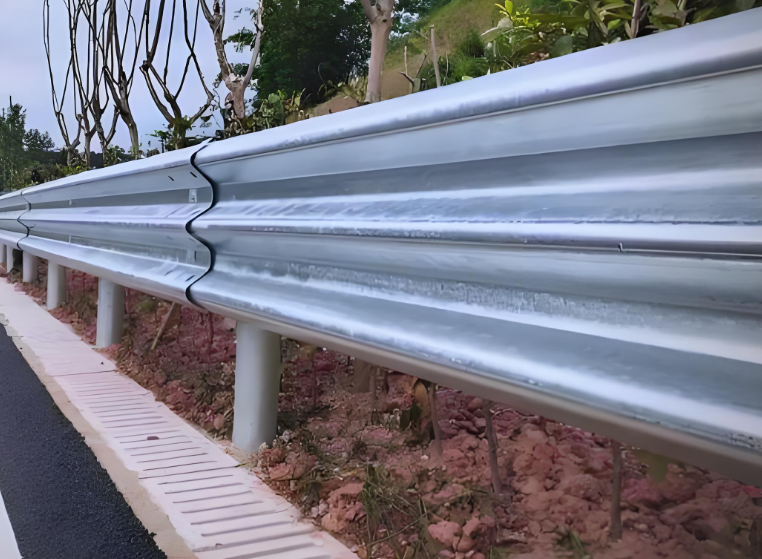
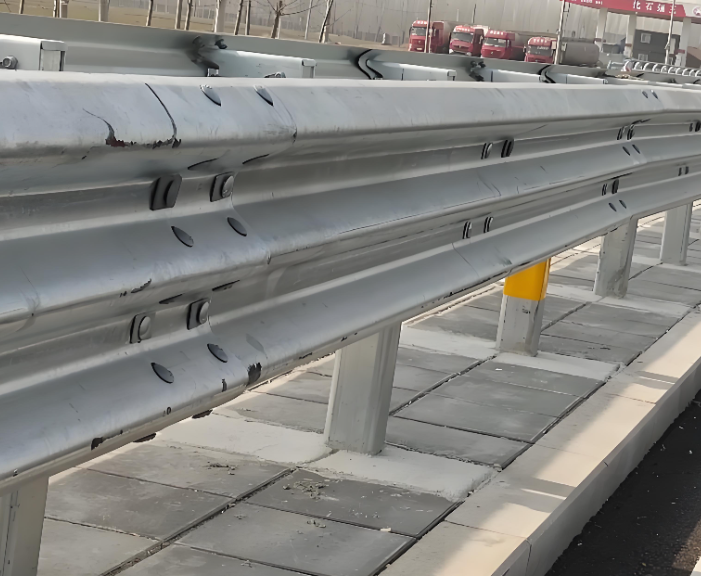


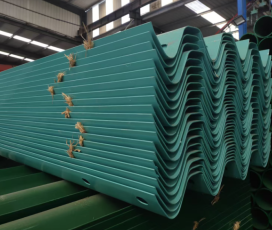
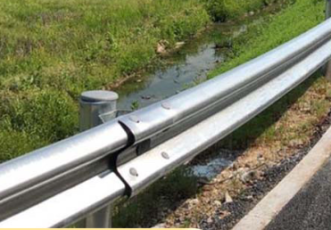
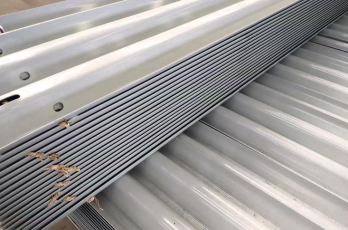
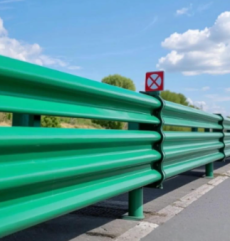
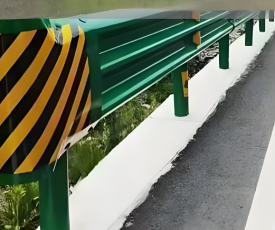
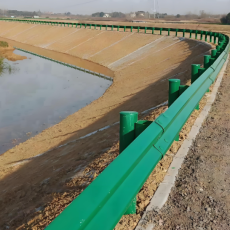
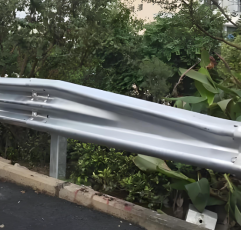
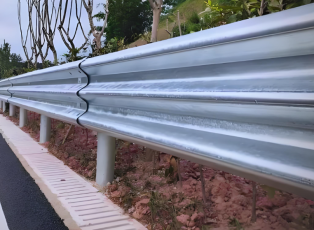
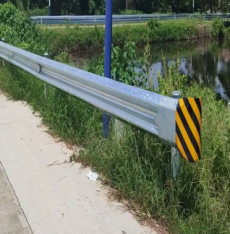
The key differentiator of this heavy-duty guardrail is its exceptional impact resistance and structural stability. Made from Q355 high-strength steel, it boasts a tensile strength of 450-630 MPa, which is 20% higher than standard Q235 steel, allowing it to absorb up to 30% more impact energy during collisions. The double W-shaped wave panel design distributes impact force across a wider area, minimizing localized deformation and ensuring the guardrail retains its protective function after a crash. The 180g/㎡ hot-dip galvanized coating provides superior corrosion resistance, protecting against rain, snow, and road salt in cold or coastal regions. Its combined bolted and welded connection system ensures a secure, rigid structure that can withstand repeated impacts. Additionally, it is equipped with reinforced anti-block spacers that further enhance energy absorption and reduce vehicle damage during collisions.
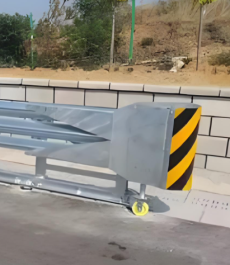
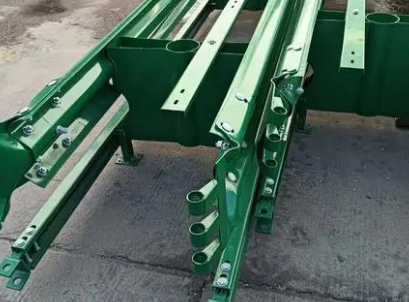
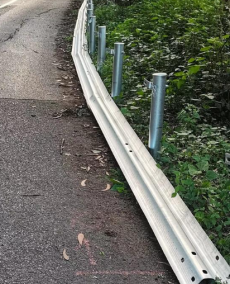
This guardrail system meets strict international highway safety standards. The main panel is 4000mm long, 910mm high, and 3.0mm thick, with a double W-shaped wave profile that has a wave depth of 85mm and wave pitch of 310mm. Supporting posts are 140mm diameter, 5.0mm thick steel pipes, buried 1500mm deep with an exposed height of 850mm. The galvanized coating on all components meets ASTM A123 standards, with a zinc adhesion strength of ≥60 N/cm. Connection hardware includes M20 high-strength bolts and welded post-foot plates, requiring a torque of 60-70 N·m for bolted joints. The total weight per meter is approximately 32kg, ensuring structural rigidity. It is compatible with end terminals, transition sections, and median barriers for full highway safety system integration.
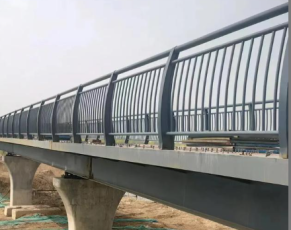
This heavy-duty corrugated guardrail is exclusively designed for high-speed road networks with daily traffic volumes exceeding 10,000 vehicles, including national expressways, intercity highways, and urban elevated roads. It is also suitable for mountainous highways with steep slopes and long straight sections, where the risk of high-speed collisions is elevated. Additionally, it can be installed in median strips to prevent head-on collisions between opposing traffic lanes, a critical safety measure for busy highways. Port authorities and logistics hubs also use this guardrail to protect loading docks and warehouse access roads from heavy truck impacts. Its ability to withstand extreme weather conditions and heavy traffic loads makes it an essential component of modern high-speed transportation infrastructure.








 Post RFQ


 Chat
Chat


 ALL CATEGORIES