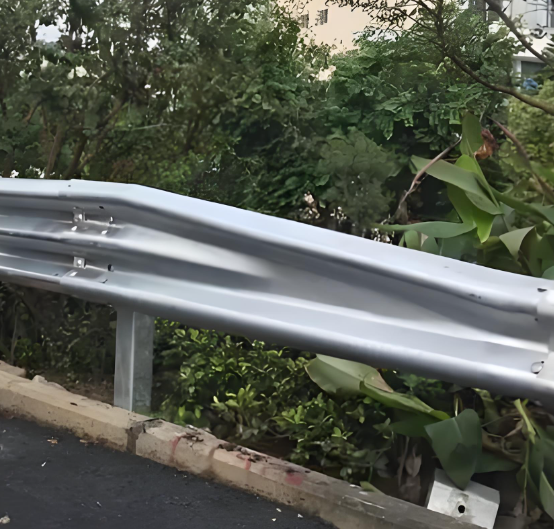
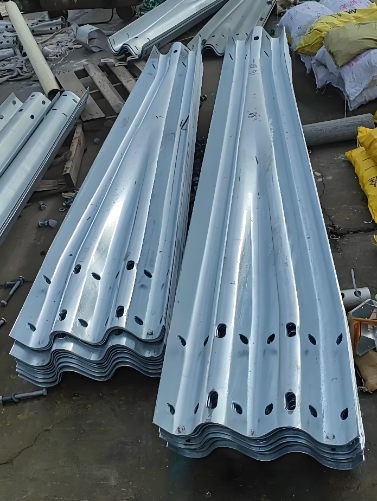


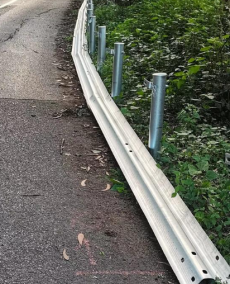
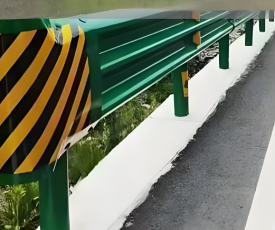
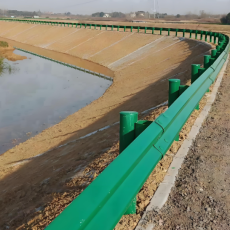
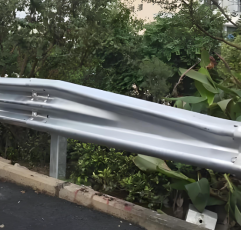
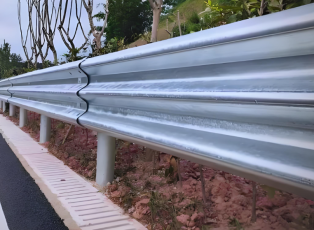
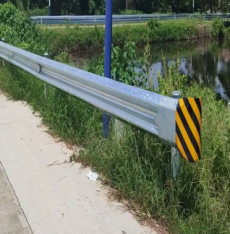
The core advantage of this guardrail is its exceptional curve adaptability and impact resistance. The triple wave-shaped panel design increases the contact area with errant vehicles, distributing impact force more evenly and reducing the risk of vehicle penetration. The 1500mm post spacing, half the distance of standard highway guardrails, enhances structural stability on curved terrain, preventing post bending or panel displacement during collisions. It is equipped with energy-absorbing rubber blocks between panels and posts, which absorb up to 40% more impact energy than traditional spacers, reducing vehicle damage and occupant injuries. The 200g/㎡ hot-dip galvanized coating plus polyester powder coating provides superior corrosion resistance, making it suitable for humid mountain environments with frequent rainfall. Additionally, its adjustable post angles allow for seamless installation on curves ranging from 0 to 30 degrees.
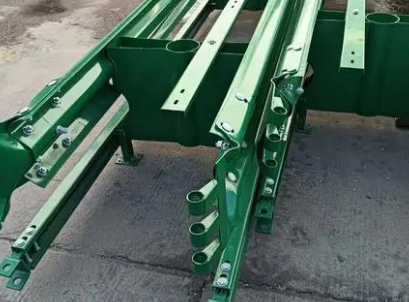
This guardrail complies with JT/T 281-2007 mountain highway safety standards. The main panel is 4000mm long, 950mm high, and 3.2mm thick, with a triple wave profile (85mm depth, 310mm pitch per wave). Supporting posts are 165mm diameter, 6.0mm thick steel pipes, buried 1600mm deep to ensure stability on uneven mountain terrain. The galvanized coating meets ASTM A123 standards, and the top powder coating has a hardness of 2H, resistant to scratches and fading. Connection hardware includes M22 high-strength bolts and energy-absorbing rubber blocks, with a torque requirement of 70-80 N·m. The total weight per meter is approximately 38kg, ensuring structural integrity on steep slopes. It is compatible with curved end terminals and slope adaptation brackets for custom installation on mountain road sections.
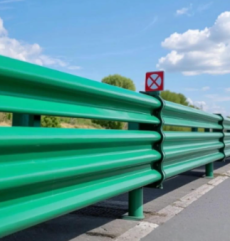
This reinforced corrugated guardrail is exclusively designed for mountainous highway sections, including sharp curves, steep downhill slopes, cliffside roads, and narrow mountain passes with limited visibility. It is also suitable for forestry roads and mining access roads in mountainous regions, where heavy truck traffic and uneven terrain increase crash risks. Transportation departments use it to upgrade existing guardrail systems on high-risk mountain roads, reducing the incidence of fatal crashes and vehicle fatalities. Additionally, it can be installed in scenic mountain highways to protect tourists and vehicles from roadside hazards while preserving the natural landscape. Its ability to adapt to complex terrain and withstand extreme impact forces makes it an essential safety component of mountain transportation infrastructure.








 Post RFQ


 Chat
Chat


 ALL CATEGORIES