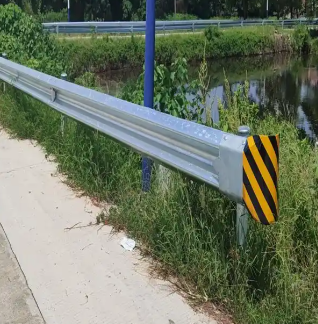
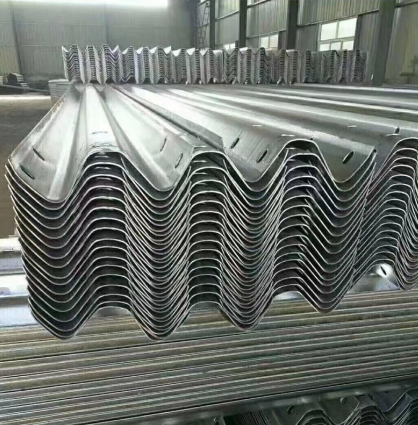


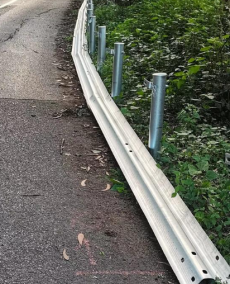
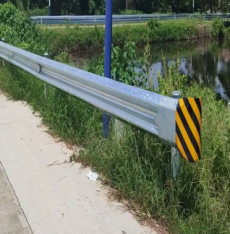
The core advantage of this economical guardrail lies in its balance of affordability and functional reliability. Constructed from high-quality Q235 carbon steel, it offers sufficient tensile strength to absorb impact energy from light to medium-weight vehicles. Its simplified bolted connection system eliminates the need for on-site welding, cutting installation time by up to 40% compared to welded alternatives. The 60g/㎡ hot-dip galvanized coating provides basic rust resistance, suitable for areas with low humidity and minimal salt exposure. Unlike heavy-duty highway guardrails, this model is lightweight yet durable, allowing for manual handling during installation, which reduces labor costs. It also features a standard W-shaped wave design that effectively disperses impact force along the guardrail length, preventing localized deformation. Additionally, its modular design enables easy replacement of damaged panels, minimizing downtime and maintenance expenses for road managers.
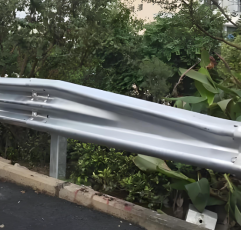
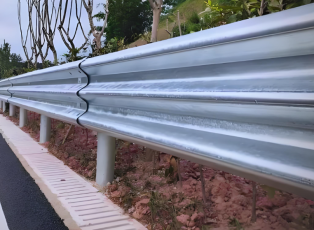
This corrugated guardrail adheres to national road safety standards for rural infrastructure. The main panel measures 4000mm in length, 810mm in height, and 2.5mm in thickness, with a single W-shaped wave profile that has a wave depth of 85mm and wave pitch of 310mm. The supporting posts are made of 114mm diameter, 4.5mm thick steel pipes, with a buried depth of 1200mm and exposed height of 750mm. The galvanized coating on both panels and posts meets GB/T 13912-2002 standards, ensuring uniform coverage and adhesion. Connection hardware includes M16 high-strength bolts and nuts, with a torque requirement of 45-55 N·m for secure assembly. The entire guardrail system has a total weight of approximately 18kg per meter, making it easy to transport and install in remote locations. It is compatible with standard end terminals and transition brackets for seamless integration with existing road safety equipment.
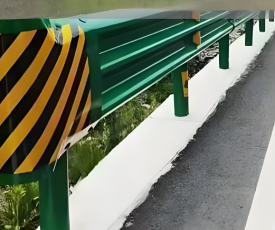
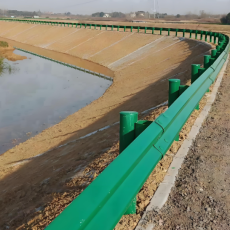
This economical corrugated guardrail is primarily designed for rural road networks, including village main roads, farm access roads, forestry paths, and scenic area branch roads with daily traffic volumes of less than 500 vehicles. It is also suitable for private property roads such as residential community side roads, industrial park auxiliary roads, and school access routes in suburban areas. In regions with limited construction budgets, it serves as a cost-effective alternative to more expensive guardrail systems, providing essential crash protection without compromising on basic safety performance. Additionally, it can be used in temporary road sites such as construction detours and event access roads, where quick installation and easy removal are prioritized. Its adaptability to uneven terrain and simple maintenance requirements make it a versatile choice for a wide range of low-traffic road safety projects.









 Post RFQ


 Chat
Chat


 ALL CATEGORIES