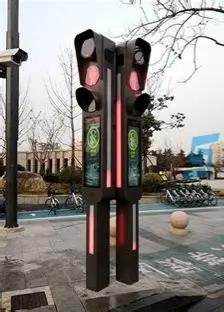
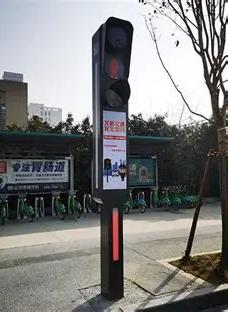



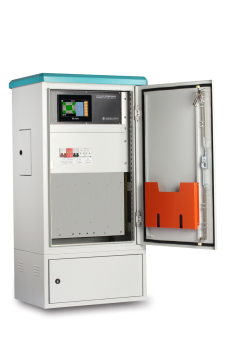
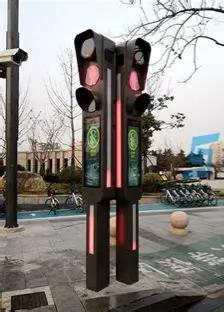
This signal light’s core feature is its pedestrian-first design: when a pedestrian presses the touch button or uses voice activation, the system will adjust the signal timing to give priority to pedestrian crossing, reducing waiting time by up to 70% compared to traditional fixed-timing signals. The multilingual voice broadcast function provides clear prompts such as "Green light, please cross" and "Red light, please wait", and the braille prompts on the touch button help visually impaired pedestrians operate the device easily. The adjustable warning sound volume can be customized according to the surrounding environment, avoiding noise pollution in residential areas while ensuring clear prompts in busy commercial streets. Additionally, the SMD 2835 LED chips provide soft, non-glare light emission, protecting pedestrians’ eyesight during nighttime crossing.
The main signal module of this crosswalk light has a size of 500mm×500mm×100mm, with each pedestrian figure module measuring 200mm×150mm. The touch button module is 150mm×100mm×50mm, installed at a height of 1.2-1.5m to facilitate operation by children and the elderly. It uses SMD 2835 LED chips with a brightness of 4000cd per module, ensuring clear visibility up to 800m. The rated power is 30W, with a standby power consumption of less than 3W. It supports AC 110-240V input voltage, adapting to different regional power standards. The protection grade is IP65, with a waterproof plastic housing that can withstand rain and dust. The response time from trigger to signal adjustment is less than 2s, and the voice broadcast volume can be adjusted between 60-90dB. The service life of the LED chips is over 60,000 hours, and the touch button has a press life of over 1,000,000 times.
This product is widely used in school entrances, elderly communities, commercial pedestrian streets, and hospital surrounding areas. At primary and secondary school entrances during morning and evening commutes, it can quickly respond to student crossing requests, ensuring safe passage between school gates and bus stops. In elderly communities, the braille prompts and voice broadcast help visually impaired or elderly pedestrians cross the road safely without assistance. For commercial pedestrian streets with mixed pedestrian and vehicle flow, it can dynamically adjust signal timing to balance pedestrian crossing needs and vehicle traffic efficiency, reducing conflicts between pedestrians and vehicles. Additionally, it can be used in tourist attractions with a large number of foreign visitors, as the multilingual voice broadcast provides convenient guidance for international tourists.











 Post RFQ


 Chat
Chat


 ALL CATEGORIES