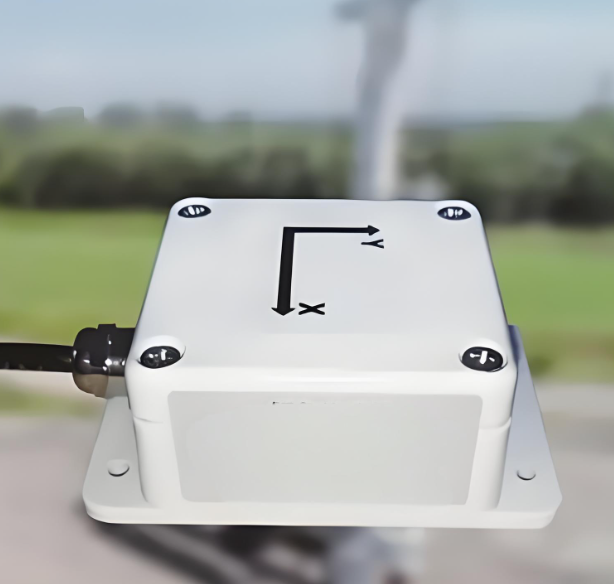
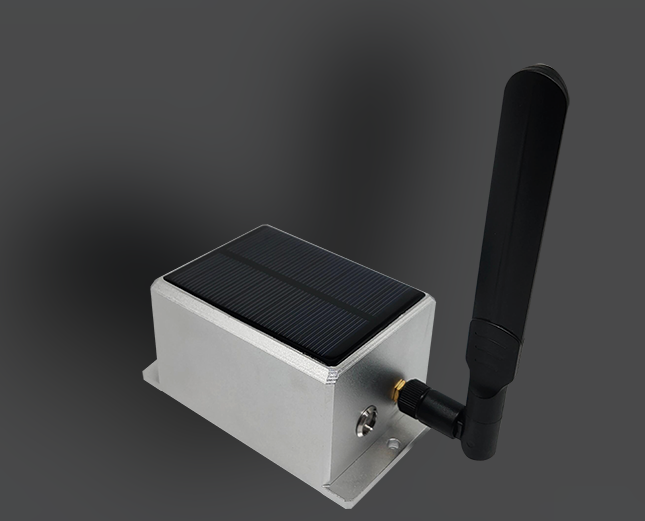



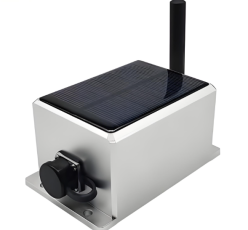
This wireless Bluetooth slope inclinometer has multiple core advantages: first, it uses Bluetooth 5.2 technology, with a transmission distance of up to 100 meters, and can realize stable data transmission in complex outdoor environments. Second, it has a long battery life, up to 30 days of continuous monitoring with a built-in rechargeable battery, reducing the frequency of battery replacement. Third, it supports over-tilt angle alarm, once the tilt angle exceeds the set threshold, it will send an audible and visual alarm and push a reminder to the mobile phone, helping managers to quickly respond to safety risks. Fourth, it supports real-time cloud data synchronization, and the measured data can be viewed and analyzed remotely through the dedicated APP, which greatly improves the efficiency of safety monitoring.
The wireless Bluetooth slope inclinometer has the following detailed specifications: measurement range is ±20°, measurement accuracy is 0.05°, resolution is 0.01°. It uses Bluetooth 5.2 for data transmission, with a transmission distance of up to 100 meters in an open environment. The built-in 3.7V 2000mAh rechargeable lithium battery can provide 30 days of continuous working time. The protection grade is IP67, which can resist rain and temporary immersion. The product size is 100*80*40 millimeters, weighing 150 grams, which is convenient for installation. It supports embedded installation and paste installation, and is equipped with fixed accessories for quick installation. The dedicated APP supports real-time data viewing, data analysis and alarm setting, and is compatible with Android and iOS systems.
This product is mainly used in the following safety monitoring scenarios: first, highway and railway slope safety monitoring, real-time monitoring of slope tilt changes to prevent landslide accidents. Second, building foundation pit monitoring, detecting the tilt of the foundation pit wall during construction to ensure the safety of construction personnel. Third, dam and levee safety monitoring, monitoring the tilt status of dams and levees to prevent leakage and collapse accidents. Fourth, bridge and tunnel structural health monitoring, detecting the tilt of bridge piers and tunnel walls to ensure the safe operation of traffic facilities. It can also be used for high-rise building settlement monitoring and wind turbine foundation tilt monitoring, meeting the needs of multiple structural safety monitoring scenarios.








 Post RFQ


 Chat
Chat


 ALL CATEGORIES