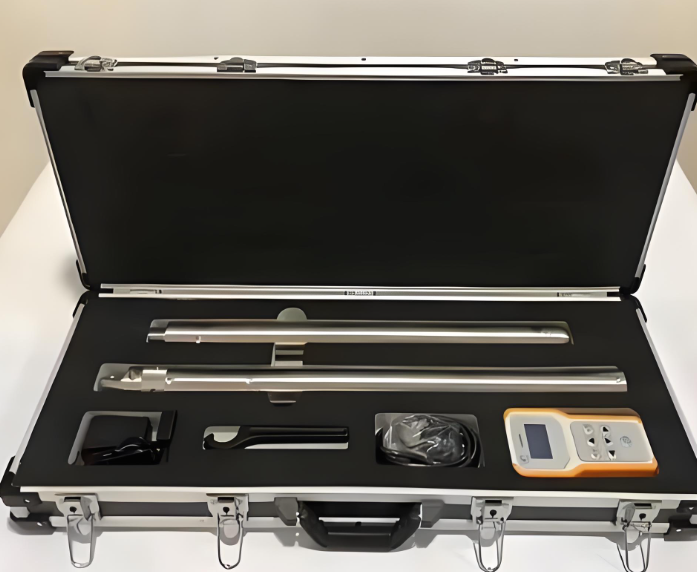
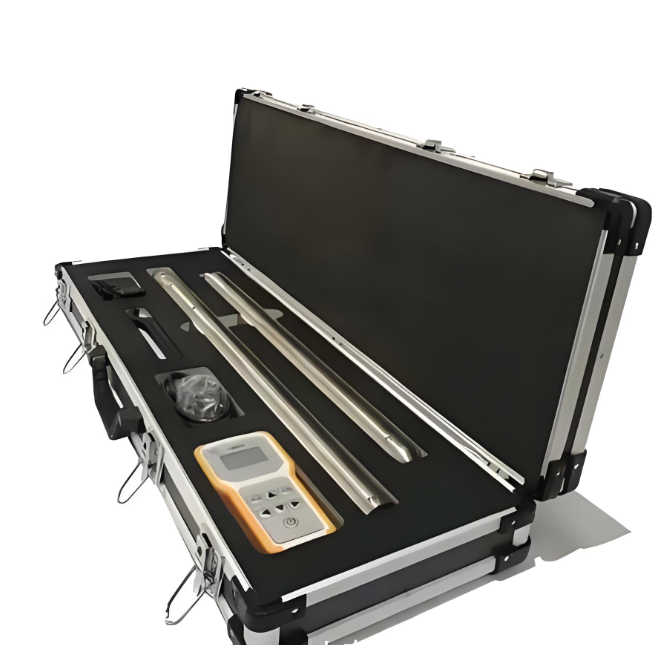


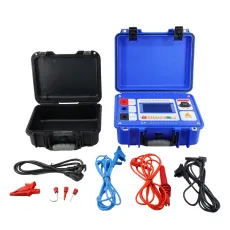
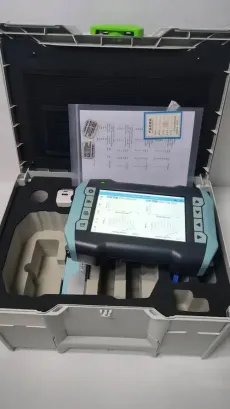

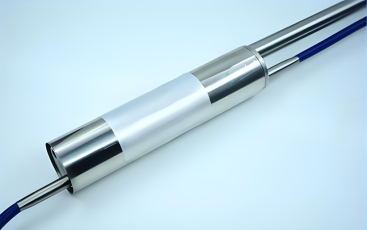
This downhole borehole inclinometer has three core competitive advantages: first, it has high pressure resistance of 100 Bar, which can adapt to the high-pressure environment of 5000 meters deep underground, meeting the measurement needs of most deep well drilling. Second, it adopts high-precision fiber optic or silicon sensor technology, with an accuracy of 0.02°, which can provide accurate borehole trajectory data. Third, it supports wired data transmission, which can transmit measurement data to the ground in real time, avoiding data loss caused by wireless signal interference underground. In addition, it has a large-capacity data storage function, which can store up to 50000 groups of measurement data for temporary storage when the transmission is interrupted.
The downhole borehole inclinometer has the following detailed specifications: measurement range is ±30°, measurement accuracy is 0.02°, probe diameter is 38 millimeters, probe length is 800 millimeters. The maximum measuring depth is 5000 meters, pressure resistance level is 100 Bar, operating temperature range is -20°C to 80°C. The product is made of stainless steel, with IP68 protection grade, which can resist the erosion of underground liquid and impurities. It is equipped with a 5-core shielded cable for data transmission, with a transmission distance of up to 5000 meters. The built-in data storage can store 50000 groups of measurement data, and supports real-time data transmission to the ground control center.
This product is mainly used in the following industries and scenarios: first, oil and gas well drilling, real-time monitoring of the well trajectory to ensure that the well is drilled according to the predetermined route, improving drilling efficiency and reducing drilling costs. Second, geological exploration, detecting the inclination angle of boreholes in mineral exploration, providing key data for geological structure analysis. Third, mine roadway detection, monitoring the tilt status of mine roadways to ensure the safety of underground mining. Fourth, water conservancy and hydropower engineering, detecting the tilt of dam foundation boreholes and ensuring the safety of water conservancy projects. It can also be used for underground pipeline laying and tunnel construction orientation, providing accurate tilt measurement data for underground engineering.







 Post RFQ


 Chat
Chat


 ALL CATEGORIES