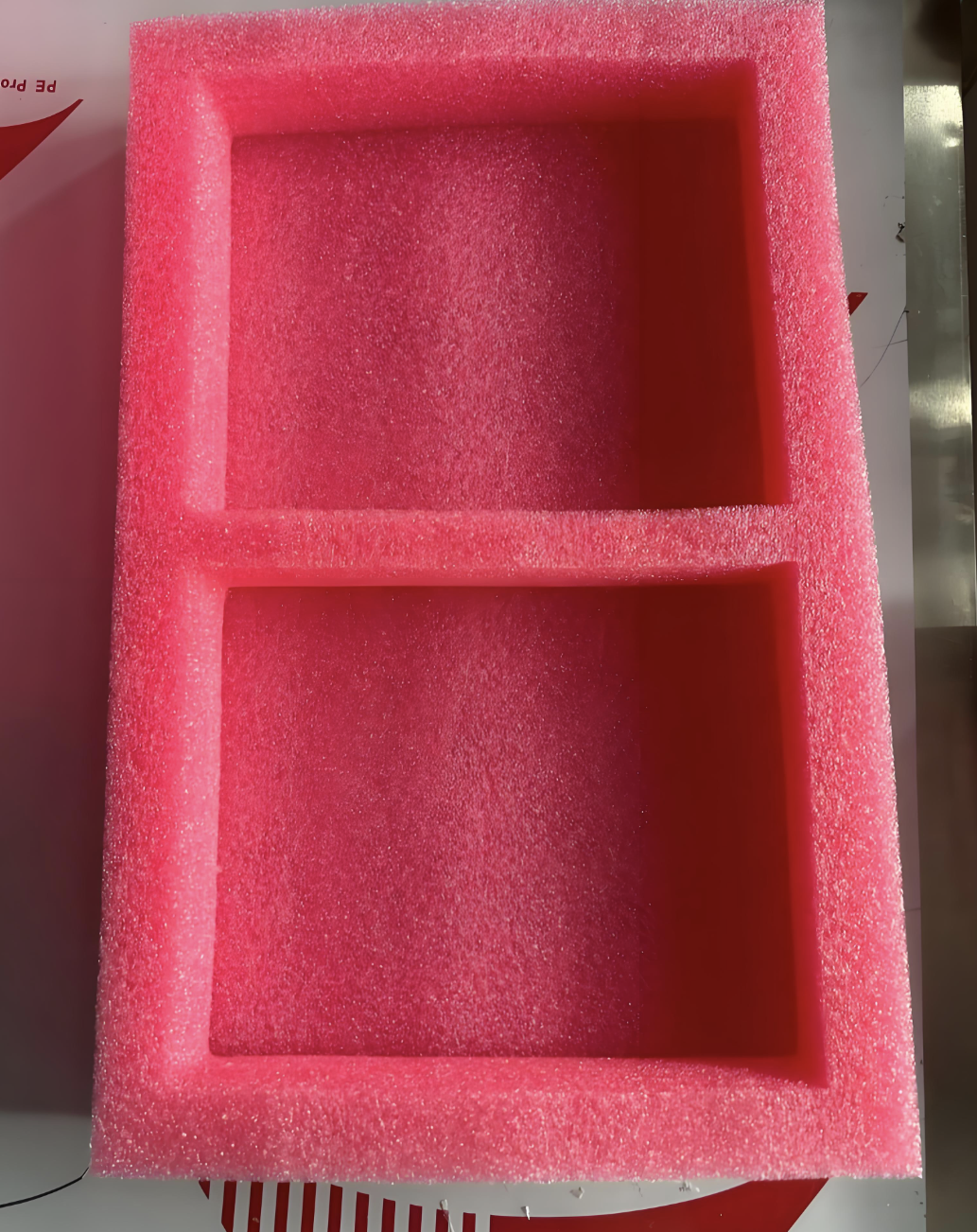
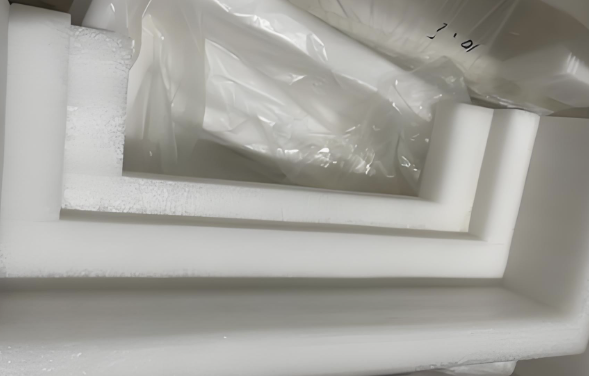





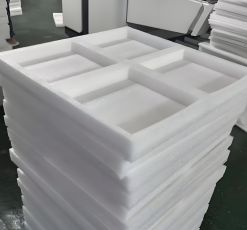
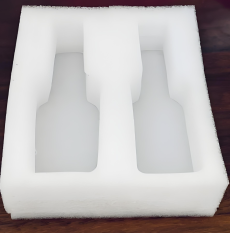

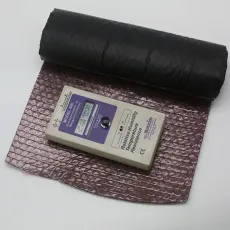
The core advantage lies in its professional antistatic performance, with a stable electrostatic dissipation value ranging from 10^6-10^9Ω, which can quickly release electrostatic accumulation and avoid irreversible damage to precision electronic components caused by static electricity. Compared with traditional anti-static packaging materials, this product is lighter in weight, has better cushioning performance, and will not cause scratch damage to products. It uses E0-level environmentally friendly raw materials, free of heavy metals and toxic volatile substances, and complies with EU ROHS environmental protection standards. It also has IPX4 level water resistance, which can protect electronic components from moisture intrusion in humid environments. It can be cut into any shape of cushioning liner according to customer needs, adapting to the packaging protection of mobile phone parts, computer motherboards, precision sensors and other products, solving the dual pain points of static electricity hazard and insufficient cushioning of traditional packaging.
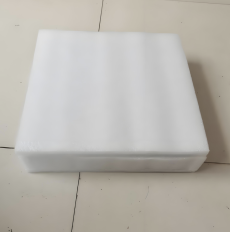
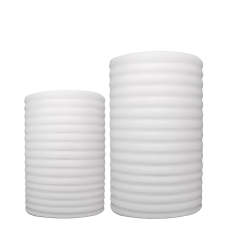
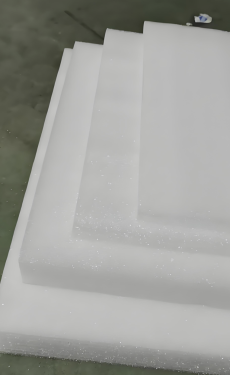
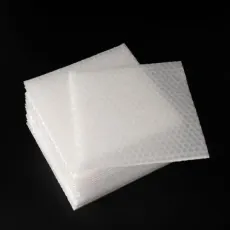
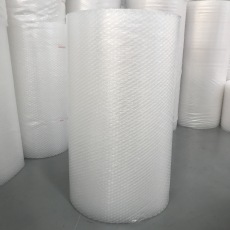
The standard sheet size is 1000*2000mm and 1200*2400mm, the thickness range covers 3mm to 30mm, the material density is 20-25kg/m³, the tensile strength is not less than 150kPa, the electrostatic dissipation value is stable at 10^6-10^9Ω, and the service temperature range is -30℃ to 70℃. The surface is dust-free, free of residual odor and burrs, and can be directly used for packaging operations in clean workshops. The product can be processed into special-shaped liners through laser cutting, die cutting and other processes, adapting to the packaging needs of all kinds of precision electronic equipment.
It is mainly used in electronic manufacturing (PCB circuit board, mobile phone parts, computer motherboard packaging), precision instrument industry (sensor, precision measuring instrument protection), semiconductor industry (chip packaging cushioning), aerospace parts packaging and other scenarios. It can be used as a special packaging material for dust-free workshops, effectively avoiding static electricity and mechanical damage, improving the integrity rate of products during transportation and storage, and helping electronic manufacturing enterprises meet the industry standards of dust-free packaging.











 Post RFQ


 Chat
Chat


 ALL CATEGORIES