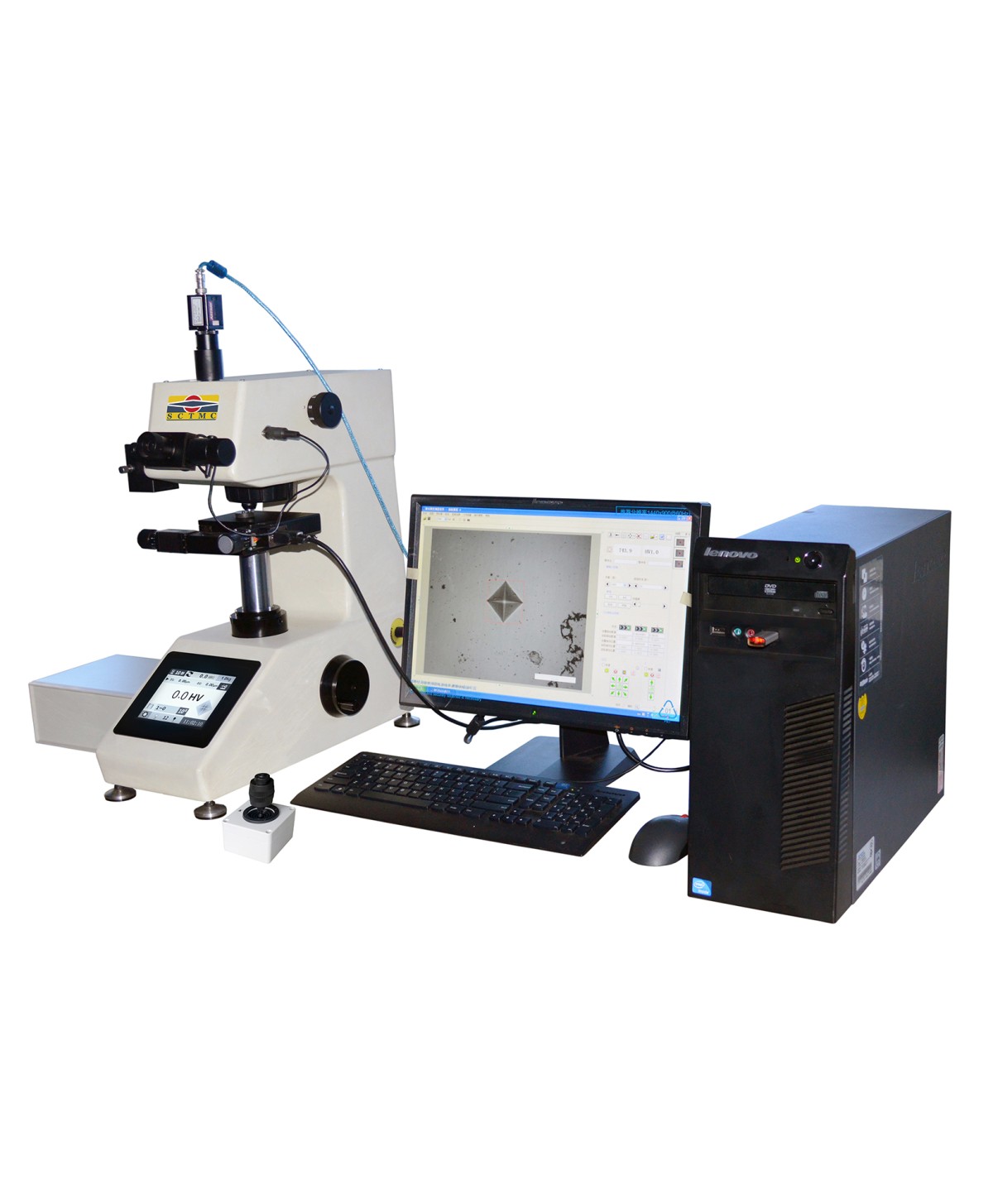


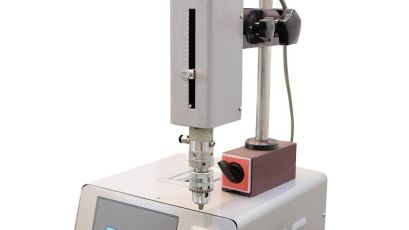
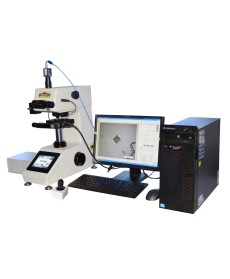
This micro Vickers hardness tester has multiple unique advantages. It adopts a high-precision weight force loading system, which ensures the stability of the testing force and the consistency of testing results. It is equipped with a 100× and 400× magnification metallographic microscope, which can clearly observe tiny indentations and measure the size of the indentation accurately. The built-in automatic indentation measurement system can reduce manual measurement errors and improve testing efficiency. The marble base has good shock absorption performance, which ensures the stability of the equipment and avoids the influence of vibration on the testing accuracy. Compared with similar products, its loading speed is faster, and the data storage capacity is larger, supporting USB and Ethernet data export. It has passed ISO 9001 and ASTM E384 certification, and its testing accuracy meets international industry standards.
This micro Vickers hardness tester has the following detailed specifications: supports Vickers and Knoop two hardness scales, the testing force range is 0.01-1kgf, the Vickers hardness range is 5-3000HV. The magnification is 100× and 400×, and the indenter is a 136° diamond indenter for Vickers testing. The overall dimension is 650mm in length, 450mm in width and 350mm in height, with a net weight of 85kg. It is powered by AC 110V/220V, and the detection accuracy is ±0.5%HV. It can store 2000 sets of test data, and supports USB and Ethernet data export. It has an automatic focusing function, and the marble base has good shock absorption performance. The working temperature range is 18-25℃ (laboratory standard temperature), and the relative humidity range is 30%-70%, suitable for laboratory testing scenarios. It has passed ISO 9001 and ASTM E384 certification, ensuring the accuracy and reliability of the product.
This micro Vickers hardness tester is widely used in multiple high-precision industrial scenarios. It is mainly used for micro-zone hardness testing of tiny workpieces in industries such as precision tool manufacturing, semiconductor packaging material testing, coating thickness hardness testing, micro-component quality inspection and aerospace precision parts R&D. It can accurately detect the hardness of tiny-sized workpieces and thin coatings, ensuring that the product meets the high-precision industry standards. It is very suitable for quality inspection personnel and R&D personnel in high-precision manufacturing enterprises, helping them optimize production processes and improve product performance.








 Post RFQ


 Chat
Chat


 ALL CATEGORIES