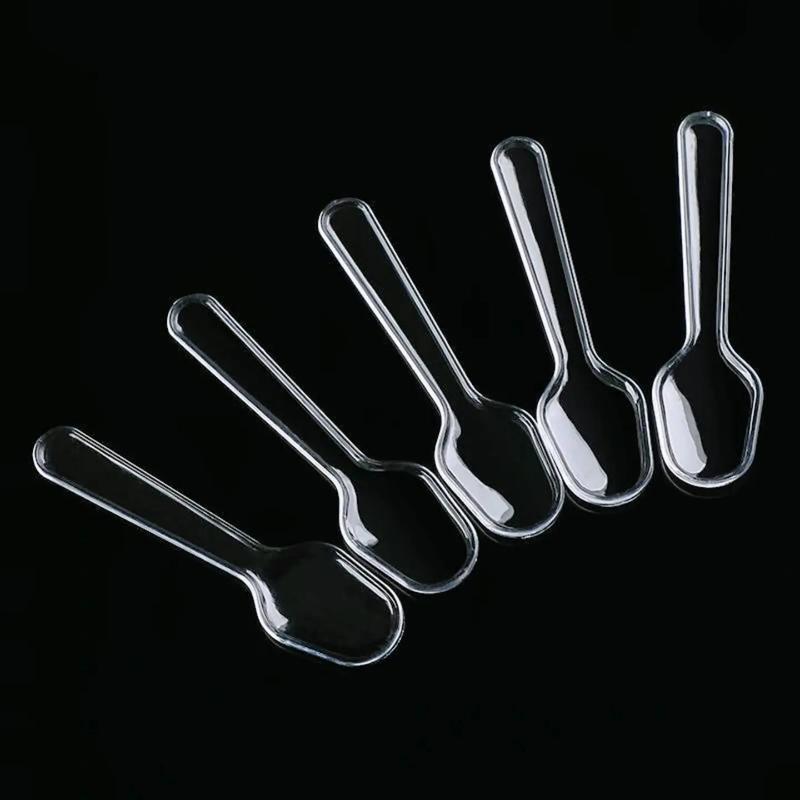
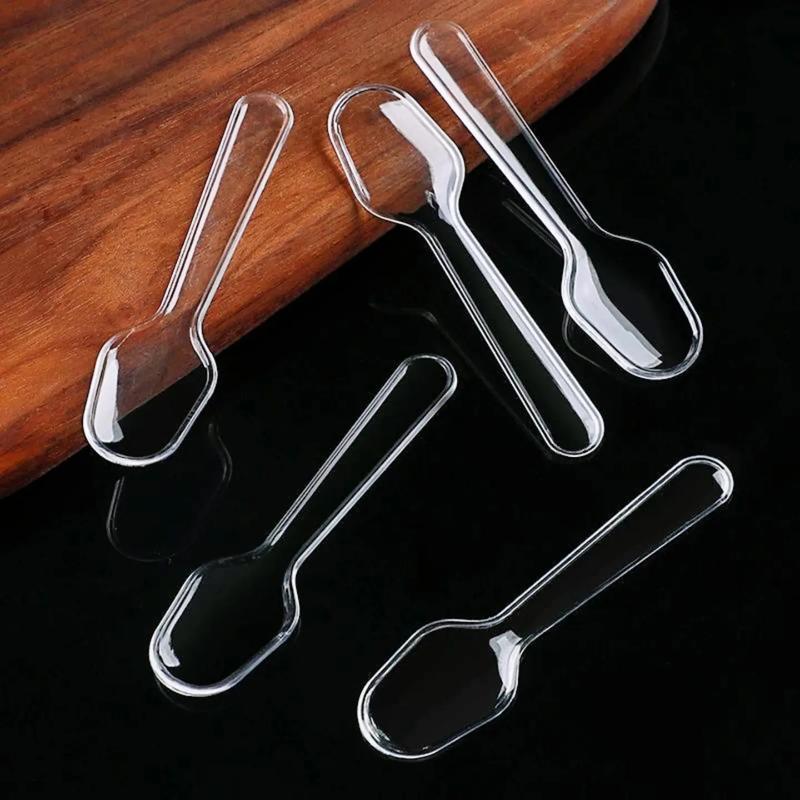



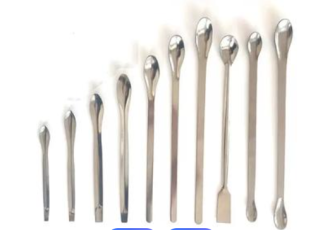
This product is designed for delicate operations. Its signature slender V-groove structure can scoop samples as small as a few milligrams or less, utilizing the converging effect of the groove walls to prevent spillage. The sharp spoon tip can easily access small openings like sample vials, narrow inlet ports of gas/liquid chromatographs, or the inside of test tubes for spotting or transfer. Some models feature a malleable metal handle that can be bent to specific angles as needed for sampling from awkward positions. Material options are varied; stainless steel is economical and general-purpose, while brass is softer and non-magnetic, suitable for situations where magnetic interference is a potential concern (e.g., magnetic materials laboratories). Surface plating provides additional corrosion protection and prevents reactions between certain metal samples and the spoon material.
The product is precisely dimensioned as a micro-tool. The depth and angle of the V-groove are optimized to hold an adequate sample volume while facilitating easy pouring. The tip is finely polished and burr-free, preventing scratches on precision instruments. The overall finish is of high cleanliness, making it easy to wipe with alcohol or clean in an ultrasonic cleaner. For bendable models, the bending area is typically specially annealed, allowing several manual bends for shaping without breaking while maintaining sufficient structural support. Products are usually manufactured and packaged to the standards of high-grade industrial or laboratory consumables.
This is an essential tool in R&D and quality control laboratories. It is mainly used for: extracting small amounts of plastic pellets from standard sample bags for Melt Flow Index (MFI) testing or Fourier-Transform Infrared Spectroscopy (FTIR) analysis; preparing and adding milligram-level samples for analytical instruments like Thermogravimetric Analysis (TGA) and Differential Scanning Calorimetry (DSC); placing and adjusting powder samples under a microscope; transferring micro-quantities of solid catalysts or reagents in chemistry laboratories. In the electronics industry, it is used for handling SMT solder paste or conductive adhesives. Due to its precision, it is also commonly used in high-end fields like jewelry appraisal and precious metal powder sampling.













 Post RFQ


 Chat
Chat


 ALL CATEGORIES